


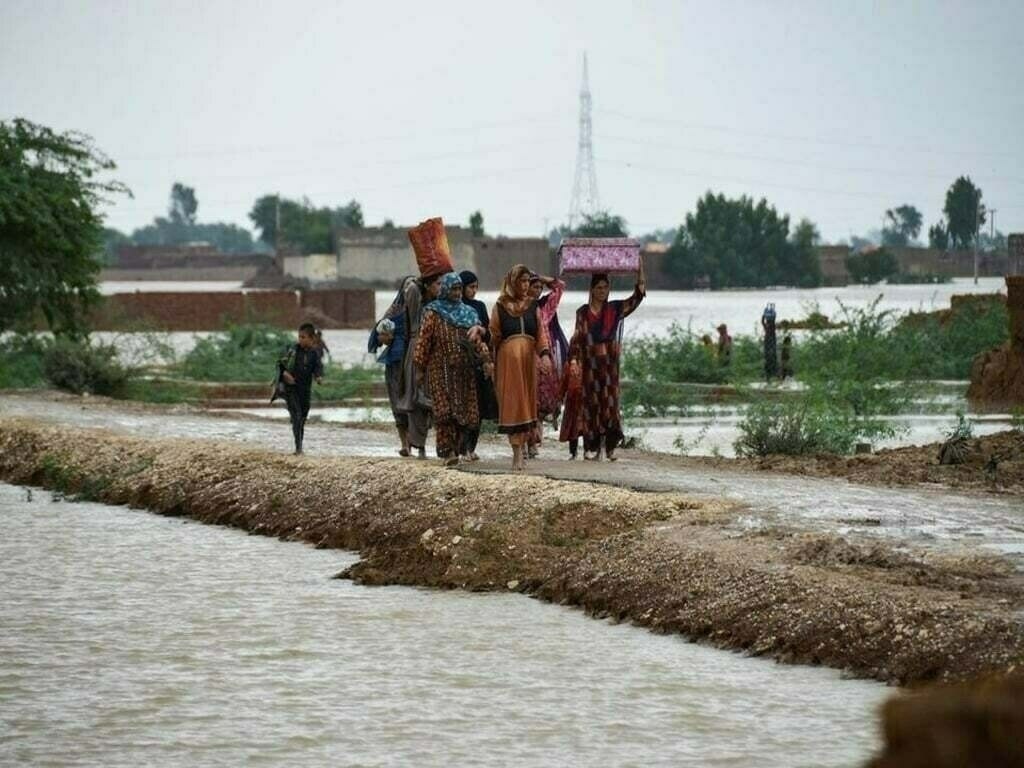

The catastrophic floods of 2022 were one of the most devastating natural disasters in Pakistan’s history, particularly for the province of Sindh.
Nearly 70 percent of the region was submerged, with all 24 districts officially declared calamity-hit by the government. As a result, more than 12.36 million people were directly affected, and over 2.1 million homes were completely or partially destroyed.
Basic services such as food, clean water, healthcare, education, and livelihoods came to a halt. In this climate of despair, emerged a beacon of hope and recovery — the Sindh People’s Housing for Flood Affectees (SPHF) — a government-led initiative that has grown into the world’s largest public sector housing programme.
This monumental effort was not just about rebuilding structures; it was about rebuilding lives. SPHF adopted a holistic model of recovery that combined human dignity, transparency, gender equity, technological innovation, and environmental resilience. It’s not merely a housing scheme; it is a blueprint for social transformation and welfare governance.
For the first time in Sindh’s history, data was collected from over 2 million households across 24 districts, covering a total of nearly 12 million individuals. This extensive data mapping served two purposes: it ensured that the most vulnerable populations were prioritized, and it brought to light the socio-economic realities of flood-affected communities. According to the data, 94 percent of the beneficiaries earn less than USD 70 per month, while 31 percent survive on less than USD 30 per month. The majority of these individuals are daily-wage labourers, tenant farmers, unemployed individuals, and low-income public servants. In total, over 1.88 million beneficiaries were recorded across various occupations.
One of the most groundbreaking aspects of SPHF is its commitment to gender inclusion and women’s empowerment. Over 800,000 women were given legal ownership of residential plots under this program — a radical step toward enhancing women’s socio-economic agency in a traditionally patriarchal society. This not only uplifts women but also introduces a paradigm shift in the way land rights and property ownership is perceived at the grassroots level.
But SPHF’s vision goes far beyond housing. At its core lies the idea of “building back better” — making communities more climate-resilient, inclusive, and sustainable. The programme includes more than 60,000 climate-resilient settlements across Sindh, where infrastructure is designed to withstand future climate shocks. Additionally, Water, Sanitation, and Hygiene (WASH) projects have been rolled out in over 3,000 villages, benefiting around 1.5 million people with access to clean water and improved sanitation.
What truly distinguishes SPHF on the global stage is its robust use of technology to ensure accountability and transparency. From the initial damage assessment to plinth verification, lintel monitoring, and roofing completion, every stage of the process is digitally tracked in real time through the MIS (Management Information System) and GIS (Geographic Information System) platforms. The integration of AI tools, beneficiary portals, mobile apps, and digital forms ensures that no deserving family is left behind. All data is open to audit and verification by independent institutions, donors, and technical partners.
In terms of financial inclusion, SPHF has opened more than 1.16 million bank accounts for beneficiaries. Around 1.05 million individuals have already received direct financial assistance through transparent digital transactions, eliminating any middlemen or chances of corruption. This digital-first approach has not only protected public funds but also introduced thousands of previously unbanked individuals to the formal financial system.
Job creation is another pillar of this initiative. By integrating local labour into construction, surveying, data entry, logistics, and facilitation roles, SPHF has generated employment for over 1 million people — many of whom had lost their livelihoods in the flood. Women were also trained and employed in non-traditional roles, setting new standards for gender-inclusive economic recovery.
International institutions like World Bank’s executive directors have praised SPHF’s transparency and impact. At the Dubai Lynx Creative Commerce Awards, SPHF received accolades for its innovation and execution — a rare feat for a government-led project. This international recognition validates the programme as not only effective but also exemplary.
SPHF has also pioneered climate-smart practices, including the plantation of over 105,000 saplings, community engagement on disaster preparedness, and infrastructure planning based on vulnerability mapping. The project’s heat maps and data analytics allow for dynamic decision-making and resource allocation based on need, risk, and urgency.
One of the most powerful stories is that of Noor Khatoon from Thatta district — a woman who, like thousands of others, lost everything in the flood. Through SPHF, she received step-by-step support — from the first installment for land preparation to the final roofing of her new, durable home. Today, she is not just a flood survivor, but a homeowner with dignity, stability, and hope. Her journey reflects that of hundreds of thousands who are now reclaiming their lives, thanks to this initiative.
Beyond statistics and strategy, SPHF is a human story — one of resilience, dignity, and collective action. It demonstrates how data, technology, and political will can converge to not just repair what was broken, but to create something fundamentally better. It reminds us that even the gravest disasters carry within them the seeds of transformation, provided we have the courage and vision to nurture them.
In a world grappling with climate change, displacement, and inequality, SPHF offers a replicable model of how developing nations can rebuild inclusively and sustainably. It is proof that when governance is people-centric, transparent, and adaptive — miracles can happen at scale. SPHF is not just a housing project — it is the rebirth of a province. From ruins to renewal, Sindh is rising again, brick by brick, life by life.
Copyright Business Recorder, 2025
The writer is a former Director General (Board of Investment) Email: [email protected]. The views expressed in this article are not necessarily those of the newspaper




















Comments
Comments are closed for this article.