


Enhancement in court fees, securities: SC Full Court defers implementation of amendments in rules
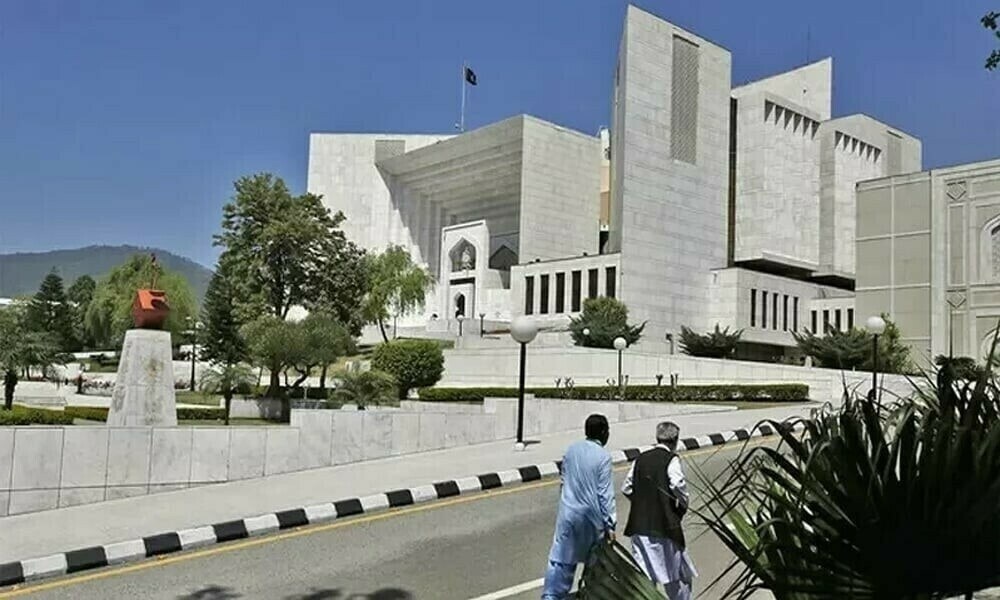

ISLAMABAD: The Full Court of the Supreme Court unanimously decided to postpone the implementation of amendments to the Supreme Court Rules, 2025, to the extent of enhancement of court fees and securities for the time being.
The 156th Full Court meeting was held on Monday at the Supreme Court Building, Islamabad, with Chief Justice of Pakistan Yahya Afridi in the chair. It was attended by the Justice Amin-Ud-Din Khan, Justice Jamal Khan Mandokhail, Justice Muhammad Ali Mazhar, Justice Syed Hasan Azhar Rizvi, Justice Shahid Waheed, Justice Musarrat Hilali, Justice Irfan Saadat Khan, Justice Naeem Akhter Afghan, Justice Malik Shahzad Ahmad Khan, Justice Aqeel Ahmed Abbasi, Justice Shahid Bilal, Justice Muhammad Hashim Khan Kakar, Justice Muhammad Shafi Siddiqui, Justice Salahuddin Panhwar, Justice Shakeel Ahmad, Justice Aamer Farooq, Justice Ishtiaq Ibrahim, Justice Ali Baqar Najafi and, Justice Miangul Hassan Aurangzeb.
However, four senior judges, including Justice Syed Mansoor Ali Shah, Justice Munib Akhtar, Justice Ayesha Malik, and Justice Athar Minallah, were not present, as they wrote a joint letter, which was addressed to CJP Yahya Afridi.
Justice Shahid Waheed, Chairman of the Committee, briefed the Full Court on the rules. The Chief Justice appreciated the committee’s exhaustive work, undertaken with input from judges and the legal fraternity, resulting in a comprehensive draft of the Supreme Court Rules, 2025.
Following detailed deliberations on various provisions, the Full Court unanimously agreed that the Supreme Court Rules, 2025, are a “living document,” and shall be subject to ongoing review and amendment as required from time to time.
The Full Court, after considering various aspects and deliberating upon some of the critical provisions, also decided that the Committee shall consider the suggestions from judges, the Bar representatives, or other stakeholders in this regard for placement before the Full Court for decision in light of the Committee’s recommendations.
The Chief Justice termed this development a significant milestone, reflecting the judiciary’s commitment to strengthening institutional frameworks and ensuring that the Supreme Court Rules remain dynamic, responsive, and in line with contemporary needs.
However, the four judges in their joint letter stated, “We have consistently raised this issue that the present Supreme Court Rules were never placed before, nor approved by, the Full Court.” The Rules framed without deliberation and approval of the Full Court; therefore, lack the imprimatur of the Court itself, and cannot acquire binding legal status.
“What compounds this infirmity is the method of ‘approval’. The Rules were processed through circulation. Circulation is an administrative convenience to deal with routine or minor procedural matters; it is not, and cannot be, the vehicle for laying down the constitutional architecture of this Court’s governance.”
According to the letter, unless the Full Court itself had expressly resolved to adopt circulation for this purpose, the Chief Justice alone could not unilaterally resort to it. The present Rules; therefore, suffer from both substantive and procedural illegality.
They criticised the procedure, saying, “A Full Court at this stage is not only puzzling but fallacious in purpose. They pointed out that on 9th August 2025, the Rules were already notified as ‘approved’.” Yet, within three days, on 12th August 2025 the Chief Justice sought suggestions for amendment in the same Rules and has now convened the Full Court to discuss them.
They wrote that after notifying the Rules, the exercise reduces the Full Court to a cosmetic role. In effect, the meeting is being used to give a veneer of legitimacy to an otherwise invalid process.
They demanded that the constitutionally consistent and institutionally honest course would be to place the Rules, in their entirety, before the Full Court, permit genuine discussion and deliberation, and only thereafter seek formal approval.
The deficiencies identified in this letter cannot be remedied by the expedient of convening a meeting that is designed merely to serve as a stamp of approval for the existing position. Unless this course is adopted, we see no point in attending a meeting that is premised on amending Rules which, in our respectful view, already suffer from illegality both in substance and in process.
They requested that their objection be fully recorded in the minutes of the meeting and that the minutes of the Full Court be made public.
Copyright Business Recorder, 2025


























Comments
Comments are closed for this article.