


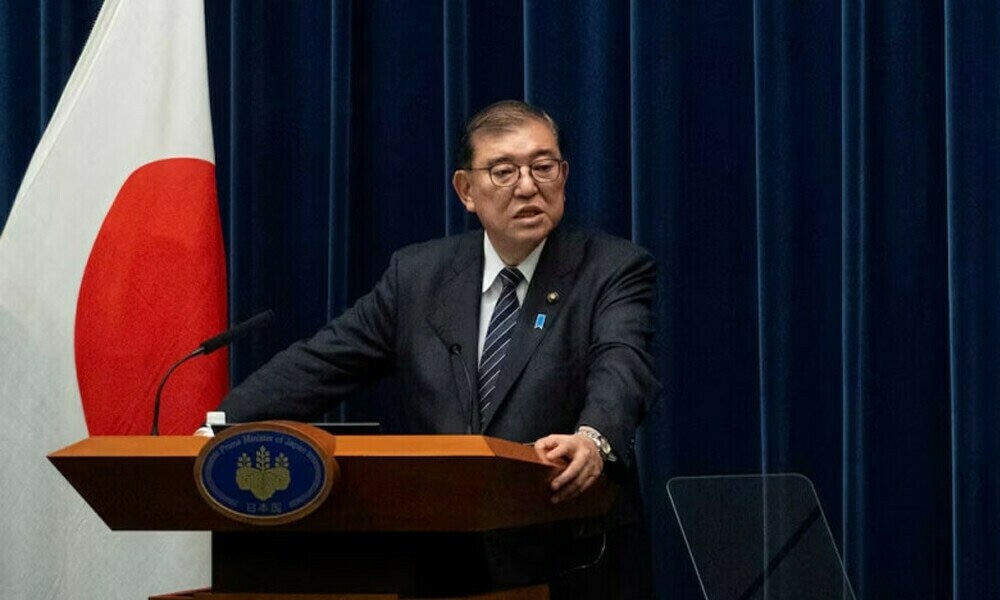

TOKYO: Japanese Prime Minister Shigeru Ishiba resigned on Sunday, ushering in a potentially lengthy period of policy uncertainty at a shaky moment for the world’s fourth-largest economy.
Having just ironed out final details of a trade deal with the United States to lower President Donald Trump’s punishing tariffs, Ishiba, 68, told a press conference he must take responsibility for a series of bruising election losses.
Since coming to power less than a year ago, the unlikely premier has overseen his ruling coalition lose its majorities in elections for both houses of parliament amid voter anger over rising living costs.
He instructed his Liberal Democratic Party - which has ruled Japan for almost all of the post-war period - to hold an emergency leadership race, adding he would continue his duties until his successor was elected.
“With Japan having signed the trade agreement and the president having signed the executive order, we have passed a key hurdle,” Ishiba said, his voice seeming to catch with emotion. “I would like to pass the baton to the next generation.”
Ishiba has faced calls to resign since the latest of those losses in an election for the upper house in July. The LDP had been scheduled to hold a vote on whether to hold an extraordinary leadership election on Monday.
Concern over political uncertainty prompted a sell-off in Japan’s yen currency and its government bonds last week, with the yield on the 30-year bond hitting a record high on Wednesday.
Investors are focusing on the chance of Ishiba being replaced by an advocate of looser fiscal and monetary policy, such as LDP veteran Sanae Takaichi, who has criticised the Bank of Japan’s interest rate hikes.
Ishiba narrowly defeated Takaichi in last year’s LDP leadership run-off. Shinjiro Koizumi, the telegenic political scion who has gained prominence as Ishiba’s farm minister tasked with trying to cap soaring prices, is another possible successor.
“Given the political pressure mounting on Ishiba after the LDP’s repeated election losses, his resignation was inevitable,” said Kazutaka Maeda, economist at Meiji Yasuda Research Institute.
“As for potential successors, Koizumi and Takaichi are seen as the most likely candidates. While Koizumi is not expected to bring major changes, Takaichi’s stance on expansionary fiscal policy and her cautious approach to interest rate hikes could draw scrutiny from financial markets,” Maeda said.
Since the ruling coalition has lost its parliamentary majority, the next LDP president is not guaranteed to become prime minister, although that is likely as the party remains by far the largest in the lower house.
Whoever becomes the next leader may choose to call a snap election to seek a mandate, analysts said. While Japan’s opposition remains fractured, the far-right, anti-immigration Sanseito party made big gains in July’s upper house election, bringing once-fringe ideas into the political mainstream.

























Comments
Comments are closed for this article.