


EDITORIAL: The scenes from Indonesia these past days are a warning to elites everywhere who imagine that public patience is endless.
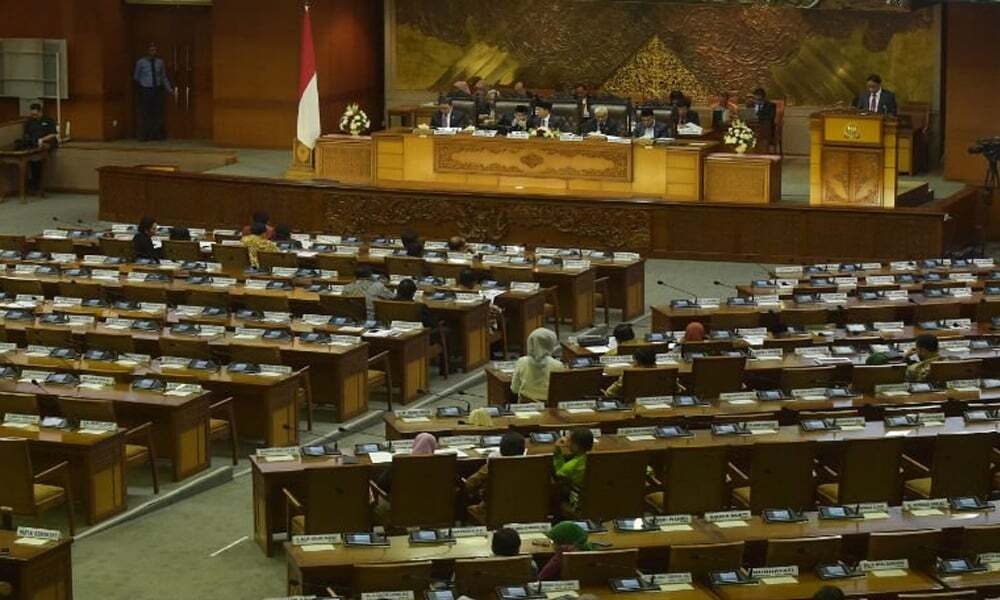
The spark was almost banal in its brazenness: lawmakers granting themselves housing allowances nearly ten times the minimum wage in Jakarta, even as the government cut health, education and public works.
The outrage grew into a nationwide protest after a 21-year-old delivery driver was killed when a police armoured vehicle ran him over in Jakarta. The result has been seven dead, hundreds injured, and more than a thousand detained, in what is already being described as the most serious test yet for President Prabowo Subianto’s government.
The parallels for Pakistan are uncomfortably close. Here, too, the common man endures harsh economic conditions while the privileged classes insulate themselves with perks, protections and subsidies.
Here, too, the gulf between the ruled and the rulers keeps widening. Indonesia’s protests are not only about one allowance or one life lost, they are about a system that appears to mock the sacrifices of ordinary people. That is a lesson Pakistan’s elites should heed, because this country has seen how such gaps feed discontent and distrust.
The echoes of the Arab Spring are unmistakable. That wave, triggered by the self-immolation of a Tunisian street vendor protesting harassment and economic despair, spread with startling speed across the Middle East and North Africa.
The outcomes varied from country to country, but the common thread was that neither the repressive governments nor the ordinary citizens emerged stronger. The uprisings left institutions weakened, economies more fragile, and societies polarised. The warning is not that every protest becomes a revolution, but that once legitimacy is eroded, it rarely returns intact.
Indonesia’s experience shows how quickly a narrow grievance can become a national crisis when governance has already alienated the governed. Anger at perks cascaded into fury at the military’s growing role in civilian life, resentment at austerity, and outrage at heavy-handed policing.
The government scrambled between concessions, such as cutting parliamentary privileges, and crackdowns, labelling protesters as “treasonous” or “terrorists.” That duality only deepened suspicion. Once public trust is lost, gestures that might otherwise calm tempers are seen as tactical rather than sincere.
Pakistan has lived through its own cycles of public anger, most often over food prices, utility shortages and corruption. But the warning from Jakarta is sharper: when people believe that sacrifices are demanded only of them and while the state’s resources serve an insulated elite even small triggers can ignite a much wider fire. In such moments, the state’s instinct to repress is precisely what confirms the protesters’ claims.
The path forward for any government, whether in Indonesia or Pakistan, is not to rely on force or temporary appeasement, but to narrow the gap between promise and practice. That requires transparency in public spending, restraint in official perks, and visible accountability for those who abuse authority. Above all, it requires listening to the grievances of ordinary people before those grievances turn into rage.
Indonesia is a stark reminder that governance divorced from fairness courts instability. Pakistan knows this truth too well. The only question is whether its ruling classes are willing to act on it, or whether they will wait, as others have, until the streets deliver the message in ways no one can control.
Copyright Business Recorder, 2025


























Comments
Comments are closed for this article.