


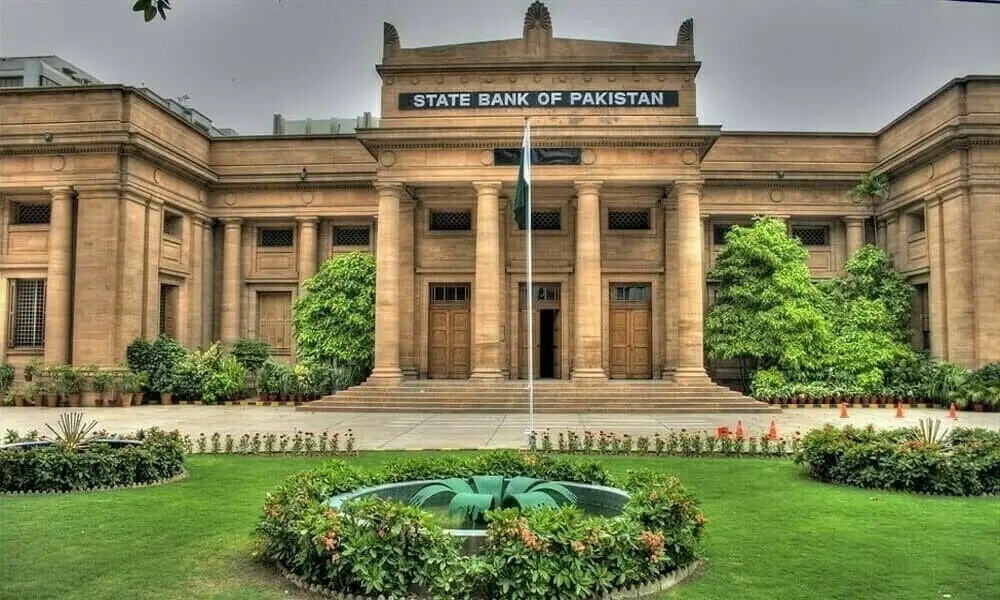
ISLAMABAD: The State Bank of Pakistan (SBP) has agreed in principle to legalise digital currencies for which a formal regulatory framework is yet to be put in place. This was revealed by Acting Deputy Governor Dr Inayat Hussain while briefing the Senate Standing Committee on Finance and Revenue, here on Wednesday.
The committee met with Saleem Mandviwalla in the chair to discuss “the Virtual Assets Bill, 2025”.
The committee chairman asked, “Can Pakistani people buy virtual assets now?” The SBP official replied: Yes, as the SBP has agreed in principle to legalise digital currencies for which the legal framework is being put in place.”
‘Fleecing by Islamic banks’: Senate panel seeks detailed briefing from SBP
In response to another question, the SBP official said that the regulatory framework would be set up. SBP would withdraw the existing orders that prohibit the use of cryptocurrencies.
The committee deliberated on the Government Bill titled “The Virtual Assets Bill, 2025”.
The Bill is aimed at regulating virtual assets in view of the established international practices. The committee was also informed that the given Virtual Assets Authority will play a key role in combating money laundering, terror financing, and other illicit activities.
Finance Division, in a written briefing, informed that virtual assets are an evolving component of the modern financial ecosystem, offering new opportunities for innovation, investment, and economic growth. However, these assets also face significant regulatory challenges, particularly in ensuring investor protection, market transparency, and the integrity of financial systems.
To address these challenges, a dedicated regulatory arm for the licensing and supervision of Virtual Asset Service Providers (VASPs) is essential. Such an oversight mechanism not only safeguards investors but also fosters innovation, mitigates risks of misuse, and promotes confidence in the virtual asset market.
Recognizing the need for a comprehensive legal and regulatory structure, the Government of Pakistan promulgated the Virtual Assets Ordinance, 2025 on 8 July 2025. Following its promulgation, the Pakistan Virtual Asset Regulatory Authority (PVARA) was established as the primary regulatory body responsible for overseeing the virtual asset sector.
The Ordinance provides a robust legal framework enabling PVARA to license and supervise VASPs, prevent money laundering, terrorist financing, and other illicit activities, promote innovation and financial inclusion, encourage the development of Shariah-compliant virtual asset services, and align domestic practices with international standards.
This framework aims to create a secure environment for virtual asset transactions, curb illegal activities such as fraud and money laundering, and position Pakistan as a competitive player in the global virtual asset landscape.
While thoroughly examining the bill, the Committee recommended that the Virtual Assets Authority should be placed under the Finance Division instead of the Cabinet Division, given the nature of the subject.
The Committee also set the upper age limit of 55 years with five-year experience in Digital Finance and Technology for appointment as chairperson of the authority. Anusha Rehman said that young people with five years of experience need to be accommodated instead of ‘parking lot’. After an extensive discussion, the Committee deferred the deliberations on the bill till the next meeting.
Earlier, the committee witnessed an exchange of harsh words between Secretary Law and Senator Afnanullah Khan, who accused the government of copying and blocking his private member bill ‘The Virtual Assets Bill,2025,” and introducing its own bill.
Khan informed that a bill encompassing the same subject had been submitted by him in the Senate, but the government came up with a bill carrying the same idea. The Committee in the last meeting had directed the Secretary of Law and Justice to review the copy shared by Afnanullah Khan and submit a comparison thereafter in the next meeting. Khan was not happy with the Secretary of Law and Justice Division’s response and termed it a copy of his idea.
He termed it unethical and corrupt practices. The committee decided to introduce amendments in the Senate Rules to stop such practices in the future.
Copyright Business Recorder, 2025















Comments
Comments are closed for this article.