


Rising waters, rising resolve: Pakistan facing ‘unprecedented’ floods
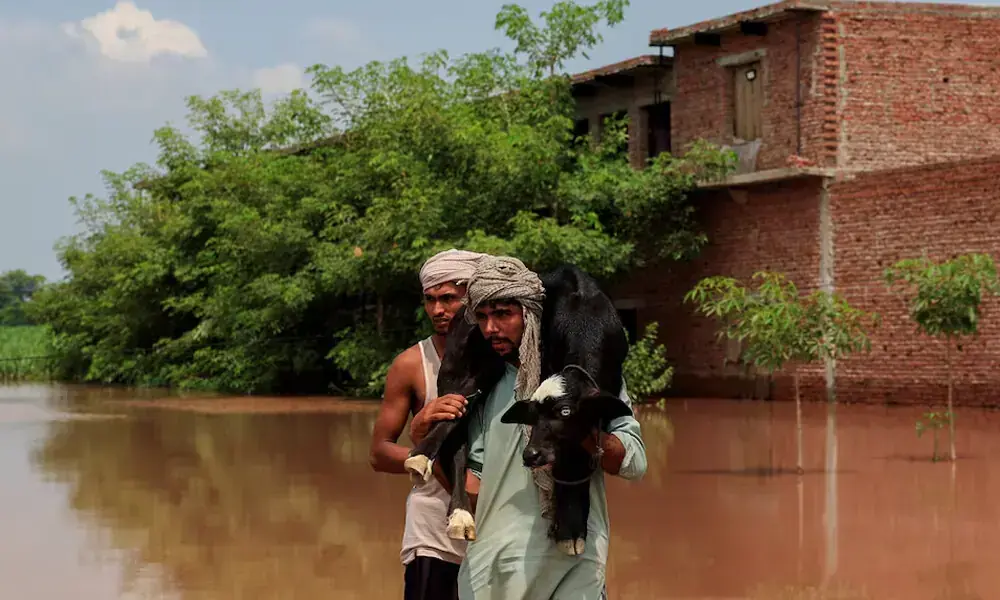

In August 2025, Pakistan found itself grappling with a devastating flood crisis that began with India’s sudden, unannounced and uncoordinated release of water from upstream dams in Jammu & Kashmir. The deluge surged into Pakistan’s eastern rivers—Ravi, Chenab and Sutlej—triggering widespread destruction across Punjab and setting the stage for further inundation downstream in Sindh. The timing and scale of the water release, which coincided with already heavy monsoon rains, overwhelmed the river systems and left little room for preparation or mitigation.
India’s decision to open all floodgates of major dams without prior coordination or sufficient warning was widely condemned across Pakistan and at international level as well, reportedly President Trump was vocal on it. Officials and analysts described the move as a form of “water warfare,” citing its timing and disregard for downstream impact. The abrupt surge of water not only violated the spirit of the Indus Water Treaty but also raised serious questions about transboundary water ethics and regional stability. While India attributed the releases to emergency management of excessive rainfall, Pakistan’s leadership called for international scrutiny and demanded the establishment of real-time data sharing mechanisms to prevent the instant as well as future crises of this magnitude.
Punjab, obviously, bore the initial brunt of the disaster. Within hours, water levels at key barrages exceeded safe thresholds, submerging hundreds of villages and displacing nearly two million residents. The provincial government responded with urgency, deploying the army, Rangers, Rescue 1122 and civil administration in a coordinated effort to evacuate affected populations and reinforce vulnerable embankments. Emergency shelters were established in schools and community centers while heavy machinery was mobilized to divert floodwaters and protect urban infrastructure. Daily briefings kept the public informed and real-time data sharing with federal / provincial agencies ensured that downstream provinces were alerted to the evolving threat.
As the floodwaters moved southward, attention turned to Sindh, where the Indus River now carried the full force of the surge carrying additional waters from KP and G-B. Forecasts indicated high flood levels at Guddu, Sukkur and Kotri barrages, placing over 1.6 million people at risk across many districts. The Sindh government, drawing lessons from past disasters, began proactive preparations. Evacuation orders are being issued for riverine communities, relief camps are being activated and livestock shelters are also to be set up to protect rural livelihoods. Embankments at critical points should be reinforced and communication channels are required to open to ensure transparency and coordination with federal and provincial counterparts.
The 2025 flood crisis has underscored the urgent need for national cohesion in the face of climate-driven disasters. While India’s actions demand diplomatic scrutiny and stronger trans-boundary water protocols, Pakistan’s internal response must be rooted in solidarity. Punjab’s swift mobilization and Sindh’s proactive planning will offer a blueprint for future emergencies. As the waters recede, the real test will be whether governance can rise above politics to deliver lasting protection and dignity to those most affected. Nonetheless,
a deep study and critical investigation on Indian move on water warfare is imperative with strong and unwavering retaliation, if some foul play is found in discharge of huge unprecedented release of water.
(The writer is a former Director General DPP,
Copyright Business Recorder, 2025
The writer is a former Director General, Federal Government; Former Associate Professor, University of Agriculture Faisalabad - ([email protected]). The views expressed in this article are not necessarily those of the newspaper

























Comments
Comments are closed for this article.