


‘Hybrid regime’ remark undermines govt’s credibility, says minister
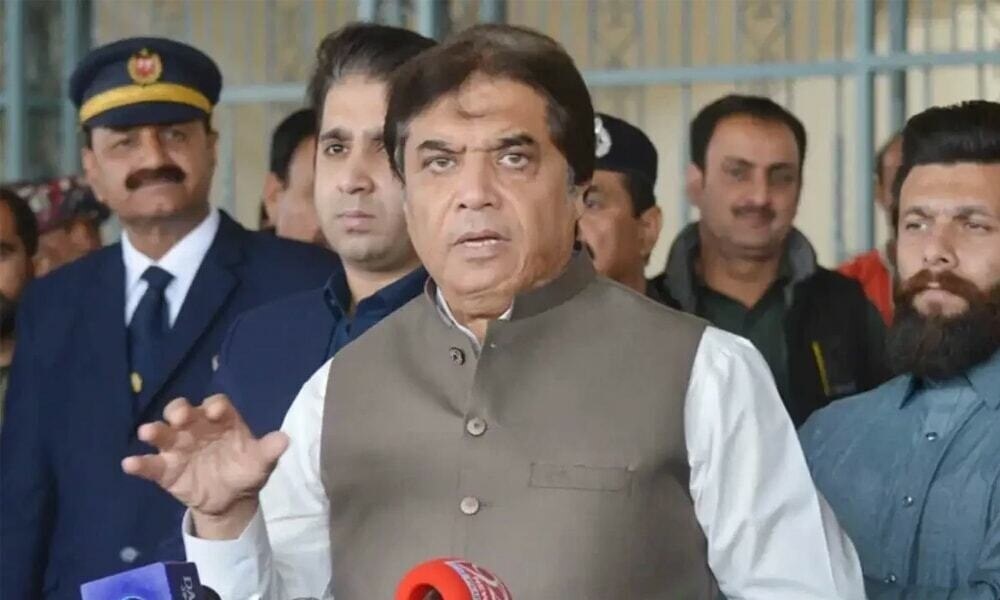

ISLAMABAD: In a rare display of dissent within the ruling Pakistan Muslim League-Nawaz (PML-N), Railways Minister Hanif Abbasi on Tuesday issued a veiled but unmistakable rebuke directed at Defence Minister Khawaja Asif, over his recent remarks critical of the country’s governance model and bureaucracy.
Speaking in the National Assembly, Abbasi – without naming the minister – condemned Asif’s recent remarks characterising the country’s political system as a “hybrid regime,” terming such statements irresponsible and detrimental to the government’s credibility.
“It is regrettable to hear those on the treasury benches blame the system – sometimes even calling it a hybrid setup,” said Abbasi. “If that is their view, perhaps they belong on the opposition benches.”
While he refrained from naming Asif directly, the implications were clear. Abbasi questioned the integrity of individuals who, despite having been entrenched in the political establishment for decades, now seek to distance themselves from the very system they helped sustain. “You say the last 40 years of the system are to blame? But you’ve been part of that very system for 40 years. How can you absolve yourself,” he remarked.
In what appeared to be a subtle suggestion that Asif reconsider his position in the cabinet, Abbasi added: “I’ve seen people resign when they can no longer align with government policies. If someone doesn’t like the system they are part of – and have benefited from – they should call it a day.”
His comments follow Khawaja Asif’s candid remarks earlier this week acknowledging the persistent influence of unelected institutions in state affairs – a rare admission from a sitting federal minister.
Abbasi also cautioned his colleagues against chasing fleeting online popularity. “In your lust to trend online, beware – things may not go viral the way you expect,” he warned.
Applauded by treasury backbenchers, especially women MNAs on reserved seats, Abbasi closed his speech with praise for Prime Minister Shehbaz Sharif, citing the premier’s recent reception in Beijing as a testament to international confidence in his leadership.
While the Railways Minister spared little criticism for the opposition – accusing the PTI of being “hijacked by Imran Khan” – his sharpest words were reserved for dissenting voices within his own party.
“I have nothing to say to PTI (…) they are in Imran Khan’s hands. But I must speak to those from my own party, who hold the reins of governance: please refrain from making such irresponsible statements,” he concluded.
The unusually candid intra-party critique underscores growing tensions within the ruling coalition, as internal disagreements increasingly play out in the public domain. Whether Abbasi’s remarks reflect isolated frustration or a deeper ideological rift remains to be seen.
In a separate development that added to the day’s political drama, Pakistan Tehreek-e-Insaf (PTI) lawmakers staged a walkout from the National Assembly, announcing a boycott of future sessions and forming a symbolic parallel “public assembly” outside Parliament House.
Led by former Speaker Asad Qaiser, the protest was framed as a response to the incarceration of PTI founder Imran Khan and the disqualification of several party lawmakers, including Opposition Leader Omar Ayub, over alleged involvement in the May 9 riots.
The session, chaired by Speaker Ayaz Sadiq, had opened with a debate on the country’s flood crisis. However, proceedings were quickly overshadowed by the opposition’s walkout. Speaking outside Parliament House – rechristened by the party as the “Public Assembly” – PTI Chairman Barrister Gohar Ali Khan accused the government of muzzling the opposition. “Our rights in Parliament were snatched away. That is why we have formed a public assembly,” he declared, calling the disqualifications “politically motivated and fabricated.”
Inside the Assembly, Speaker Sadiq appealed for PTI’s participation in the flood debate, citing the dire conditions in their home constituencies. “Your own constituencies are underwater. Please contribute to the discussion,” he urged.
Amid the political spectacle, government ministers attempted to brief the House on ongoing flood relief efforts. Yet, the absence of concrete rehabilitation plans drew criticism not only from the opposition but also from within the ruling coalition.
Minister for Water Resources Moeen Wattoo informed the House that damage assessments were under way in Punjab, pledging compensation for affected families. He also spoke of long-term strategies involving new water reservoir projects.
Minister for Kashmir Affairs and Gilgit-Baltistan Amir Muqam shared updates on damage in KP and GB, asserting that compensation had already been disbursed in several affected areas.
Lawmakers from across party lines, however, raised serious concerns about the state’s disaster preparedness. Shahida Begum of JUI-F criticised the absence of preventive measures, while MQM-P’s Aasia Ishaque proposed regular evacuation drills ahead of the monsoon season.
PML-N’s Nosheen Iftikhar called for crackdowns on the timber mafia, which she said had worsened deforestation-linked flooding. Meanwhile, JUI-F’s Noor Alam Khan blamed India for “water aggression,” adding a geopolitical dimension to the climate crisis.
The debate also reignited calls for stalled infrastructure projects, particularly the controversial Kalabagh Dam, with several lawmakers warning that failure to pursue long-term planning would leave the country increasingly vulnerable to climate-induced disasters.
Copyright Business Recorder, 2025

























Comments
Comments are closed for this article.