


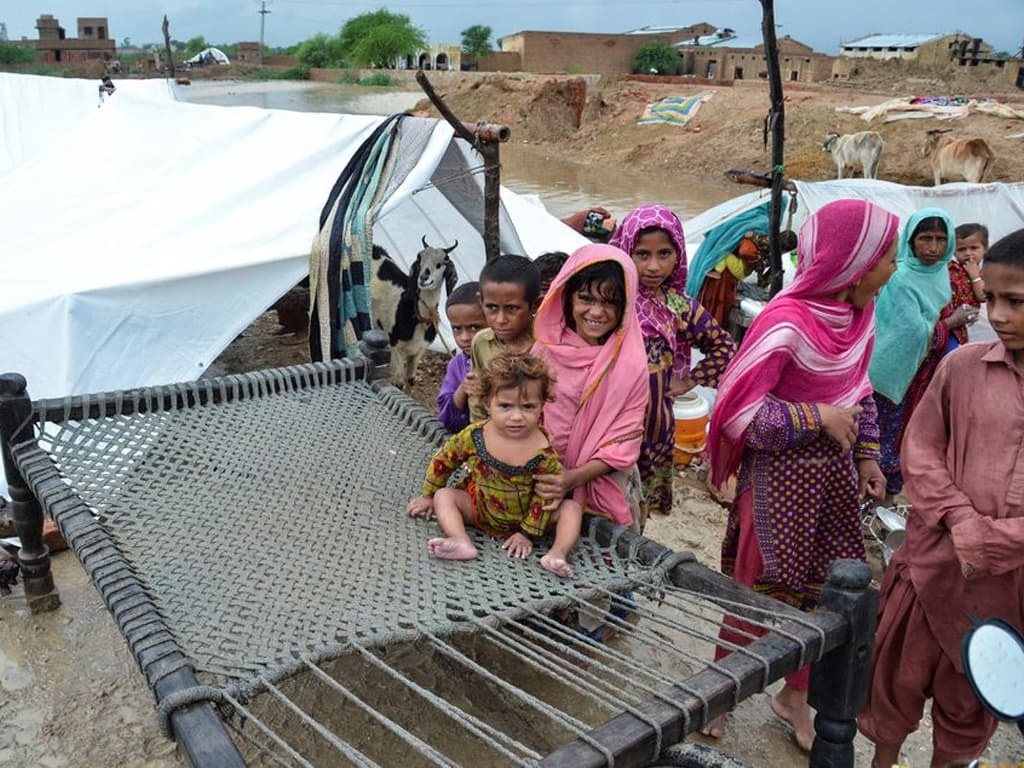

Poverty in Pakistan stems from issues that are deeply rooted in our society, and if we want real change, we must start from the roots as well. It’s difficult to pinpoint where the problem truly begins, but it’s worth giving a try.
In my view, the starting point is political instability, which itself stems from a desire to rule rather than a desire to serve. A mindset built on service would not be so eager to seize power or cling to authority.
Sadly, the urge to rule has become ingrained in our society over centuries. This attitude can be traced all the way back to a long history of subjugation under foreign rulers, and it still shapes our thinking today.
If you look at our country, it makes no sense to see so many vehicles in ministers’ entourages while the numbers tell an entirely different story. With Pakistan now in its 24th structural adjustment programme under the IMF, and almost half the population living below the poverty line, the crisis is clear.
One in three children is out of school. The GDP per capita sits at just $1,643. Floods keep washing away towns, and parts of some provinces are officially marked as severely food insecure. In a land where authority holds more appeal than policy, the queues outside CSS exam centers grow longer than any reform agenda.
Political turmoil hurts business, too. When politicians clash, it creates uncertainty, disrupts transport, shuts down schools, and shakes business confidence. The Pakistan Stock Market always takes a hit during protests and periods of instability. When things get tense, foreign investors look for the exit, pulling their money out; and that damages an economy already hanging by a thread.
As investors leave, the rupee loses value, the cost of imports rises, and inflation takes off. Microsoft’s quiet exit after 25 years in Pakistan hurts investor confidence and narrows opportunities for our top tech talent.
Another example is Careem, the ride-hailing company, which has announced plans to suspend its operations here. If big international companies cannot survive, how can small local businesses? In just the past four years, more than 55 funded startups have shut down or had to pivot drastically. This year alone, 187 textile units have closed their doors, mostly because electricity has simply become too expensive to sustain business. When businesses, especially those earning foreign exchange, collapse, Pakistan’s whole economy suffers.
Every time a business closes, the government loses revenue, whether it’s corporate or income tax. This widens the fiscal deficit, and the state is forced to borrow more, often at worse terms, locking the country into a debt trap. Soon, new loans are needed just to pay off the old ones, deepening reliance on external lenders and shrinking the already small space for genuine progress. On top of all this, the IMF steps in with strict conditions: cut subsidies, broaden the tax base, raise utility tariffs. Our tax system is already skewed.
The rich and influential often find ways to avoid taxes. While we do have taxes on income and corporations, enforcement is selective, and large estates and inherited wealth tend to fall through the cracks. Instead, the state relies heavily on indirect taxes on things like fuel, electricity, and basic goods. This puts an unfair financial burden on the poor, who have no escape.
As the IMF demands higher taxes to boost revenue, inflation climbs higher, worsened by trade deficits and a weakening rupee. The cost of living keeps rising, but incomes do not. The poor are left with the impossible task of stretching stagnant wages to meet expenses that grow by the week, while devaluation continues to erode their hard-earned wages.
Pakistan’s poverty, unlike previous years, has risen visibly as well. With core inflation only rising, one can walk through the markets or along the streets and find people who look educated and well-dressed now forced to beg. This strips away human dignity and self-respect, and should be a collective shame for all of us. We need to elevate our ethical standards and find ways to lift each other up, to serve humanity in the true sense.
The government should focus on making it easier for businesses to grow, especially in their early stages. Tax laws must be enforced fairly, talent must be retained, and a climate of creativity needs to be encouraged. The work to eliminate poverty has to start at the grassroots. No matter how many plans are drawn up for public welfare, nothing will truly change unless our collective outlook as a society transforms.
The recent tragedy in Swat precisely highlights this point. The death of three children in Madyan when a roof collapsed and the sweeping away of two brothers in Malam Jabba were not isolated events. They were failures of institutional responsibility more than environmental catastrophes. Then there was the heartbreaking story of a family picnicking near the Swat River.
After hours of pleas for help, they too were swept away by floodwaters. This was a failure by the state to respond quickly. When the emergency struck, delays in rescue efforts cost lives. More than just a logistical failure, it reflects a deeper, disturbing truth: how little seriousness we attach as a state and society to the value of ordinary citizens’ lives. There is a need to move from individualism toward a collective mindset.
We need to move away from thinking only about ourselves. Those who are privileged must support those who are deprived, in every way possible. If we can develop a true intent to serve, and start seeing others as part of ourselves, perhaps Pakistan’s future can finally begin to change.
Copyright Business Recorder, 2025
The writer is a Chartered Accountant and CEO of the welfare organisation RubySher, which aims to eliminate poverty in Pakistan

























Comments
Comments are closed for this article.