


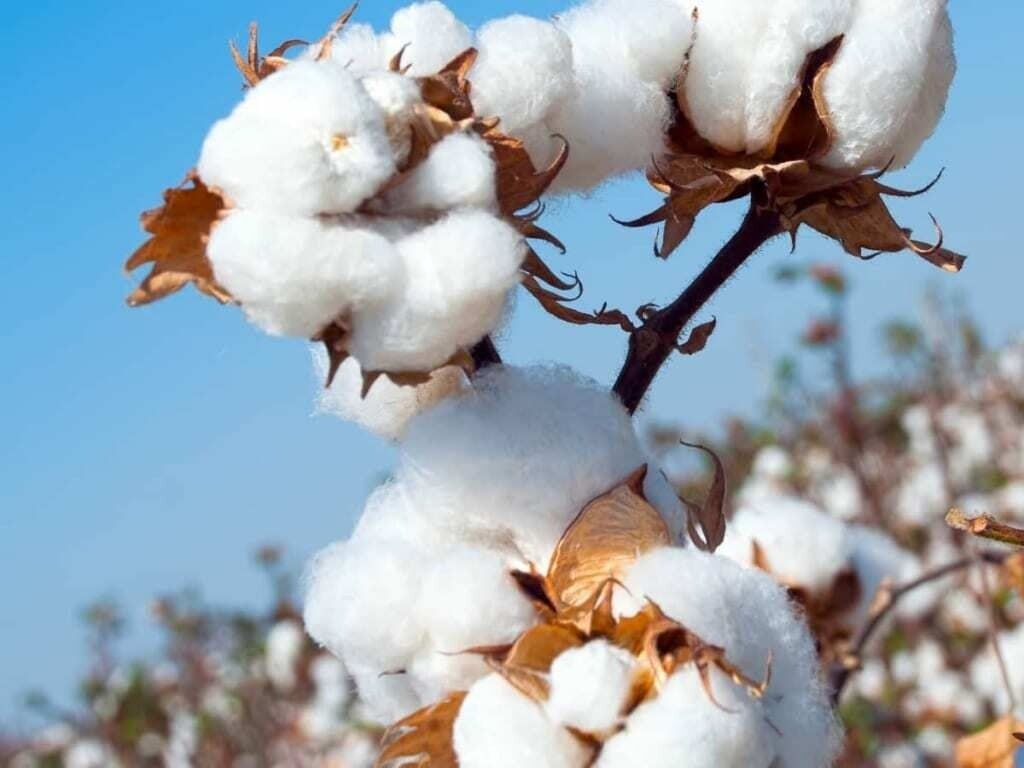

For generations cotton has been the backbone of Pakistan’s agriculture and economy. Known as “white gold,” cotton sustains over 1.3 million farming families, employs millions in the textile and allied sectors, and contributes more than half of the country’s total export earnings.
Yet, in the last two decades, cotton has been in sharp decline. Its traditional strongholds in Sindh and Punjab are increasingly dominated not by white cotton fields but by tall stalks of sugarcane, a shift that has proven disastrous for both agriculture and the economy of Pakistan.
The spread of sugarcane into cotton belts is not accidental. Wherever sugarcane takes root, cotton withers away. This is because the very nature of sugarcane cultivation is incompatible with cotton’s.
Sugarcane requires prolonged irrigation, often leaving fields waterlogged for months. This not only damages soil structure but also increases surrounding soil moisture. Such conditions are highly favorable for pests like Whitefly, Jassid, and Mealybug. The pest pressure spills over into cotton fields, creating an uncontrollable pest complex.
Even repeated pesticide sprays fail, making cotton cultivation near sugarcane unviable. Farmers, facing recurring cotton failures, are compelled to abandon cotton entirely and switch to cane, which appears more stable in the short term due to mill contracts.
At first glance, sugarcane may look like a prosperous cropgreen, tall, and promising. But the economics and sustainability tell a different story.
Pakistan’s sugarcane yields are among the lowest in the world. While Brazil, India, and Thailand achieve 70–80 tons per hectare, and Egypt surpasses 100 tons per hectare, Pakistan struggles with just 45–50 tons per hectare.
This stark difference shows that even with heavy irrigation and high input use, Pakistan cannot compete globally.
The problem is compounded by inferior sugar content. Pakistan’s average sugar recovery rate is just 7-9 percent, compared to India’s 11–12 percent, Brazil/Thailand’s 12–13 percent and Sudan 12-16 percent. This means Pakistan not only harvests fewer tons per acre but also extracts less sugar per ton, making its cane doubly inefficient.
Global Comparison of Sugarcane Yields
====================================================================
Country        Average Yield                                   Notes
              (tons/hectare)
====================================================================
Pakistan          45–50                 Heavy irrigation, high input
                                               costs, low efficiency
Brazil            75–80            World’s largest producer, natural
                                          rainfall supports the crop
India             70–75                 Major producer with monsoon-
                                                    based irrigation
Thailand          75–80              Strong cane industry, supported
                                                by tropical rainfall
Egypt           100–110                     Among the highest in the
                                            world, aided by Nile-fed
                                                  irrigation systems
====================================================================
Sugarcane is also one of the world’s most water-thirsty crops. It requires between 1,500–2,500 mm of water annually, equivalent to 2,000–3,000 liters per kilogram of sugar produced. Pakistan is already a water-stressed country, with per capita availability below 900 cubic meters—well under the international scarcity threshold of 1,000 cubic meters.
Diverting canal water and tube well extraction to feed sugarcane comes directly at the expense of food security and strategic crops like wheat, cotton, and oilseeds. In global practice, sugarcane thrives in rainfed tropical areas such as Brazil, Thailand, and India. In Pakistan, however, it survives only through forced irrigation, making it fundamentally unsustainable in the long term.
The expansion of sugarcane has coincided with a dramatic decline in cotton. Cotton area has shrunk from 3.1 million hectares in 2000 to barely 1.7–2.0 million hectares today.
Cotton production has plummeted from 13–14 million bales to just 4.5–5.0 million bales. This shortfall forces textile mills to import 4–6 million bales annually, costing 2.5–3 billion dollars in foreign exchange. This is a paradox: while Pakistan grows sugarcane at loss-making efficiency, it imports cotton, the very crop that once made it self-sufficient and export-competitive.
The shift from cotton to sugarcane is not just an agricultural problem; it is a social and economic crisis. Millions of rural women earn livelihoods from cotton picking. Cane, being machine-harvested and male-dominated, excludes them, worsening rural poverty. Cotton supports smallholders, while sugarcane profits are concentrated in a handful of mill owners. Cotton is the lifeline of Pakistan’s textile sector, the country’s largest export earner. Its decline weakens the entire export economy.
Globally, the trend is moving away from cane and toward more sustainable alternatives. Europe has shifted largely to sugar beet, which requires less water. Brazil, despite being the largest producer, is diversifying cane for bioethanol rather than expanding raw sugar exports. Many countries are discouraging water-intensive crops in favour of climate-smart, resilient agriculture. Pakistan, on the other hand, is locking itself deeper into sugarcane, against both global trends and its own ecological realities.
If proposed deregulation of the sugar sector is implemented removing zoning laws and licensing restrictions, the consequences will be catastrophic. Mills will expand deeper into cotton belts. Farmers, lured by cane contracts, will abandon cotton altogether. The textile industry will lose its raw material base. Cotton imports and the foreign exchange burden will rise further. Deregulation is not about competition it is a death sentence for cotton.
Sugarcane in Pakistan is unsustainable low yield compared to global averages, low sugar recovery, extremely water-thirsty in a water-scarce country, and socially regressive as it displaces women workers and smallholders. Pakistan’s comparative advantage lies in cotton, not cane. Cotton sustains livelihoods, feeds the textile industry, and earns foreign exchange. Every acre shifted from cotton to sugarcane erodes Pakistan’s economic foundation. The choice is clear: revive cotton, restrict sugarcane expansion, and realign agriculture with sustainability.
Copyright Business Recorder, 2025

PUBLIC SECTOR EXPERIENCE: He has served as Member Energy of the Planning Commission of Pakistan & has also been an advisor at: Ministry of Finance Ministry of Petroleum Ministry of Water & Power
PRIVATE SECTOR EXPERIENCE: He has held senior management positions with various energy sector entities and has worked with the World Bank, USAID and DFID since 1988. Mr. Shahid Sattar joined All Pakistan Textile Mills Association in 2017 and holds the office of Executive Director and Secretary General of APTMA.
He has many international publications and has been regularly writing articles in Pakistani newspapers on the industry and economic issues which can be viewed in Articles & Blogs Section of this website.




















Comments
Comments are closed for this article.