


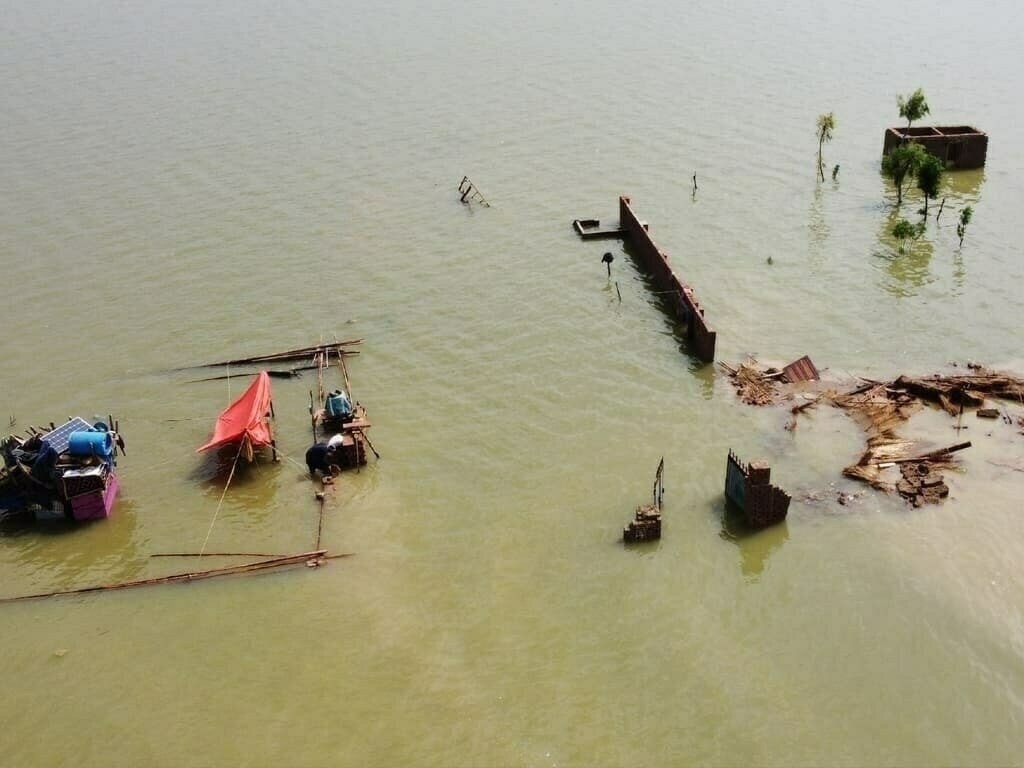

From submerged villages to shattered livelihoods, Pakistan’s floods reveal the bitter truth: a crisis we did not create is the one we suffer most.
With the onset of the monsoon season in Pakistan, which typically lasts from late June to September, the country is once again facing the full force of nature’s madness. Heavy rainfall has triggered extreme weather events across northern and western regions, raising the risk of flash floods and landslides.
According to the Global Climate Risk Index, Pakistan ranks as the 5th most vulnerable country to climate change. The memory of the 2022 floods which killed at least 1,700 people, displaced millions, destroyed vast tracts of agricultural land, and caused billions in losses still looms large.
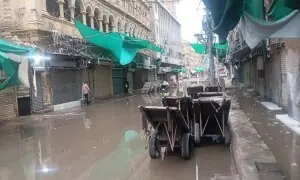
This year, rain-related incidents including roof collapses and electrocutions have already claimed at least 739 lives, including 178 children, since June 26, according to the National Disaster Management Authority (NDMA). The toll has risen sharply in recent weeks, with floods in Sindh and Punjab and deadly landslides in Gilgit-Baltistan and Khyber Pakhtunkhwa.
Another 978 people have been injured, thousands displaced, and 5006 livestock perished. Damages are deepening food insecurity in already vulnerable communities.
NDMA warns the crisis is far from over. Further heavy rainfall is forecast for northern and hilly areas, increasing the threat of urban flooding, landslides, and glacial lake outburst floods (GLOFs) in valleys such as Skardu, Hunza, and Gilgit-Baltistan.
The Pakistan Meteorological Department has issued fresh alerts across northern hill districts and major cities, including Islamabad, Lahore, Rawalpindi, and Gujranwala. Yet the country’s response remains reactive rather than preventive.
But the continual devastation is not just a force of nature; it is the outcome of weak governance and global indifference. Pakistan’s disaster preparedness remains far behind the scale of the challenge.
Warnings are issued but seldom matched with resilient infrastructure. Bridges and drainage systems collapse under predictable stress, and local authorities are stretched beyond capacity. Relief camps are temporary fixes, not long-term solutions. What Pakistan faces is not simply a “natural” disaster it is a systemic failure to climate-proof the country against predictable, worsening monsoon cycles.
Part of the crisis, however, is also self-inflicted. Rapid deforestation, unchecked tourism, and the rush to build hotels, roads, and housing in fragile mountain zones have stripped away natural protections that once absorbed rainfall and stabilized slopes. In Murree and parts of Hunza, forests have been cleared to make way for construction, turning slopes into landslide traps.
Where floodplains once gave rivers space to expand, concrete buildings now block the water’s path until they collapse under its force. Pakistan’s vulnerability is not only about global emissions but also about how recklessly we treat our own environment.
At the same time, the international response has been at best symbolic. Wealthy nations, which are among the worst greenhouse gas emissions, have also promised climate financing and loss and damage cash but delivered little beyond promises.
The gap is starkly evident: Pakistan is not responsible for a crisis it didn’t cause. Pakistan needs more than just money; it needs technology transfer, adaptation expertise, investment in renewable energy and assistance in developing early warning systems and resilient infrastructure. Without such full-throated support, lives will continue to be lost every monsoon as promises caught in the bureaucratic pipelines.
Moving forward will take both swift and sustained action. Nationally, the state needs to shift from crisis management to prevention, investing in weather-proofed homes, modern drainage systems and sufficiently resourced local disaster response teams.
At the same time, Pakistan must treat climate diplomacy as a matter of national security, requiring justice, not charity, from global polluters. The international community needs to live up to its commitments; however, not with token gestures but with sustained investment that reinforce the vulnerable capacity to tolerate extremes of climate.
Climate change ensures that Pakistan will face these tests again next year, and the year after. Whether these events remain recurring tragedies or become manageable challenges depends not on the clouds above us, but on the choices governments and global institutions make today.
Pakistan cannot carry the burden of climate change alone. If the world continues to stall and Pakistan is left to patch cracks instead of building resilience, floods will remain our annual obituary.
Copyright Business Recorder, 2025
The writer is an Assistant Professor at the Pakistan Institute of Development Economics (PIDE). She can be reached via Email at: [email protected]














Comments
Comments are closed for this article.