


Trump’s envoy, China’s encore: South Asia in a new diplomatic key
- Sergio Gor's elevation to one of most sensitive diplomatic roles in Asia has raised eyebrows
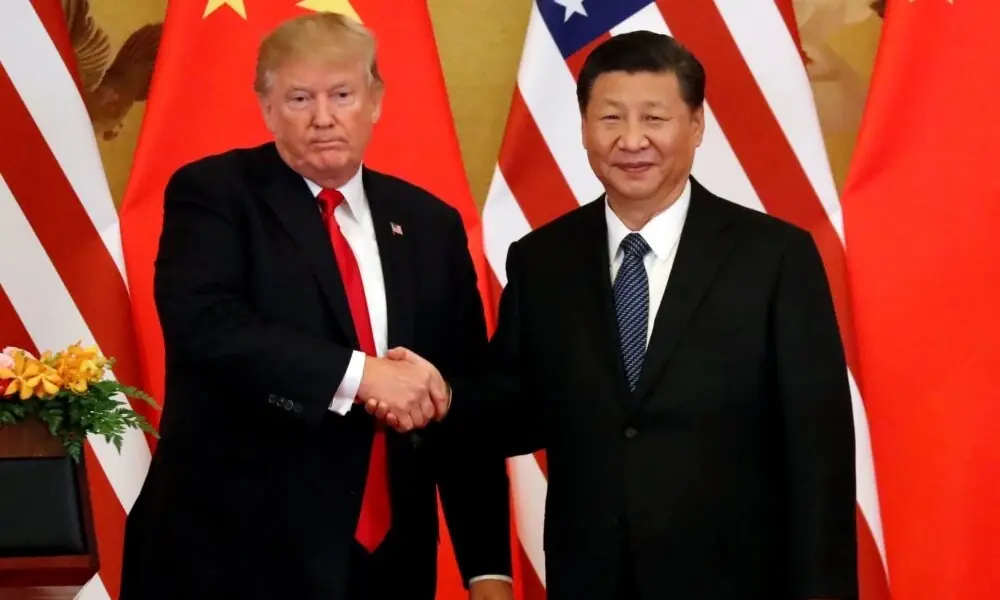

In the theatre of Eurasian diplomacy — where silence often speaks louder than declarations — President Donald Trump has struck a discordant chord. His appointment of Sergio Gor, a fiercely loyal aide with no prior diplomatic experience, as US Ambassador to India and Special Envoy for South and Central Asian Affairs is not merely a personnel decision. It is a strategic signal, a provocation, and perhaps, a miscalculation although some trumpeters are hailing it as Trump’s master stroke move. For India, it is a moment of discomfort. For China, it is an opportunity to amplify its own Eurasian symphony.
Loyalty over diplomacy
Sergio Gor, born Sergey Gorokhovsky in Soviet-era Tashkent, is not a career diplomat. He is a political operative, a publisher of Trump’s books, and the architect of loyalty tests for federal appointees. His elevation to one of the most sensitive diplomatic roles in Asia — amid rising tariffs, oil disputes, and strategic mistrust — has raised eyebrows across New Delhi’s foreign policy establishment.
Trump’s announcement on Truth Social was characteristically personal: “Sergio is a great friend… He worked on my Historic Presidential Campaigns, published my Best-Selling Books… For the most populous Region in the World, it is important that I have someone I can fully trust to deliver on my Agenda.” Not the US agenda — Trump’s agenda.
This conflation of personal loyalty with national diplomacy has unsettled Indian analysts. Kanwal Sibal, former foreign secretary, noted that Gor’s dual role as ambassador and regional envoy is unprecedented and potentially problematic. Others have warned of a “re-hyphenation” of India with Pakistan, reminiscent of Richard Holbrooke’s controversial mandate in 2009.
As Thomas Jefferson once cautioned, “When a man assumes a public trust, he should consider himself a public servant.” Gor’s appointment, however, seems to invert that principle — placing personal allegiance above institutional stewardship.
India’s strategic unease
Officially, New Delhi has remained muted. But the subtext is clear. The appointment comes amid Trump’s imposition of a 50% tariff on Indian goods — including a 25% penalty for purchasing Russian oil. It follows public rebukes from Trump’s aides, who have accused India of “profiteering” off Russian energy and acting as a “laundromat for the Kremlin.”
Congress leader Shashi Tharoor welcomed the filling of the long-vacant ambassadorial post but emphasized the need for “stable interlocutors.” Venture capitalist Asha Jadeja Motwani framed Gor’s appointment as a chance for India to gain direct access to Trump’s inner circle — but also warned that communication must now be “crystal clear.”
Behind the diplomatic niceties lies a strategic unease. India has long resisted being clubbed with Pakistan or Afghanistan in US strategic frameworks. Gor’s dual mandate threatens to revive that hyphenation. Moreover, his lack of regional expertise and overt political alignment with Trump’s America First doctrine risks undermining the bipartisan consensus that has traditionally underpinned US-India ties.
Mahatma Gandhi’s words echo here: “Politics without principle is one of the seven social sins.” India’s foreign policy establishment now faces the challenge of navigating a relationship that risks being shaped more by personality than principle.
China’s strategic silence
While Beijing has not officially commented on Gor’s appointment, its posture speaks volumes. China has long preferred to let others overplay their hand while it consolidates influence through quiet diplomacy. In contrast to Trump’s tariff tantrums and personal provocations, China has pursued a three-act Eurasian strategy rooted in mediation, engagement, and regional ownership.
Ukraine mediation
China’s special envoy Li Hui participated in the Saudi-hosted Ukraine peace summit, signalling Beijing’s willingness to act as a neutral broker. While Russia was absent, China’s presence lent credibility to its 12-point peace proposal and reinforced its image as a stabilizing force in Eurasia.
India outreach
Despite border tensions, China has resumed backchannel diplomacy with New Delhi. Foreign Minister Wang Yi’s recent visit to Moscow included remarks that subtly contrasted India’s oil purchases with China’s own strategic energy diplomacy. Beijing’s restraint — avoiding public escalation — stands in stark contrast to Trump’s punitive approach.
Afghanistan engagement
China has maintained its embassy in Kabul, engaged with the Taliban, and proposed infrastructure investments. Its approach is pragmatic, non-ideological, and rooted in regional stability. Unlike Trump’s envoy, who must juggle India, Pakistan, and Central Asia, China’s diplomats operate with clarity and continuity.
Diplomatic achievements: China’s crescendo
China’s Eurasian diplomacy is not just reactive — it is architectural. Recent achievements include:
● ASEAN engagement: Completion of the Version 3.0 China-ASEAN Free Trade Area and rollout of “Lancang-Mekong Visas.”
● South Asia outreach: Wang Yi’s visits to Sri Lanka, Maldives, Pakistan, and Nepal reaffirmed China’s commitment to regional integration.
● Head-of-State diplomacy: President Xi’s engagements with over 130 foreign leaders in 2024, including summits with Africa, Arab states, and Central Asia, have reshaped China’s global narrative.
These moves reflect a strategic doctrine that values restraint, regional ownership, and multipolarity. In contrast to Trump’s transactional approach, China offers predictability—even if cloaked in ambiguity.
As Confucius once said, “The superior man acts before he speaks, and afterwards speaks according to his actions.” China’s diplomacy exemplifies this ethos — quiet, deliberate, and deeply strategic.
A tale of two mandates
The contrast between Gor’s appointment and China’s diplomatic choreography reveals two competing visions for South Asia:
● Trump’s vision: Personal loyalty, economic coercion, and unilateralism. Gor’s mandate is to enforce Trump’s agenda, not to build regional consensus.
● China’s Vision: Strategic patience, regional integration, and narrative sovereignty. Beijing’s diplomats are architects, not enforcers.
For India, the dilemma is acute. Aligning too closely with Trump risks alienating China and undermining its own strategic autonomy. Resisting Gor’s overtures could trigger further tariffs and diplomatic isolation. The middle path — engaging with Gor while deepening ties with China and the Global South — may be India’s best bet.
Conclusion: The sound of strategy
Sergio Gor’s arrival in Delhi is not just a personnel shift — it is a test of India’s strategic maturity and China’s diplomatic finesse. As Trump plays his solo, China continues its symphony. One is loud, erratic, and personal. The other is quiet, deliberate, and systemic.
In this Eurasian concerto, the question is not who plays the loudest note — but who composes the lasting melody. Or as Benjamin Franklin once mused, “Speak little, do much.”
The article does not necessarily reflect the opinion of Business Recorder or its owners.
The writer is a retired Group Captain of PAF, and now a security analyst




















Comments
Comments are closed for this article.