


‘Committee meeting’ under SC Act: Two senior-most SC judges explain their position
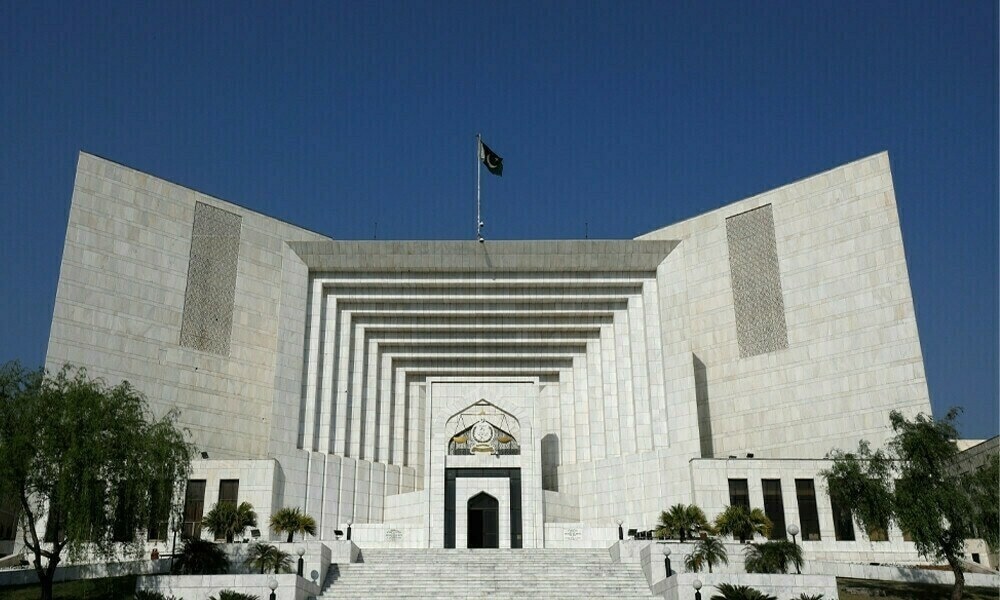

ISLAMABAD: Justice Syed Mansoor Ali Shah and Justice Munib Akhtar explain their position of convening a meeting of the Committee, set up under Supreme Court (Practice and Procedure) Act, 2023, and to decide about fixation of petitions challenging 26th Constitutional Amendment before the Full Court.
The SC most senior judges on Wednesday wrote a five-page letter after the Supreme Court on August 14 made public the minutes of a Committee constituted under Supreme Court (Practice and Procedure) and the Chief Justice of Pakistan’s letter.
The letter mentioned; “Since the minutes of the meetings and record relating thereto have been uploaded to the SC website despite the Committee’s interdict and are now irreversibly in the public domain, we require that the Registrar forthwith also place this on the website alongside the record and material pertaining to the meeting of 31-10-24.”
It said; “One of us (Justice Mansoor) has been a member of the Committee, set up under Act 2023, since 24-01-2024. Justice Munib became its member on 11-03-2024 but was removed from the Committee (firstly, by means of an amending Ordinance dated 19-09-2024 and then by the SC (Practice and Procedure) (Amendment) Act, 2024.”
The letter maintained; “The minutes of the meeting of 26-11-2024 revealed that the Committee, over dissent of Justice Mansoor, decided by majority and with specific reference to the uploading of minutes on the SC website, that “the minutes will be with restricted circulation”, i.e., will not be placed in the public domain. However, the minutes of subsequent meetings do not show that the Committee altered its decision, nor is Justice Mansoor aware of any such decision.”
“The obvious question that arises is as to why have the minutes now been publicly disclosed despite the interdict placed by the Committee itself? This may well become clear once the judicial year of the Court begins in September, and the Constitutional Benches (currently in hiatus) start functioning again.”
Both the senior judges have given background of the meeting of 31st October, 2024, stating that in the morning of that day they met with the CJP in his chambers to impress upon him the importance of constituting a Full Court to hear the petitions challenging the vires of 26th Constitutional Amendment.
However, the CJP despite the strenuous efforts did not accept their position, stating that under the 26th Amendment such matter could only be heard by the newly conceived Constitutional Benches. While we pressed the point and asked for the constitution of the Full Court, the CJP remained reluctant, but then requested that he be given one hour and that he would meet us again thereafter.”
Later on the CJP met them in Justice Munib’s chambers and stated that the majority of the judges had expressed disinclination for a Full Court hearing the challenges. As the CJP was unwilling to place the matter before a Full Court on the judicial or even the administrative side, then we, as member of the Committee had no option but to convene the meeting under the Act, but the CJP did not attend the meeting.
We, as majority members of the Committee decided that the petition challenging the 26th Amendment be fixed before the Full Court on November 4, 2024.
The letter noted that the majority decision of the Committee held on 31-10-24 was legally binding decision, which could not be disregarded by anyone.
When the petitions were not fixed on November 4, 2024 then we wrote again, but this letter too was, regrettably, disregarded.
They wrote that in the Judicial Commission of Pakistan (JCP) meeting, held on November 5, 2024, both the notes penned by the CJP were neither sent to the other members of the Committee. Instead, one of the notes was read out by him at the meeting.
The judges stated that the JCP was not the forum for such a matter, nor could the Committee’s decision of 31-10-24 be forwarded to the Commission.
Copyright Business Recorder, 2025

























Comments
Comments are closed for this article.