


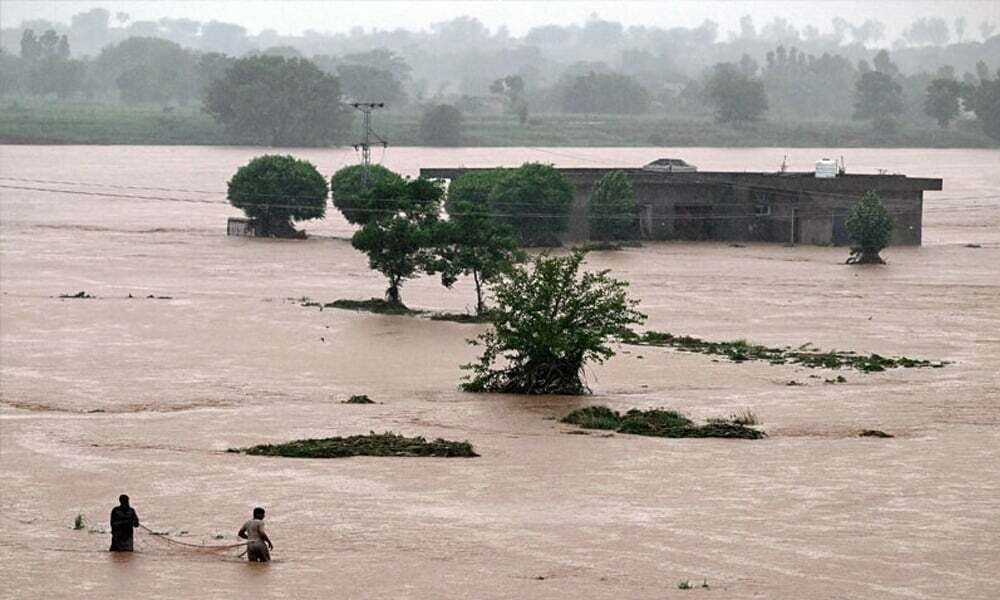
EDITORIAL: Torrential rains and floods sweeping across Khyber Pakhtunkhwa (KP) have once again laid bare the weaknesses in our disaster preparedness and the devastating toll of climate change on vulnerable communities. So far, at least 323 lives have been tragically lost, with around 150 people still missing.
Entire villages have been wiped out, roads washed away, and critical infrastructure damaged beyond immediate repair. The human suffering caused by these floods is immeasurable, and the worst may not be over yet. According to the National Disaster Management Authority (NDMA), heavy downpours are expected to continue until August 22, with two to three more spells of rain forecast in September.
This is not the first time a climate change-induced disaster has struck. In 2022, record-breaking monsoon rains triggered floods that inundated one-third of the country, claimed some 1,700 lives, and displaced more than 33 million people. KP, with its mountainous terrain in the north, remains particularly prone to flash floods and landslides.
But the scale and intensity of this year’s flooding point to a deeply worrying trend: climate change is accelerating the frequency and severity of extreme weather events across Pakistan.
In KP and Gilgit-Baltistan (GB), a dangerous mix of rising temperatures, glacial melt, and unpredictable rainfall patterns is creating increasingly hazardous conditions. This year, the Pakistan Meteorological Department had warned of 15 percent higher-than-normal monsoon rainfall — warnings that were not matched by adequate preparation on the ground. Experts point out that floods, in themselves, are not new phenomena. What makes them so destructive now is human interference with natural waterways.
A major factor behind the scale of devastation in KP, GB, and parts of Azad Jammu and Kashmir (AJK) is unregulated construction. The unchecked building of homes, hotels, and roads in the path of rivers, nullahs, and flood channels has blocked the natural flow of water. Over the years, encroachments on riverbanks and floodplains have become dangerous. When torrential rains hit, water follows its course — through homes, markets, and lives.
While climate change is intensifying extreme weather, it is poor planning and a lack of enforcement of land use and zoning regulations that are greatly amplifying the damage. The devastation in KP underlines the urgent need for robust land management policies and stricter regulation of construction in high-risk zones.
For far too long, authorities have turned a blind eye to illegal and ill-advised development projects, often due to political or commercial pressure. Now, ordinary people are paying the price with their homes, livelihoods, and lives.
Looking ahead, both the provincial and federal governments must prioritise rebuilding with resilience. This means not just restoring what has been lost, but rethinking how we plan and manage our towns, villages, and cities — especially those near rivers, mountain streams, and other water bodies.
Equally important is better preparedness. That calls for serious investment in climate adaptation, reforestation, early warning systems, and community awareness. Only through such measures can we hope to make future disasters less frequent — and less deadly.
Copyright Business Recorder, 2025




















Comments
Comments are closed for this article.