


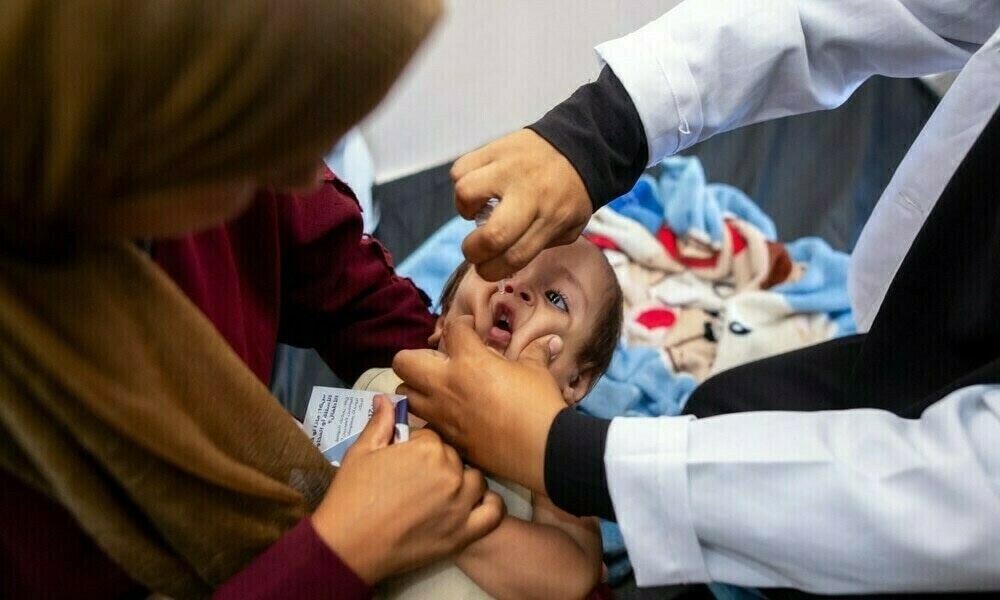
EDITORIAL: The confirmation of yet another polio case in Lakki Marwat, Khyber Pakhtunkhwa (KP), raising the national tally to 19 this year, is an alarming reminder that Pakistan’s fight against this crippling disease is far from over.
Despite decades of vaccination drives and international support, poliovirus continues to threaten children, particularly in areas where vaccine coverage remains low and resistance to immunisation is high.
This entirely preventable disease still finds footholds in tribal districts of KP and parts of Balochistan, where vaccine refusal is widespread.
The resistance is driven by misinformation, distrust of health initiatives, religious misconceptions, and conspiracy theories that have taken deep roots in some communities. These challenges are further compounded by serious security threats, which prevent vaccinators from safely reaching remote or resistant populations. Over the past decade, extremist violence has directly targeted polio health workers and their police escorts.
Many of these workers — brave individuals, often women — have been shot and killed while administering vaccines to children through door-to-door campaigns. Their escorts, tasked with ensuring their safety, have also paid with their lives. These attacks have created a climate of fear.
In high-risk areas, vaccinators are understandably hesitant to do their work. In some cases, drops are skipped altogether, with only the ink mark placed on a child’s finger to falsely indicate vaccination — just to avoid confrontation.
Such fear also discourages families from cooperating with vaccination teams. In certain regions, the threat is so severe that immunisation campaigns are suspended altogether. This allows the virus to continue circulating, infecting and disabling children who should have been protected.
Addressing this crisis-like situation requires a practical and committed response. First, the security of health workers must be prioritised. These individuals are on the front lines of a national public health battle and must be provided with the protection they need to carry out their work safely.
Second, a shift in strategy is needed, one that focuses on building trust from the ground up. Local religious leaders, tribal elders, teachers, and community influencers must be engaged as partners to counter myths and misinformation.
Pakistan’s Polio Eradication Programme has made important strides, with case numbers declining significantly over the years.
However, the latest case in Lakki Marwat is a sobering reminder that the fight for eradication is yet to be won. As long as the virus continues to circulate, no child is truly safe, and Pakistan will remain one of only two countries in the world — alongside Afghanistan — where polio remains endemic. We seem to be stranded in the last mile to the finishing line. With renewed commitment, stronger protection for health workers, and sustained community engagement, reaching that goal should not be difficult.
Copyright Business Recorder, 2025






















Comments
Comments are closed for this article.