


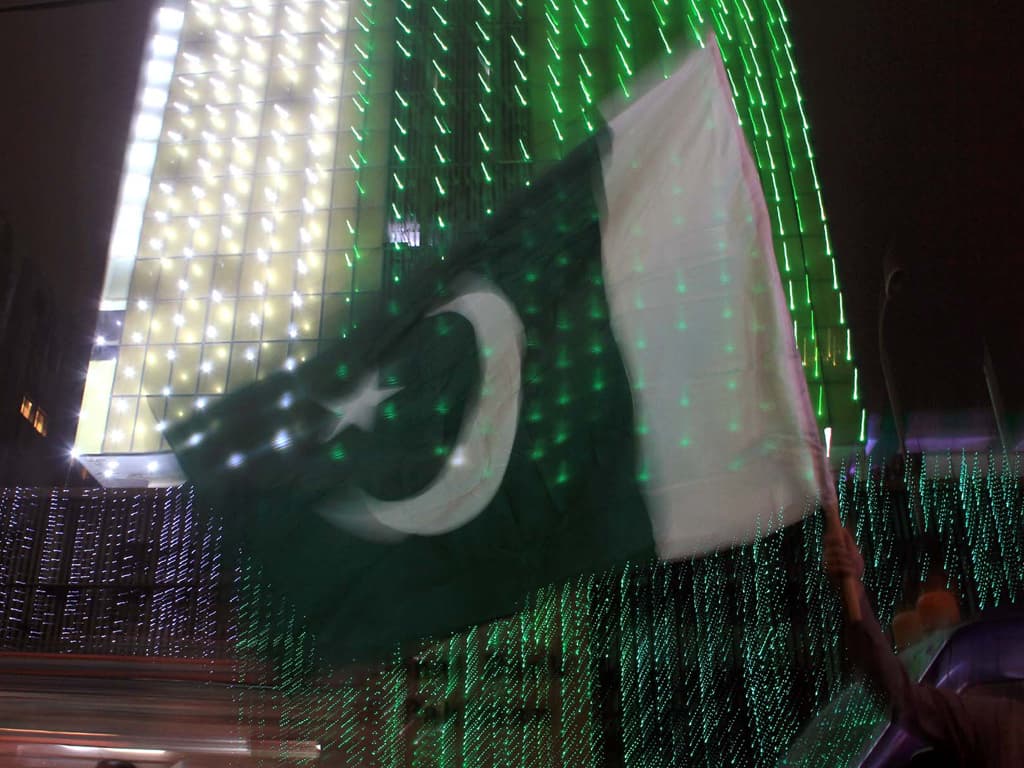
EDITORIAL: As Pakistan celebrates Independence Day today, the promise of freedom still rings hollow for the vast majority of its citizens. For many, this means living under crushing economic pressures, facing a dangerous security environment, and most tragically, grappling with a democratic project that has yet to deliver on its ideals 78 years after the nation’s birth.
The grip of an entrenched, narrow elite over the nation’s resources, decision-making and opportunities has left little space for the aspirations of ordinary Pakistanis to find voice or fulfilment.**
The real tragedy here is that in the years since 1947, little progress has been made in building institutions capable of safeguarding political and civic freedoms, or ensuring economic empowerment for the majority.
Leafing through the editorials and columns published on Independence Days past, one finds a recurring lament: the nation’s quest for true sovereignty thwarted by not just military dictators, but also civilian leaders wedded to the same authoritarian impulses, with those devoid of popular mandate readily shaping the fortunes and futures of millions, leaving Pakistan perpetually clinging to the coattails of distant superpowers — a reality that many would argue endures to this day.
Time and again our rulers have ignored that the true purpose of a state is to safeguard the fundamental rights of its people — their freedoms, their equality before the law and their ability to shape their own future — while upholding justice and creating conditions in which all can live with dignity, security and the chance to prosper economically.
Instead, those who have ruled us have chosen to prioritise the dominance of unelected power centres and the privileges of a small elite. They have also ignored key lessons from history: that nations thrive when they tap into the collective wisdom of their peoples, value and celebrate their diversity — of opinions, cultures and ethnicities — and recognise that unity is strengthened, and not weakened, by respecting that diversity.
Yet when the right to vote is repeatedly subverted, the people’s will cast aside, elections stripped off their credibility and the collective wisdom of the citizenry sidelined, the fundamental groundwork of prosperity for the many is never laid.
When these basic prerequisites for collective well-being are missing, it is worth asking what exactly are we celebrating on Independence Day today? Indeed, the state of our independence can be judged from the fact that the governing elite readily hail as achievements the deals they strike with dominant global powers — arrangements that may deliver some token gains to select interests, but then are flaunted as justification for the elite’s continued hold on power. This, unfortunately, has been a recurring pattern throughout our history, made inevitable by the lack of genuine electoral legitimacy of our rulers.
This absence of representative governance is also reflected in the way our economy is structured. Instead of enabling broad-based economic empowerment, the system largely serves a small segment, with economic opportunities, access to resources and wealth creation remaining out of reach for the majority. Without policies that expand economic inclusion, and provide social and financial security, the promise of a better life will remain a distant ideal for most citizens.
True independence, therefore, cannot be claimed while the majority remain economically powerless, and the structures of the economy continue to perpetuate inequality.
It is worth recalling here the Quaid-e-Azam’s reminder to the nation on Pakistan’s first Independence Day anniversary in 1948, “Nature has given you everything; you have got unlimited resources … it is now for you to build, and build as … well as you can.” That building, however, can only happen when the people are free to shape their own future; without respect for their will, even abundant resources cannot fulfil this nation’s immense potential.
Copyright Business Recorder, 2025




















Comments
Comments are closed for this article.