


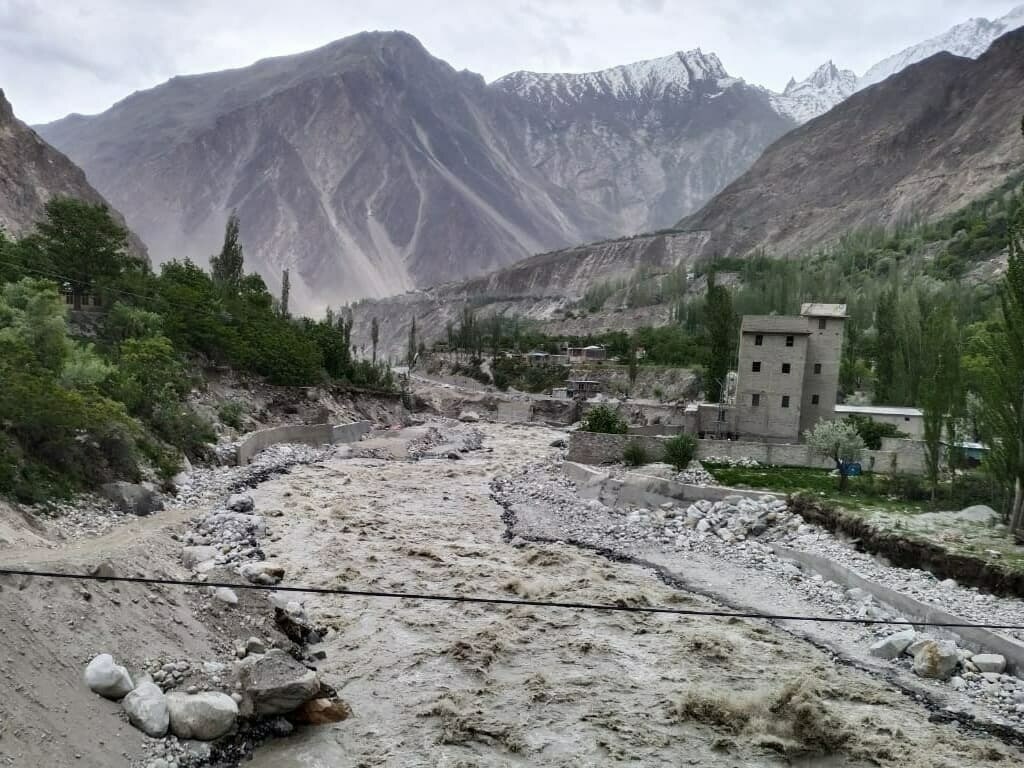
EDITORIAL: It’s good to see the prime minister visits flood-hit Gilgit-Baltistan (GB). It’s better than not going at all. But as always, it comes after the fact — after the cloudbursts, after the landslides, after the destruction, and after lives have been lost. If climate change is real, as the PM rightly admitted, then why is every disaster treated like a surprise?
There’s nothing sudden about any of this. The world has known for decades that global warming is accelerating. Pakistan has known for years that it sits at the frontline of the fallout. Gilgit-Baltistan, in particular, is no stranger to erratic weather, melting glaciers, and monsoon chaos. Yet the state only seems to react once disaster strikes — and rarely, if ever, before.
The prime minister’s acknowledgment that Pakistan bears little responsibility for global warming yet suffers among the worst consequences is valid and often repeated. But that’s not a defence for inaction. It’s an argument for better preparation. If you know the floods are coming, if you know the region is vulnerable, if you know people are going to die, then why wait for tragedy to play out on national television before mobilising resources?
This year’s monsoon was forecast to be more erratic. The GB terrain is already fragile. That these elements would collide violently was not just predictable, it was statistically likely. But instead of proactive coordination, risk mapping, or early infrastructure deployment, we get rescue helicopters after villages have already washed away. We get tents after homes are gone. We get field visits after funerals.
And once the headlines fade, the usual pattern resumes. The NDMA goes quiet. The federal and provincial governments begin to disengage. Local administrations are left to fend for themselves, with whatever meagre budgets they have. Climate change, like every other crisis in this country, becomes just another soundbite — until the next season of catastrophe.
The PM has now ordered a national climate strategy, improved forecasting systems, and enhanced institutional coordination. These are necessary steps. But they’re also recycled promises, repackaged each time a new flood or heatwave hits. The bureaucratic muscle memory is not one of preparation, but of post-disaster optics. And while tents and C-130s may look impressive on paper, they don’t substitute for functioning disaster readiness.
At some point, this institutional negligence will need to be called what it is: criminal. When preventable tragedies are allowed to unfold year after year, when lives are lost in areas already flagged as high-risk, when no meaningful learning takes place despite repeated devastation — then it is no longer just poor governance. It is complicity.
There’s also the matter of international climate financing. The PM wants swift mobilisation of adaptation funds, which is fair. But credibility matters. Donor countries and agencies are unlikely to take Pakistan seriously unless it shows it can do its own homework — start building local resilience, make data-driven policy, and enforce land, construction, and zoning laws with climate sensitivity in mind. Climate diplomacy starts at home.
Gilgit-Baltistan doesn’t need post-disaster sympathy; it needs pre-disaster strategy. Pakistan doesn’t need more statements of concern; it needs structural transformation. And if the state keeps pretending that climate emergencies are unpredictable acts of nature, then its failure to plan will continue to cost lives.
Rescue is not policy. Reaction is not leadership. And survival, in the face of foreseeable crisis, should not feel like luck.
Copyright Business Recorder, 2025

























Comments
Comments are closed for this article.