



In a region where geography offers a natural advantage for trade, Pakistan and Afghanistan have long struggled to translate proximity into prosperity. However, the recent implementation of a bilateral Early Harvest Programme marks a pivotal opportunity to turn the page.
The programme is effective from August 1, 2025, to July 31, 2026, under which both countries will offer mutual tariff concessions on key agricultural goods. Pakistan will reduce duties on Afghan tomatoes, grapes, pomegranates, and apples, while Afghanistan will cut tariffs on Pakistani potatoes, bananas, quinoa, and mangoes.
Although reduced, duties will remain between 22 percent and 27 percent, allowing continued revenue collection. The programme is expected to boost bilateral trade and serve as a foundation for negotiating a more comprehensive preferential trade agreement in the future. With reciprocal tariff concessions on key agricultural exports now in effect, the two countries have taken a tangible step toward a more stable and mutually beneficial economic relationship.
Pakistan once commanded nearly 80 percent of Afghanistan’s import market, an unrivaled position rooted in geographical proximity, shared borders, and cultural ties. However, that dominance has steadily eroded in recent years. Bilateral trade, which peaked at USD 2.86 billion in 2011, declined sharply to USD 1.39 billion in 2020 before partially recovering to USD 2.17 billion in 2024.
This downward trend highlights the need for renewed and structured engagement. The recently launched Early Harvest Programme in the agricultural sector is a timely and encouraging initiative, and similar sector specific programs particularly in manufacturing, construction materials, and pharmaceuticals could serve as important mechanisms to revive and expand trade ties. If successfully implemented, such initiatives could help restore Pakistan’s foothold in the Afghan market and build a resilient bilateral trade architecture.
Despite the promise of enhanced connectivity and mutual prosperity, trade between the two nations remains constrained. Rather than emerging as a dynamic conduit between South and Central Asia, the bilateral relationship continues to be hampered by policy fluctuations, limited trust, and underutilized potential.
Over the past two decades, trade between Pakistan and Afghanistan has shown considerable fluctuation, reflecting the evolving political, economic, and logistical dynamics between the two neighboring countries.
In 2005, Pakistan’s exports to Afghanistan stood at approximately USD 1.06 billion, significantly surpassing imports, which were a modest USD 53 million, highlighting a trade relationship heavily skewed in Pakistan’s favour. This trend of export dominance continued through the years, peaking in 2011 at over USD 2.66 billion in exports and a total trade volume of nearly USD 2.86 billion.
However, subsequent years saw a gradual decline, with exports dipping below USD 1 billion in 2020 due to a mix of regional instability, border closures, and trade policy shifts. Imports from Afghanistan, while historically low, began to increase marginally, reaching USD 957 million in 2022, showing signs of a slightly more balanced relationship.
By 2024, total trade between the two countries rebounded to over USD 2.17 billion, signaling a potential revival in economic engagement, especially as both sides continue to emphasize regional connectivity and cross border commerce. Despite challenges, the long-term trade figures underline the enduring economic interdependence and the untapped potential of bilateral trade, given their unique geographical proximity.
People-to-people connectivity is vital to sustaining trade, yet stringent visa policies and restricted border crossings continue to hinder Pakistan-Afghanistan commerce. While tariff reductions are important, true trade facilitation demands improved ease of doing business, including the smooth movement of both goods and individuals. Programmes like the Early Harvest initiative must also address these mobility challenges to unlock the full potential of bilateral trade.
Absence of a harmonized Transport and Documentation (TAD) mechanism severely hinders efficient cross-border trade between Pakistan and Afghanistan. Delays due to paper-based processes, duplicated inspections, and inconsistent application of rules increase transaction costs and reduce the competitiveness of exports.
While trade has modestly rebounded to over USD 2.17 billion in 2024, it still lags behind its true potential due to these inefficiencies. Introducing standardized electronic data interchange (EDI), adopting TIR (Transports Internationaux Routiers) systems, and aligning protocols with international best practices can streamline cross border logistics and improve economic resilience on both sides.
Tariff inconsistencies continue to pose a significant obstacle to Pakistan-Afghanistan trade. Pakistan’s exports, which reached USD 2.66 billion in 2011, have seen a marked decline, partly due to tariff-related disruptions and policy volatility. The lack of aligned tariff structures and unpredictable customs duties have especially affected trade in perishables and essential goods, discouraging stability and trust among business communities.
To reinvigorate trade flows, both nations should prioritize tariff rationalization through structured engagement and regional mechanisms like SAFTA. Building on the Early Harvest Programme, targeted reforms in key industrial sectors and priority exports are essential for long-term, sustainable trade growth.
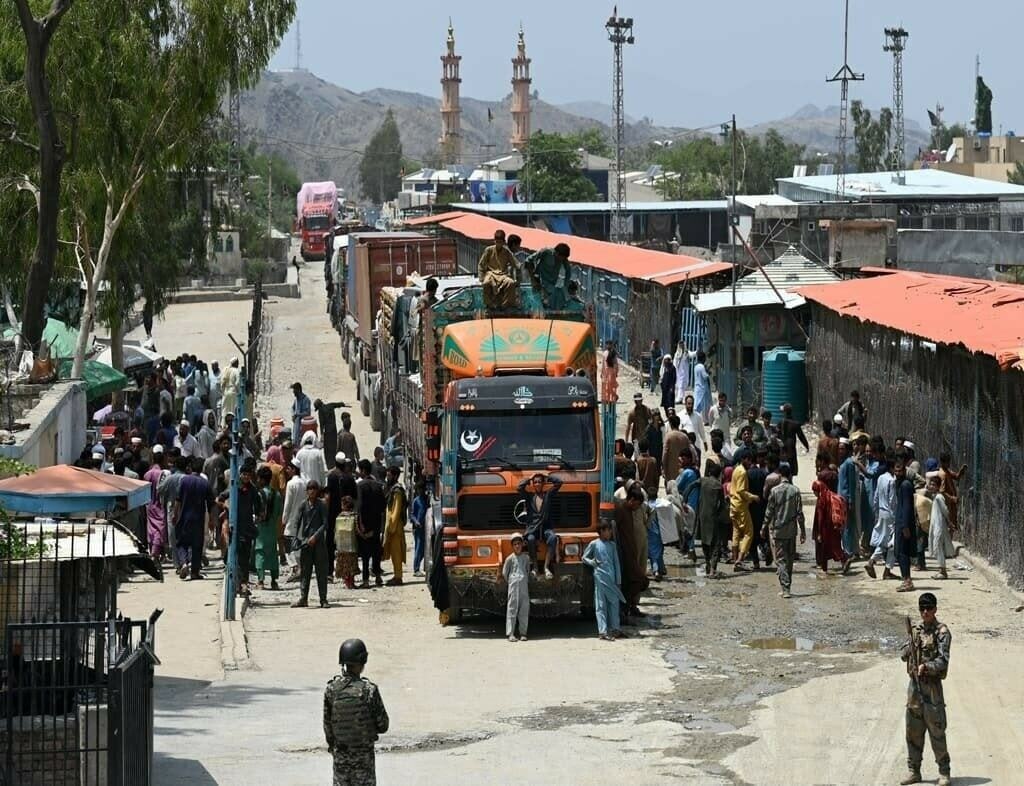
Frequent and unannounced closures of key crossing points such as Torkham and Chaman have disrupted trade flows and led to massive losses on both sides. These closures often prompted by security concerns or diplomatic tensions have not only stranded freight but also increased demurrage costs and undermined supply chain reliability.
For instance, after trade hit a high of nearly USD 2.86 billion in 2011, trade in 2020 declined to under USD 1.4 billion due to recurrent disruptions that contributed to a downward trend. Sustainable economic cooperation demands a protocol based approach to border management, wherein trade routes remain open with only targeted, proportionate controls in times of crisis.
Efficient movement of freight vehicles and goods remains a challenge, largely due to limited border infrastructure, inconsistent customs procedures, and lack of coordination between regulatory agencies. Afghan trucks are often restricted in their ability to move beyond certain designated points within Pakistan, while Pakistani freight faces similar constraints. These non-tariff barriers have led to congestion, delays, and inflated transport costs.
Frequent suspension of pedestrian movement at Torkham, even for medical or educational travel, further exacerbates tensions and dampens the spirit of economic cooperation. Establishing a joint border facilitation authority and a business friendly visa regime would significantly enhance mutual trade prospects and human connectivity.
To insulate economic cooperation from broader political turbulence, both governments must institutionalize regular dialogue through an economic track. Establishing a dedicated bilateral economic council or secretariat can ensure that trade remains a consistent point of engagement, even during political downturns. This depoliticized approach would foster long term planning and mutual trust among traders and policymakers alike.
Creating joint national and border level trade facilitation committees with representation from customs authorities, private sector stakeholders, and logistics operators can resolve operational bottlenecks in real time. These committees would serve as platforms for coordination, dispute resolution, and monitoring of bilateral trade flows, ultimately ensuring smoother and more reliable trade across crossing points.
A mutual commitment to advance notification of new trade related regulations, tariffs, or border protocols is essential to reduce uncertainty and prevent sudden disruptions. Establishing a bilateral policy notification mechanism possibly within an information sharing digital portal can help traders prepare in advance and adapt their supply chains accordingly, boosting overall confidence in the trading environment.
Regular exchange of trade delegations, business forums, and chamber to chamber engagements can foster trust, identify sector specific opportunities, and build institutional linkages. Encouraging visits not only by officials but also private investors and SMEs from both countries would enhance mutual understanding and help translate policy into practical commercial outcomes.
Unlocking the full potential of Pakistan-Afghanistan trade demands more than technical fixes; it requires unambiguous political will. Businessmen and traders still wait in long queues for documentation, visas, and clearances, while, paradoxically, elements that threaten peace and stability often find fewer barriers to cross. This troubling contrast must be addressed head on.
As Russia opens its doors to Afghanistan and regional players rush to fill the trade vacuum, Pakistan, however, risks losing its edge. The border with Afghanistan must no longer be a line of suspicion; it must become a lifeline of opportunity.
Only through bold political will, transparency, and economic diplomacy can Islamabad and Kabul reclaim their shared trade future. It’s time to stop watching others move in and start building a partnership that delivers for the people, stabilizes the region, and secures Pakistan’s place at the heart of the Afghan economy.
Copyright Business Recorder, 2025
The writer is Director Research and Development at SAARC Chamber of Commerce and Industry




















Comments
Comments are closed for this article.