


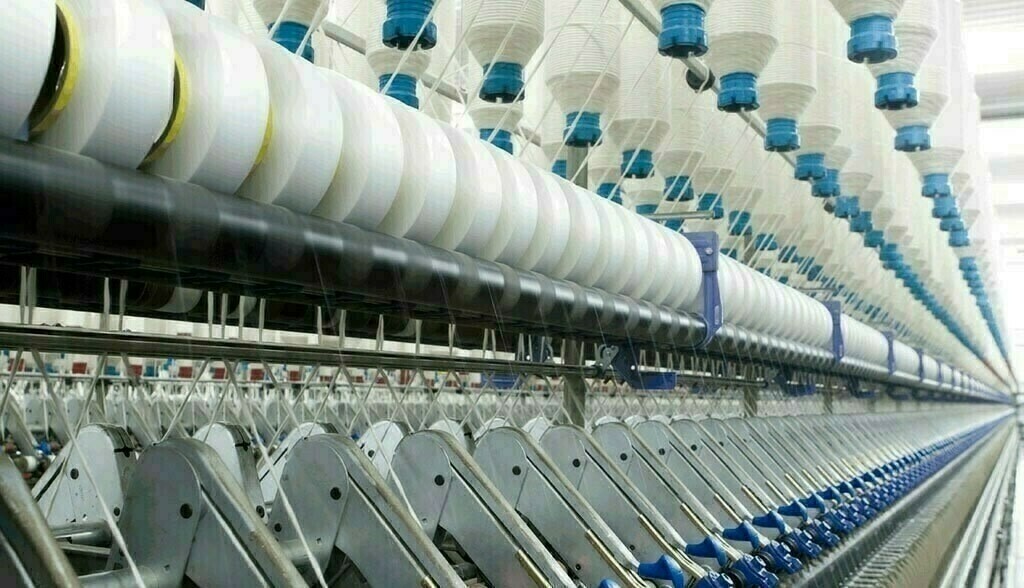
The Pakistan Textile Council (PTC), a not-for-profit research and advocacy platform, has raised concerns over recent amendments to the Export Facilitation Scheme (EFS) notified by the Federal Board of Revenue (FBR), warning that the changes, particularly the exclusion of key raw materials like cotton and yarn, will severely undermine the country’s textile exports.
In a press statement released on Saturday, PTC said that the amendments notified by the FBR through SRO 1359(I)/2025, which, if implemented in their current form, “will critically damage Pakistan’s textile and apparel exports at a time when the sector is already under immense external pressure”.
“PTC strongly urges the Government of Pakistan to intervene and suspend the enforcement of these amendments until a consensus-based revision is undertaken in line with the recommendations of the PM-mandated committee,” it said.
As per the statement, PTC noted that despite the formation of a high-level committee, chaired by Planning Minister Ahsan Iqbal, to review and rationalise the EFS in consultation with the private sector, the recommendations of the committee “have been completely disregarded”.
“The newly notified amendments have bulldozed recommendations of the committee without addressing the industry’s core concerns. The most damaging provision is the exclusion of essential raw materials, including cotton, cotton yarn, and grey cloth, from the scope of EFS,” PTC said.
The council elaborated that these materials form the backbone of Pakistan’s textile value chain and their exclusion will mean exporters must now pay import duties and sales tax upfront—despite being export-oriented entities that generate vital foreign exchange for the country.
“This is effectively a tax on exports,” said Fawad Anwar, Chairman of PTC. “It is unfathomable that at a time when Pakistan is struggling to stabilise its economy and secure foreign exchange, the government would take steps that make it harder—not easier—for exporters to survive.”
Pakistan Textile Council voices concerns over proposed amendments to EFS
The PTC shared that it has submitted detailed objections and policy recommendations to Chairman FBR, Rashid Langrial, and has formally escalated the issue to the Prime Minister’s Office, Minister for Planning, Minister for Commerce, and Minister for Finance.
The council urged the government to immediately withdraw the exclusion clause and reconsider other restrictive provisions that will paralyse the EFS regime.
Key objections raised by PTC include:
• The input utilisation period should remain at least 18 months for all EFS users, with reconciliation statements submitted as per rules.
• Permitting provisional authorisation for new EFS users based on declared capacity.
• Replacing bank guarantees with insurance guarantees to reduce cost of compliance.
• Relaxing toll manufacturing restrictions, including impractical 60-day limits and vendor detail requirements.
• Reversing the proposed drawl of intrusive physical sampling rules.
• Maintaining EFS coverage for cotton, yarn, and grey cloth, which was never agreed to be excluded from EFS.
“These changes are being introduced when Pakistan’s textile and apparel exports are already threatened by rising global protectionism, including recent reciprocal duties imposed by the United States on Pakistani goods, which is expected to further erode export competitiveness,” it warned.














Comments
Comments are closed for this article.