


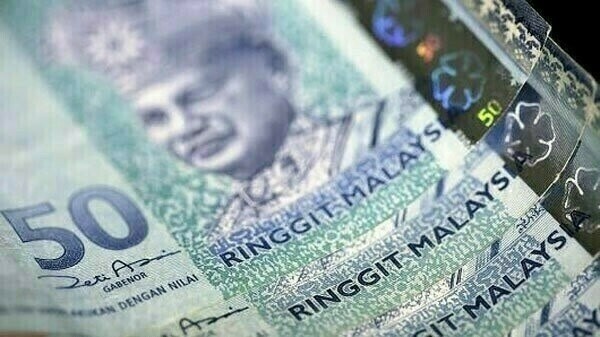

BENGALURU: Asian currencies fell to multi-month lows on Friday with South Korea’s won and Malaysia’s ringgit bearing the heaviest losses as investors abandoned riskier regional assets after the US imposed new tariffs on dozens of trading partners.
The won weakened 0.69% to an over two-month low of 1,401.53 against the dollar, while the ringgit dropped 0.5% to its weakest since June 23.
Both currencies are set for their worst weekly performance since late February and late January, respectively.
Among other currencies, the Taiwan dollar and Thai baht declined more than 0.3%, while the Philippine peso recovered from earlier six-month lows to trade flat. The MSCI emerging market currency gauge fell over 1% this week, abruptly ending a six-month rally in July and highlighting the vulnerability of regional assets to trade policy shifts.
Late Thursday, US President Donald Trump signed executive orders imposing tariffs ranging from 10% to 41% on US imports from dozens of countries, utilising emergency powers and pressuring foreign leaders ahead of his self-imposed Friday deadline.
India faces 25% levies on its US-bound exports, Taiwan 20%, Thailand and Malaysia 19%, while South Korea secured reduced 15% rates after intensive negotiations. Vietnam, Indonesia, the Philippines, Japan, and Cambodia have already secured agreements.
“Tariff rates settling at 15-20% for most of the region outside of China will hurt producers, narrow profit along the supply chain and curtail US demand,” said Alex Holmes, regional director for Asia Pacific at EIU, noting that core emerging market countries with stronger fundamentals are expected to prove more resilient than frontier economies.
The broad-based tariff structure leaves emerging markets “between a rock and a hard place,” forcing difficult choices between China and US trade relationships as they seek alternative strategies to mitigate economic fallout, Holmes added.
The greenback rose 0.3% on Friday on greater clarity around Trump’s trade policies. The dollar index climbed 2.5% this week to two-month highs.
Regional equities showed mixed performance, with Kuala Lumpur and Jakarta shares rising over 1%, while Seoul tumbled 3.5% after the government proposed rolling back recent tax cuts.
Central bank policy remains in focus, with the Monetary Authority of Singapore and Bank of Japan maintaining current rates alongside the US Federal Reserve. Thailand’s rate decision looms this month, while India’s central bank meets next week.
“A number of emerging market central banks appear to be shifting toward a more accommodative stance,” with India expected to deliver “a dovish pause” before likely cutting rates in October, Barclays analysts said.




















Comments
Comments are closed for this article.