



WASHINGTON/TORONTO: US President Donald Trump on Thursday signed an executive order increasing tariffs on Canadian goods to 35% from 25% on all products not covered by the U.S.-Mexico-Canada trade agreement, the White House said.
Goods transshipped to another country to evade the new tariffs would be subject to a transshipment levy of 40%, according to a White House fact sheet.
The move - which Washington linked in part to what it said was Canada’s failure to stop fentanyl smuggling - is the latest blow in a months-long tariff war which Trump initiated shortly after taking power.
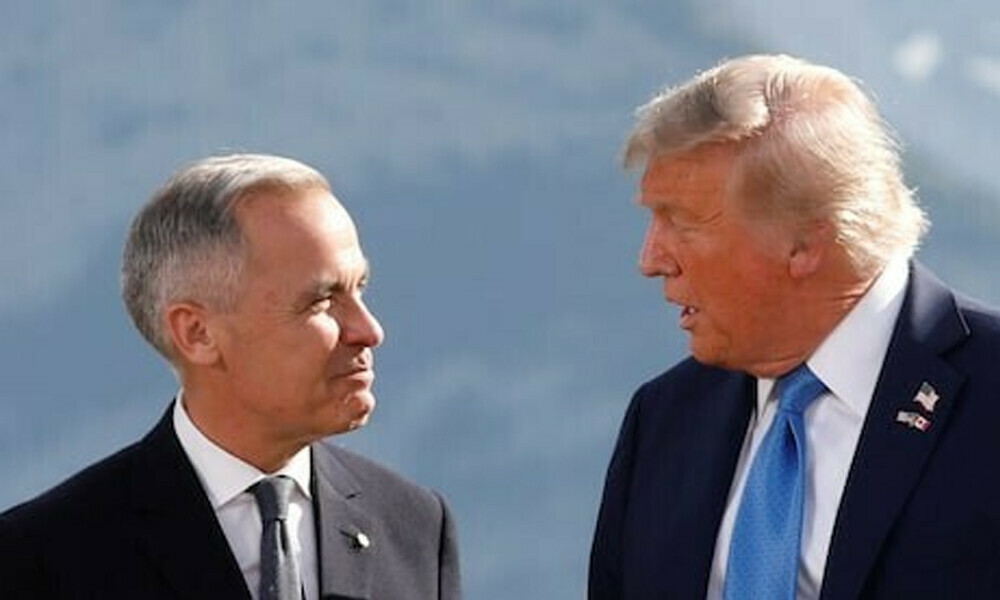
The announcement blaming Canada’s “continued inaction and retaliation” comes after Trump said Canadian Prime Minister Mark Carney reached out ahead of an August 1 tariff deadline, but no conversations between the two took place.
Trump had said any country failing to strike a deal with the U.S. before Friday will be subjected to higher tariffs imposed on goods. Carney’s office did not immediately respond to a request for comment.
Officials in Ottawa have repeatedly noted that only a miniscule amount of fentanyl entering the United States originates from Canada but they have already taken measures to strengthen the border.
Carney said on Wednesday that the trade talks had been constructive but might not conclude by the deadline. He reiterated a deal removing all U.S. tariffs was unlikely. Carney has to coordinate his reaction with that of the 10 provinces, some of whom want a hard line and others who prefer a softer approach.
Premier Doug Ford of Ontario, which accounts for around 40% of Canadian GDP and is the country’s industrial heartland, demanded Ottawa slap a 50% counter tariff on imports of U.S. steel and aluminum.
“Canada shouldn’t settle for anything less than the right deal. Now is not the time to roll over. We need to stand our ground,” he said in a post on X.
Trump said that while he loved Canada, it had treated the United States “very badly” for years.
U.S. Commerce Secretary Howard Lutnick said Trump could reconsider the tariff if Carney “starts turning on the charm and if he takes off his retaliation.”
Earlier Thursday, Trump agreed to give Mexico a 90-day window to work toward a deal, allowing it to avoid a 30% tariff that he threatened to impose by August 1.
Mexico will still have to pay a 25% duty on U.S.-bound exports that are non USMCA-compliant, a tariff that Trump has linked to demands that Mexico do more to curb drug and human smuggling.
Canada sends around 75% of all its exports south of the border and is vulnerable to U.S. trade action.
The increase in tariffs to 35% will hit exports of steel, aluminum and automobiles and the products that are not compliant with the three-nation USMCA free trade deal.
The economy has shown surprising resilience in the face of tariffs and is expected to avoid recession, economists say.
About 90% of Canadian exports to the U.S. in May were exempt under the USMCA. The compliance level has shot up dramatically in the last few months, while some companies have diversified exports to avoid tariffs.
Canadian government data shows exports to the U.S. dropped by 10 percentage points to 68% of total exports between May 2024 and May 2025, focused on manufacturing products such as cars and parts, and products made with steel and aluminum.
Carney told reporters in June that if the two countries do not reach a trade deal by August 1, Canada would likely impose more counter levies on U.S. exports of steel and aluminum.

























Comments
Comments are closed for this article.