


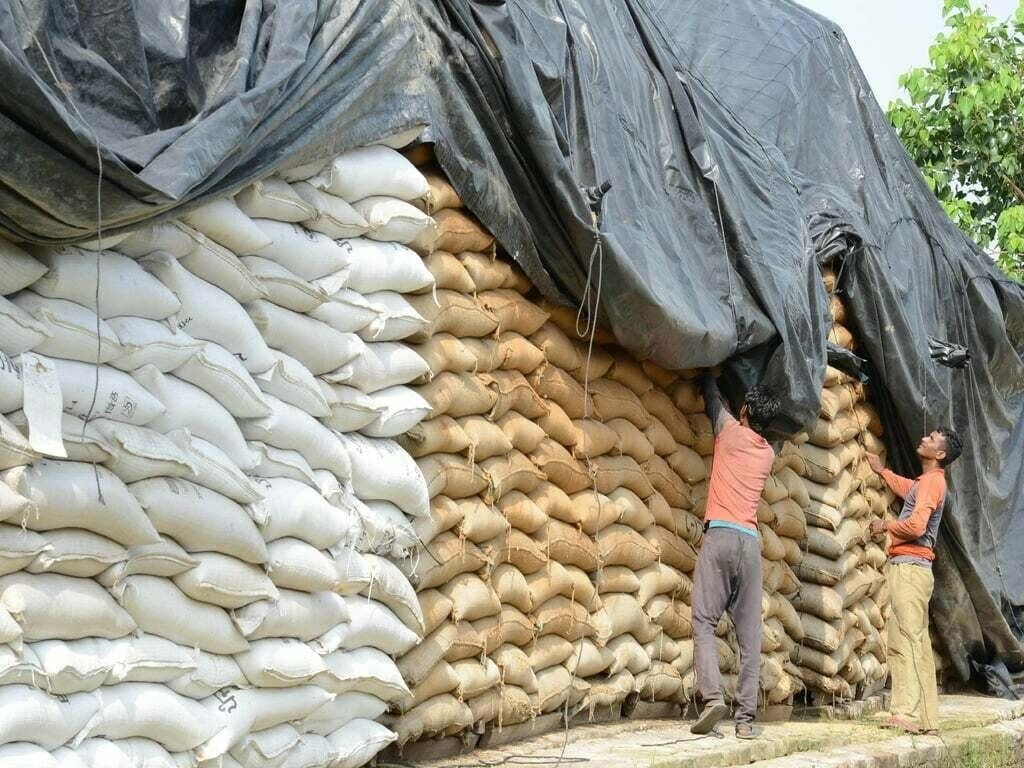

LAHORE: The District Administration of Lahore supplied over 1,000 tonnes of sugar across the city to ensure provision of the commodity on affordable rates to the residents of the metropolis, while additional supplies continued to maintain a balanced supply chain.
The administration’s spokesperson clarified that there is no sugar shortage in Lahore and that efforts to create artificial scarcity have been thwarted. The administration also launched a crackdown against the hoarders and lawbreakers, with 27 individuals facing action, nine cases registered, 13 shops sealed, and fines totalling Rs450,000 were imposed against violations.
The spokesperson emphasized that actions are based on solid evidence, ensuring no honest trader is unfairly targeted. DC Syed Musa Raza assured full support to law-abiding traders while maintaining that exploitation of the public will not be tolerated.
The administration has urged residents to report any issues with sugar availability or overpricing immediately, with direct access to the Additional Deputy Commissioner General for swift resolution. All efforts are focused on providing relief to the public, with the administration reinforcing that the law applies equally to all. These measures have stabilized sugar prices and availability, directly benefiting Lahore’s residents by ensuring a steady and affordable supply of this essential commodity.
Meanwhile, the Pakistan Sugar Mills Association has said that all sugar mills are supplying sugar at Rs165 per kg ex-mill and the country has ample stocks of sugar till mid-November 2025. In a statement, a spokesman of PSMA said that sugar supply chain was affected due to divergent administrative measures taken by some government institutions which have somewhat been redressed and the supply of sugar is continuing.
The sugar industry has previously clarified that all mills are supplying sugar to the domestic market at Rs165 per kg ex-mill. Mills are only concerned with the ex-mill prices while the retail price of sugar in the market is normally determined by market forces, which is now being controlled by the government. As per media reports, sugar is being sold at Rs200 per kg but according to sugar industry information, the commodity in most markets is available at the government-set price of Rs173 up to Rs175 per kg.
The spokesperson clarified that sugar dealers are buying sugar from mills at Rs165 per kg ex-mill and instead of giving it to domestic consumers, they are giving it to industrial and commercial consumers at higher profits. Satta Mafia and Stockists are creating hurdles in the supply of sugar they purchased before the price was fixed. They are blaming sugar exports by creating the impression of an artificial shortage of sugar.
Linking sugar prices to exports is completely against the facts. The government had allowed the export of sugar only in case of surplus sugar from the carry-over stock of the last two years that was available with the mills and further surplus sugar was produced in the crushing season of 2023-24. Mills had to sell sugar at a loss well below the cost of production while meeting the government’s condition of Rs140 per kg.
Before sugar exports, all official estimates had shown a strong possibility that the next crushing season would see a good sugarcane yield and produce more sugar, but due to global warming and climate change, sugarcane production and its sucrose level dropped, which adversely affected sugar production.
In the previous crushing season, the sugar industry purchased sugarcane up to Rs700 per maund which was Rs425 per maund in the crushing season of 2023-24. This provided substantial benefits to the farmers, however, it led to the sugar industry’s cost of making sugar increase significantly.
There was also a manifold increase in other production costs, due to which sugar mills had to suffer continuous losses over the past several years and now 12 sugar mills are closed and up for sale. Baseless accusations of profiteering on the sugar industry are unjustified. All such issues would be resolved by deregulating the sugar sector at the earliest, just as happened in the case of rice and maize sectors.
Copyright Business Recorder, 2025




















Comments
Comments are closed for this article.