


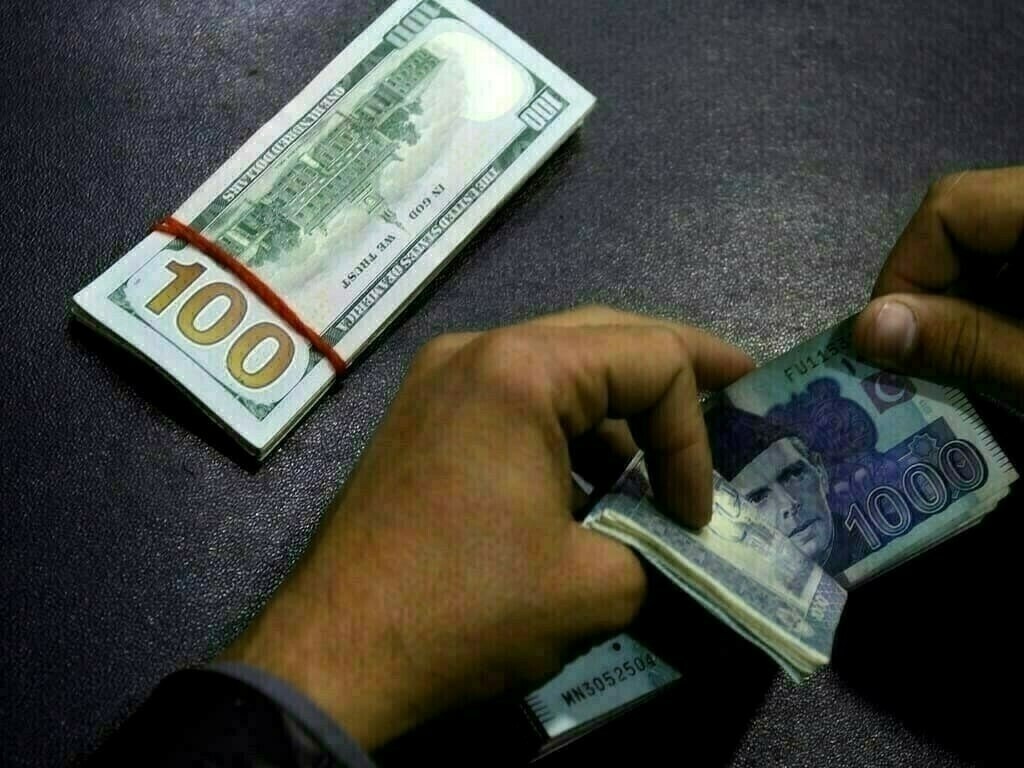

After a calm of about two years, authorities in the twin cities are once again trying to bring stability to the currency market. Several meetings have been held over the past few days – the first with exchange companies, the second with bank presidents in the presence of the SBP Governor and Finance Minister, followed by operational-level engagements that also included grey market players.
The objective is simple: stop the currency from depreciating. The general sentiment among bankers is that authorities believe the fair value of the PKR/USD is 250, and they are concerned about the recent depreciation. The aim is to address the issue administratively and encourage banks to play an active role in maintaining currency market stability.
In September 2023, when there was widespread panic and the interbank PKR/USD rate touched 307 while the open market rate hovered around 330, authorities cracked down on smuggling and hundi-hawala networks. The danda worked then, and within a few weeks, the PKR/USD fell below 280—hovering around similar levels since.
Banks were instructed to establish their own exchange companies, while licenses of dubious firms were cancelled, and the grey market nearly vanished. Consequently, inflows into the interbank market improved, and SBP began buying dollars—reportedly $12–14 billion over the last eighteen months. Banks were asked to manage outflows (import payments) through their own inflows (exports and remittances). SBP continued buying from surplus banks and, in most cases, did not allow deficit banks to purchase from the interbank market.
Lately, however, a partial revival in economic demand—due in part to interest rates being slashed by half—has led to rising imports and, broadly, increased foreign currency demand in the interbank market. Meanwhile, growth in home remittances (up from $27.3 billion in FY23 to $38.3 billion in FY25) is tapering off.
In addition to administrative efforts to curb money laundering, a fiscal subsidy (shared between banks and remitting partners) also contributed to enhanced flows through formal channels. But its continuation in FY26 is unclear—no allocation has been budgeted. Inflows dropped significantly in July, even as imports rose, resulting in a supply shortage.
With the currency moving at a snail’s pace, banks began settling import payments (including for oil) at a premium to the interbank rate. This caused open market rates to drift upward—reaching close to 290 last week.
That prompted authorities to intervene. However, there is no foul play this time, nor is there panic in the market. Hence, little can be achieved through these meetings. What is required is the supply of foreign currency through external debt or foreign direct investment. The alternative is to contain imports via policy tools (such as higher interest rates) and pressure banks to tighten L/C openings.
But that cannot happen if the goal is to revive growth and employment. You cannot have your cake and eat it too. Over the past two years, economic strangulation allowed SBP to buy dollars and rebuild reserves. Revival, however, will only occur if SBP supports the interbank market and allows it to function independently. At the same time, reserves should continue to build—and for that, authorities must work to attract foreign investment and debt inflows.




















Comments
Comments are closed for this article.