


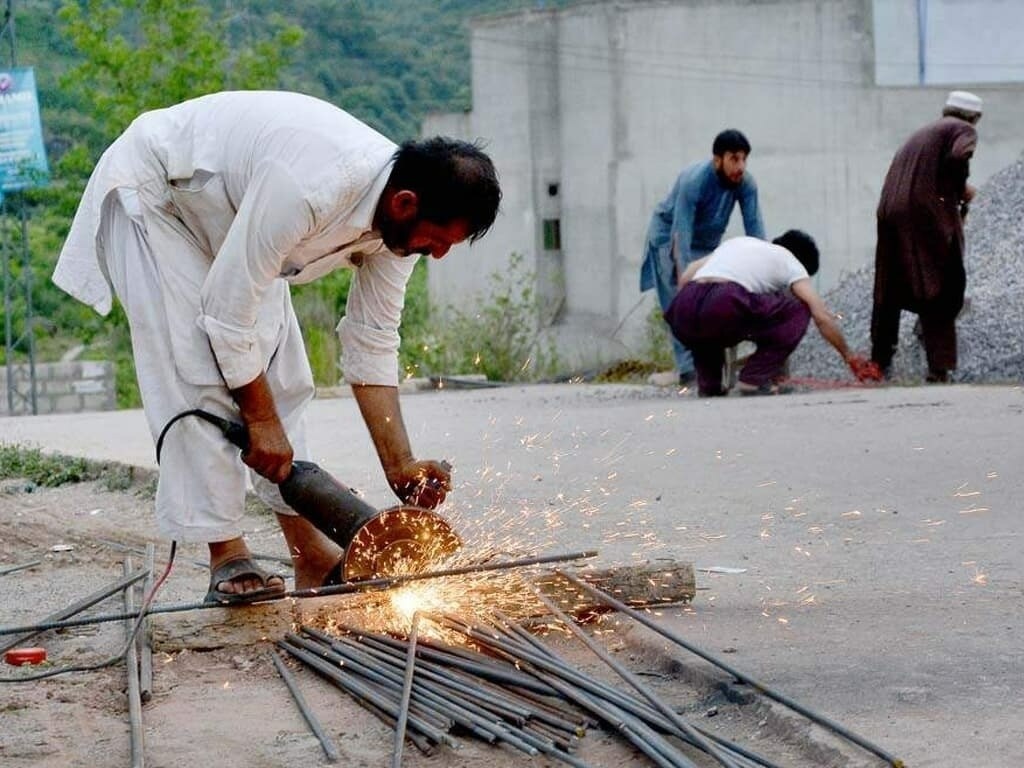

HYDERABAD: Peasants and rural workers in Sindh continue to face numerous challenges, including the absence of social security coverage and occupational health and safety protections. Despite existing laws prohibiting bonded labour, a total of 1,012 bonded labourers were released from the illegal captivity of landlords and brick kiln owners in 2024 alone. These concerns were highlighted by Akram Khaskheli, President of the Hari Welfare Association, in a statement issued on Sunday.
Khaskheli said that the Sindh Tenancy Act, 1950, has been in place for 74 years, but the amendments made over the years, particularly in 2013, favoured landlords (e.g., the Section 17 amendment shifted 100% of expenses to peasants). The high costs of inputs and limited or no irrigation water have created serious issues for sharecropping peasants. The rules for the Sindh Bonded Labour System (Abolition) Act (SBLSAA), 1992, were not notified in 2024. The draft rules remained with the Provincial Law Department and were accessible to the Provincial Home Department, but were not made publicly available.
He also highlighted that the Sindh Women Agriculture Workers Act (SWAWA), 2019 has been passed which aims to protect the rights and welfare of women agricultural workers in Sindh. The rules for this law have not been passed thus this law is not being implemented.
He said that according to HWA’s annual report on peasants rights in Sindh, most members of the Sindh assembly are feudal lords or originate from feudal families, often misrepresented as agriculturalists and businesspersons. Nine members are identified as agriculturalists and 23 as landlords; many of these are also landowners. Similar patterns are observed in the National Assembly, particularly among PPP members, where many are actual landowners, but their true professions are concealed. A significant number of Sindh Provincial Assembly members represent feudal families, who form the core base of the PPP in Sindh.
In 2024, a total of 1,012 bonded labourers were released from the custody of landlords and brick kiln owners in the agriculture and brick kiln sectors in Sindh. Of these, 620 bonded labourers (children, women, and men) were released from agriculture across various districts. Sanghar and Umerkot reported the highest numbers, with 194 and 206 individuals, respectively. In 2024 alone, 392 bonded labourers were released from the brick kiln sector, with Umerkot (125) and Sanghar (85) being the districts with the highest releases. Over 12 years (2013-2024), 12,005 bonded labourers were freed, comprising 32% men, 33% women, and 35% children. He further stated that over 6.4 million children are out of school in Sindh, many engaged in severe child labour, depriving them of education, health, and protection. Out of 1.7 million bonded labourers, approximately 700,000 are children suffering inhumane conditions, mainly in agriculture.
The report also highlighted that rural Sindh is heavily affected by dacoit culture and crime. Hari leaders blame feudal lords and landowners for contributing to this issue, claiming they have destroyed Sindh’s agriculture sector, especially sharecropping peasants and farm workers.
HWA has collected details of tribal conflict in Sindh and revealed that from October 1 to December 31, 2024, 88 murders and thousands of injuries occurred in approximately 60 reported cases. Shikarpur district had the highest number of murders (31), followed by Ghotki (12) and Kashmore (7). It showed that other districts, such as Sukkur, Larkana, and Khairpur, reported lower numbers of murders (6-8), while Naushero Feroze, Jamshoro, and Dadu had fewer incidents.
Copyright Business Recorder, 2025






















Comments
Comments are closed for this article.