


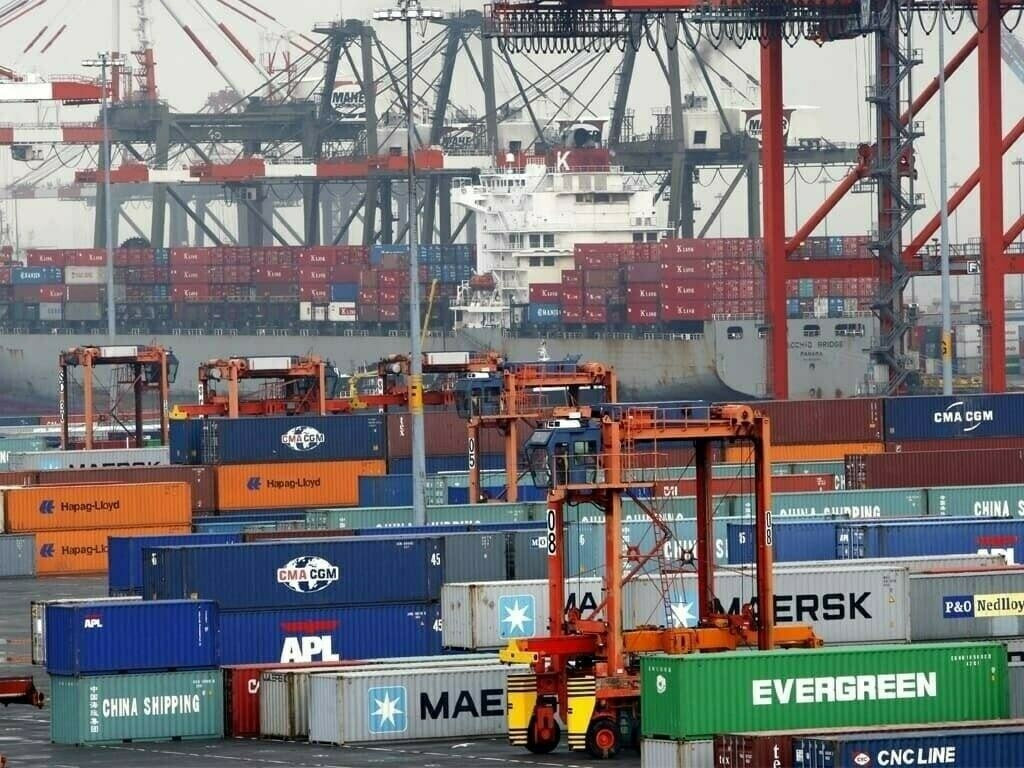

If the central bank is to be believed, Pakistan’s non-oil imports are now at their highest ever in volumetric terms. While total imports remain below the symbolic $60Bn threshold, this has less to do with any new discipline and more to do with the collapse in global commodity prices.
The World Bank’s commodity index is now near a four-year low, offering temporary relief. But as volumes inch upward and pressures begin to reappear in the currency market, the current account surplus will not hold. A return to deficit in FY26 is nearly guaranteed.
Beneath this surface-level narrative of import normalization lies something less reassuring. The volume of goods being imported is rising, but not in a way that signals recovery in industrial activity.
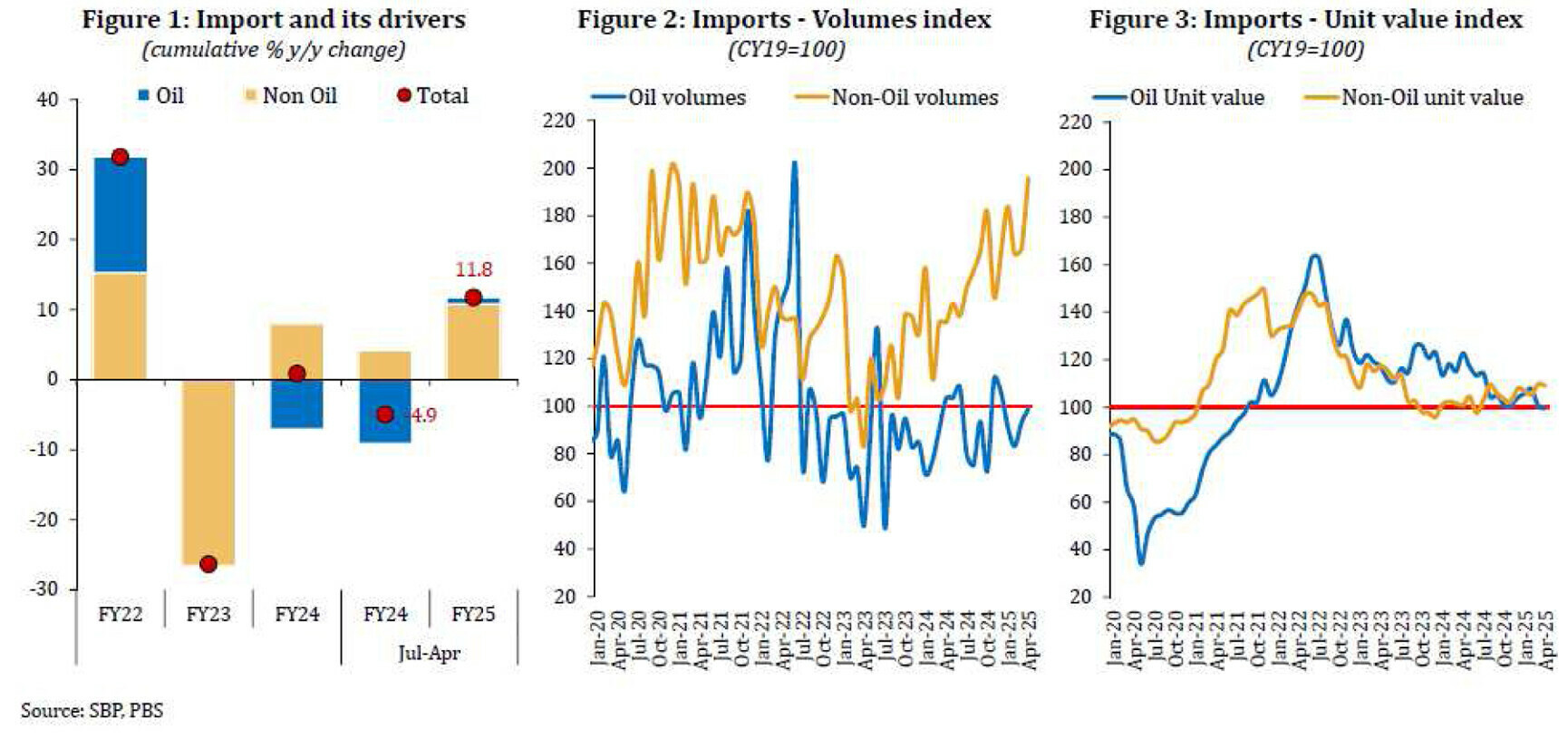
A review of import composition across two time periods—FY17 to FY19, when the exchange rate was overvalued and imported consumption was at its peak, and FY23 to FY25, a period defined by import suppression and currency collapse—tells a clearer story. What is growing today is not productive capital or industrial raw material. It is food, basic consumables, and inputs that feed domestic demand without creating export value.
Wheat imports are the most glaring shift. From virtually zero five years ago, volumes have now crossed three million metric tons. Pulses are up 36 percent, tea up 33 percent, edible oil up 16 percent, and spices up 28 percent. This is not a temporary distortion. It reflects structural decay in domestic production and a growing reliance on foreign supply for the country’s most basic staples.
Meanwhile, the sectors that matter most for industrial output are either stagnant or in decline. Fertilizer imports have dropped by 43 percent, iron and steel by 33 percent, rubber by 14 percent, and packaging materials by 31 percent. Even petroleum is down 8 percent. These are not encouraging signs. These are the quiet signals of an economy that has lost its productive footing.
Some categories might appear on the surface to indicate rising industrial input demand—textile raw materials, plastic, insecticides, medicinal products—but the context matters. Plastic use is mostly tied to packaging and consumer goods, not manufacturing for export. Insecticides are up because more food is being grown domestically, but even more is being imported. Medicinal imports are rising because people are consuming more healthcare products, not because the country is manufacturing them at scale. Even the rise in textile inputs has not translated into stronger net exports.
This is not a shift toward value addition. It is a shift toward import dependence that is being masked by temporarily low prices. A growing population is consuming more, while domestic production remains stagnant. The import bill is climbing, but not for the kinds of goods that signal economic momentum. It is climbing for wheat, tea, medicine, and plastic bags.
If policymakers want to claim this as a sign of recovery, they are welcome to do so. But it would be more honest to call it what it is. The balance of payments is once again under stress, even before the machinery of the economy has started to turn. Another year of modest growth in import volumesif left unaddressedwill drag the country back to the same crisis point. Only this time, there will be even less room to maneuver.
Copyright Business Recorder, 2025




















Comments
Comments are closed for this article.