


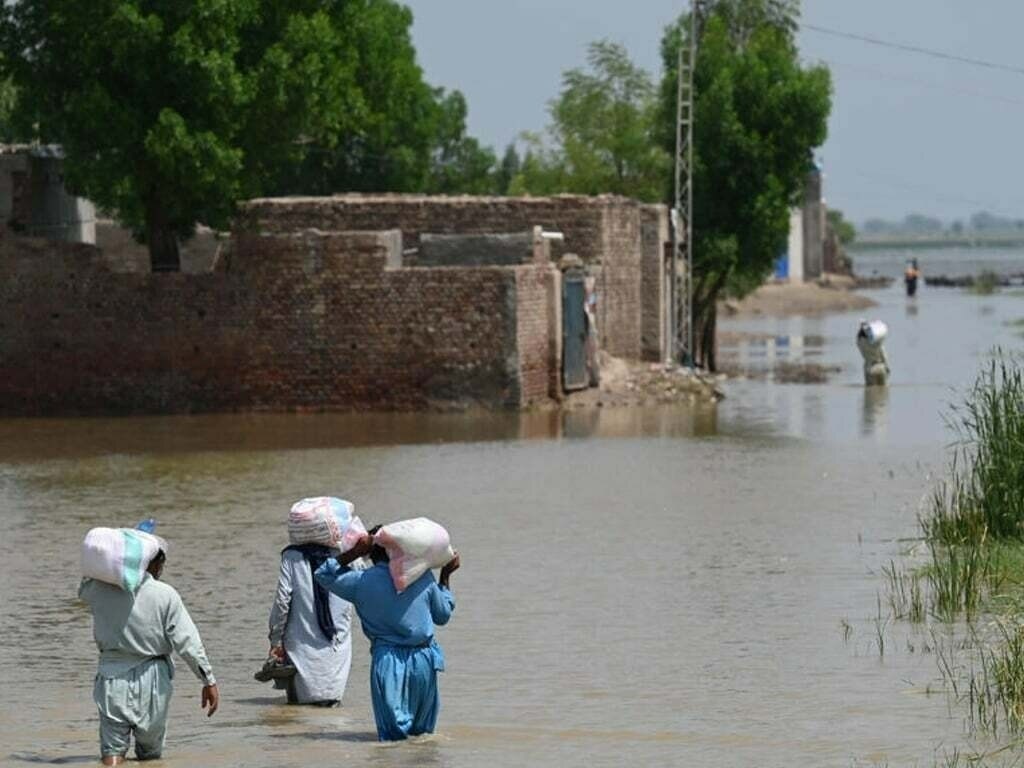
EDITORIAL: More than 200 lives have already been lost since the latest monsoon spell began in late June.
As the fourth wave of rainfall continues across Punjab, with alerts now issued for rising water levels in Ravi, Sutlej, and Chenab, it’s clear that Pakistan’s disaster preparedness remains reactive rather than proactive. That this tragic toll — 216 deaths and counting — includes more than 100 children underscores the magnitude of institutional shortcomings, not just the strength of the rain.
The Provincial Disaster Management Authority (PDMA) has warned of widespread showers and possible river flooding across Punjab, yet such alerts almost always follow rather than precede the most critical damage. The latest toll includes 13 deaths in just 24 hours. Most of the fatalities have come from roof collapses, another annual reminder that infrastructure vulnerability is not merely an economic concern, but a recurring cause of death.
What is more troubling is that the agencies mandated for prevention and responses are not new or underfunded. Both PDMA and NDMA were created and equipped precisely to forecast such scenarios and mobilise defences before disaster strikes. But each season reveals the same fault line — warnings issued when rivers have already swelled, and public awareness campaigns started after homes have caved in.
The NDMA confirms that 135 of the 216 deaths have occurred in Punjab, where the latest spell is expected to last until July 25. Key catchment areas are already under close watch. Yet, beyond mapping river flows and issuing advisories, little has changed in the way ground-level relief is structured.
The same challenges resurface — absence of early relocation for at-risk communities, inadequate support for damaged homes, and overwhelmed local administrations.
It is also notable that while alerts mention specific districts like Rawalpindi, Murree, Gujrat, Faisalabad, Dera Ghazi Khan, and Multan, no corresponding information is publicly available about shelter availability, evacuation plans, or targeted interventions. If these preparations do exist, they are not reaching the people who need them most. And if they do not, then another round of administrative lapses is already underway.
The federal climate narrative also loses credibility when such regular patterns of destruction are not met with evolved protocols. The 2022 floods led to international commitments and revised policies, but at the local level, rainfall still causes the same breaches, displacements, and fatalities. At what point does this become a policy failure rather than a climatic inevitability?
Meanwhile, Karachi has had a reprieve, though its early morning showers and minor accumulations are only noteworthy because of the city’s notorious history with urban flooding. A maximum temperature range of 32–34°C and cloud cover may provide relief, but they should not mask the broader concern: Sindh could be next. The Met Office has already flagged another monsoon system that may affect the province in late July. That should put authorities on alert now, not later.
The population must also share some of the burden. Year after year, citizens in flood-prone areas are asked to relocate, reinforce, and remain vigilant. Year after year, too many choose not to. Whether out of necessity, disbelief, or habit, such decisions come with tragic consequences. Informed citizens are an essential component of disaster resilience. Refusing to heed official warnings, or failing to assist local authorities when it matters most, only compounds the risk.
Still, responsibility cannot be so evenly distributed when state resources and authority lie with the government. If PDMA knows which rivers are rising and which districts are vulnerable, then it must show how that information is being operationalised. What physical preparations are in place? What assistance is available to the most exposed segments of the population? And what contingency plans exist should this monsoon spell follow the path of the last?
The fact that more rainfall is still expected, even after more than 200 deaths, should sharpen both urgency and accountability. It is already too late for the families that have lost loved ones. But it is not too late to prevent the next round of fatalities. Floods in Pakistan may no longer surprise anyone. But that is precisely why they must stop catching us off guard.
Copyright Business Recorder, 2025




















Comments
Comments are closed for this article.