


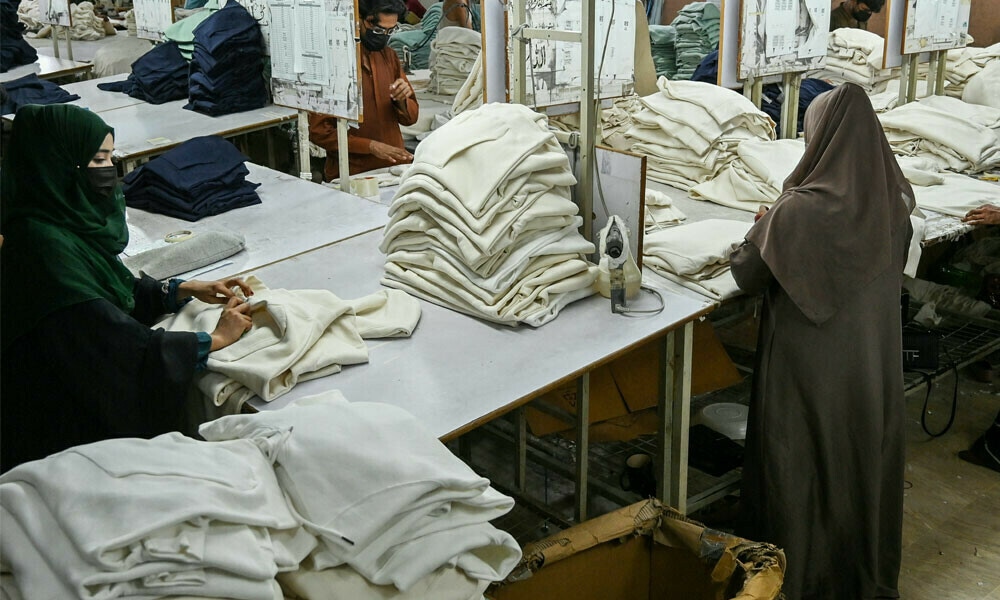
EDITORIAL: While Pakistan has made notable progress in increasing women’s participation across various fields of national endeavour — including those traditionally dominated by men — the gender pay gap continues to persist.
Findings from the International Labour Organisation (ILO) study titled “Gender Pay Gap in Pakistan: An Empirical Analysis” reveal that women in Pakistan earn, on average, 30 percent less than men, even when they have similar qualifications and experience and are employed in comparable roles. This is a troubling reflection of the deeply entrenched gender bias that continues to shape the country’s labour market.
The report further notes that Pakistan’s wage disparity is among the highest compared to other lower-middle-income countries — a stark reminder that, despite visible gains, sexism remains a major barrier to achieving genuine gender equality.
This economic inequality is fuelled in large part by usual gender stereotypes that continue to devalue women’s work. These biases are often implicit, embedded in workplace culture and decision-making processes, making them harder to identify and even harder to challenge.
As a result, women frequently receive lower pay than men for doing the same work, not due to performance or qualifications, but due to the perceived lesser value of their work.
The wage gap is particularly wide in the informal sector, where a large number of women are employed in unregulated settings with little to no labour protections.
According to the ILO report, even women with higher levels of education often earn significantly less than men with similar — or in some cases, lower — qualifications. This disparity points to deeply rooted biases in hiring, salary setting, and promotion practices.
In the formal private sector, the pay gap is somewhat narrower, and it is lowest in the public sector, where regulated wage structures and standardised pay scales offer a greater degree of parity. Yet, even in government employment, the ‘glass ceiling’ remains intact.
Women are often overlooked for leadership roles and promotions, even when they meet or exceed the qualifications and experience required. This exclusion is especially visible in high-ranking, influential positions, where men continue to dominate. In other words, while women may hold roles similar to their male colleagues, they are frequently excluded from senior decision-making positions, limiting their career growth and earning potential.
What these findings make clear is that the gender pay gap in Pakistan is not simply the result of women being concentrated in lower-paying sectors. Rather, it reflects systemic and ingrained gender bias in salary decisions across all levels of employment. Tackling this issue requires a comprehensive, multi-pronged approach. Legal reforms must be enacted and enforced to ensure equal pay for work of equal value.
Efforts must also be made to expand women’s access to higher-paying jobs and leadership opportunities across all sectors. Also, there is a pressing need to challenge societal attitudes through educational campaigns and workplace initiatives that confront gender stereotypes.
Encouraging women to pursue careers of their choice on an equal footing with men is not just a matter of fairness; it is essential for building a more just, inclusive, and economically resilient society.
Copyright Business Recorder, 2025




















Comments
Comments are closed for this article.