


Nationwide poverty explosion: PIDE challenges widely circulated narrative
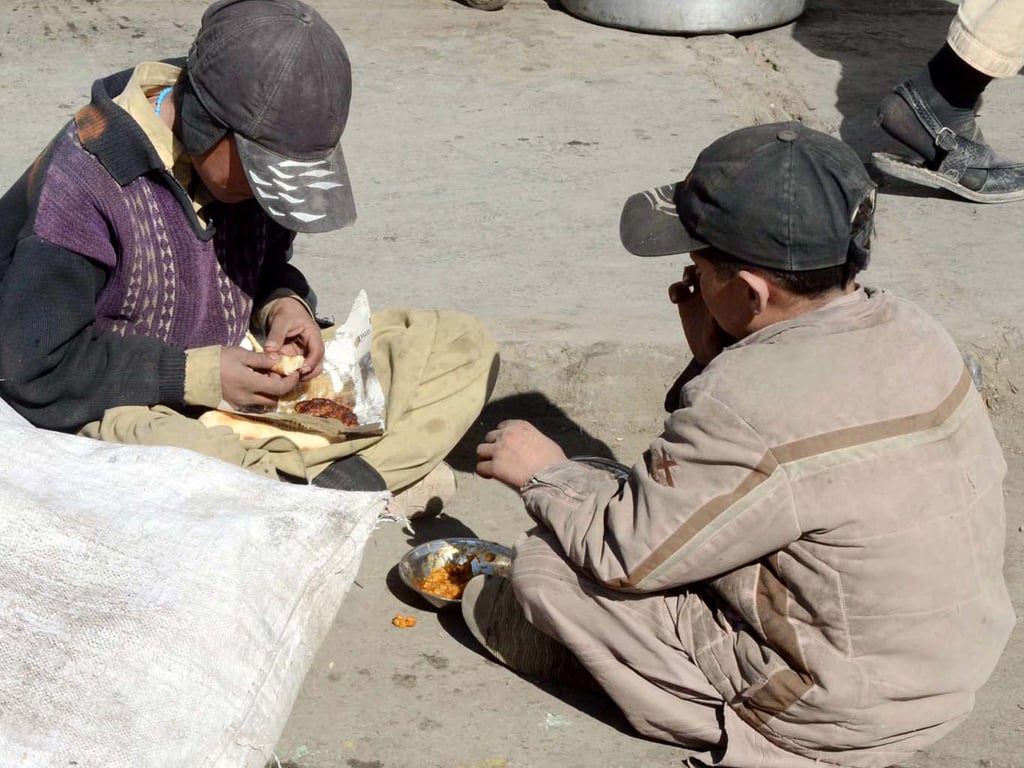

ISLAMABAD: The Pakistan Institute of Development Economics (PIDE), while debunking the claims regarding a sharp increase in poverty in the country has clarified the situation, saying the rise in poverty statistics is primarily due to global metric recalibration rather than a sudden economic collapse.
The Economic Think Tank with its latest report titled, “The Poverty Illusion: When Numbers Distort Reality” has challenged the widely circulated narrative of a nationwide poverty explosion.
The report, authored by Dr Nasir Iqbal, PIDE’s registrar and associate professor, critically examines the World Bank’s revised global poverty lines. The new $4.20 per day threshold, replacing the previous $3.20, has led to an increase in poverty statistics from 39.8 percent to 44.7percent.
However, Dr Iqbal points out that more than 80percent of this increase is the result of shifting global poverty benchmarks, not a collapse in household conditions. Inflation and other factors account for just 18percent of the increase.
As per the report, the extreme poverty, measured at $3 per day, has soared from 4.9 percent to 16.5 percent.
The sharp uptick in poverty rates is largely the result of the World Bank’s upward revision of global poverty lines. For lower-middle-income countries like Pakistan, the general poverty threshold has been increased from $3.20 to $4.20 per day.
Likewise, the extreme poverty line has been revised upward from $2.15 to $3 per day. These changes represent a substantial recalibration of the baseline used to assess poverty. When the bar is raised, more people fall below it — not because their lives have deteriorated, but because the measurement standard has shifted.
Dr Nadeem Javaid, vice chancellor (VC) of PIDE and member of the Planning Commission of Pakistan, stated, “Policymaking must be grounded in facts, not fear. These revised figures reflect changes in how poverty is measured globally, not a dramatic decline in the livelihoods of Pakistanis.”
Key insights from PIDE's analysis include the strength of the informal economy, which supports over 60 percent of Pakistan’s workforce, absorbing economic shocks and offering resilience during crises. Social protection programmes such as the Ehsaas Programme and the Benazir Income Support Program (BISP) have played significant roles in mitigating poverty.
Additionally, remittances from overseas Pakistanis continue to provide vital support, cushioning households and bolstering the economy during times of distress. Even amid major economic shocks such as the COVID-19 pandemic and the 2022 floods, PIDE estimates the poverty rate in 2025 to be between 23 percent and 25 percent, with food-based poverty pegged at just 6.2 percent, signalling consistent, long-term improvement.
In light of these findings, PIDE has proposed a series of actions to address poverty with a data-driven approach. These include reinstating the Household Integrated Economic Survey (HIES) to update data, refining BISP to link cash transfers with measurable outcomes like education, employment, and asset growth, and developing a National Poverty Reduction Strategy integrated with the Sustainable Development Goals (SDGs) to ensure inclusive economic reforms.
Additionally, PIDE calls for leveraging the informal economy through the creation of Village Economic Zones (VEZs) to boost rural employment and productivity via local value chains and agri-tech innovations.
The VC PIDE emphasised, “This is not a time for panic, but for rational, evidence-based policymaking that can turn perceived crises into opportunities for structural economic reform.”
Copyright Business Recorder, 2025




















Comments
Comments are closed for this article.