


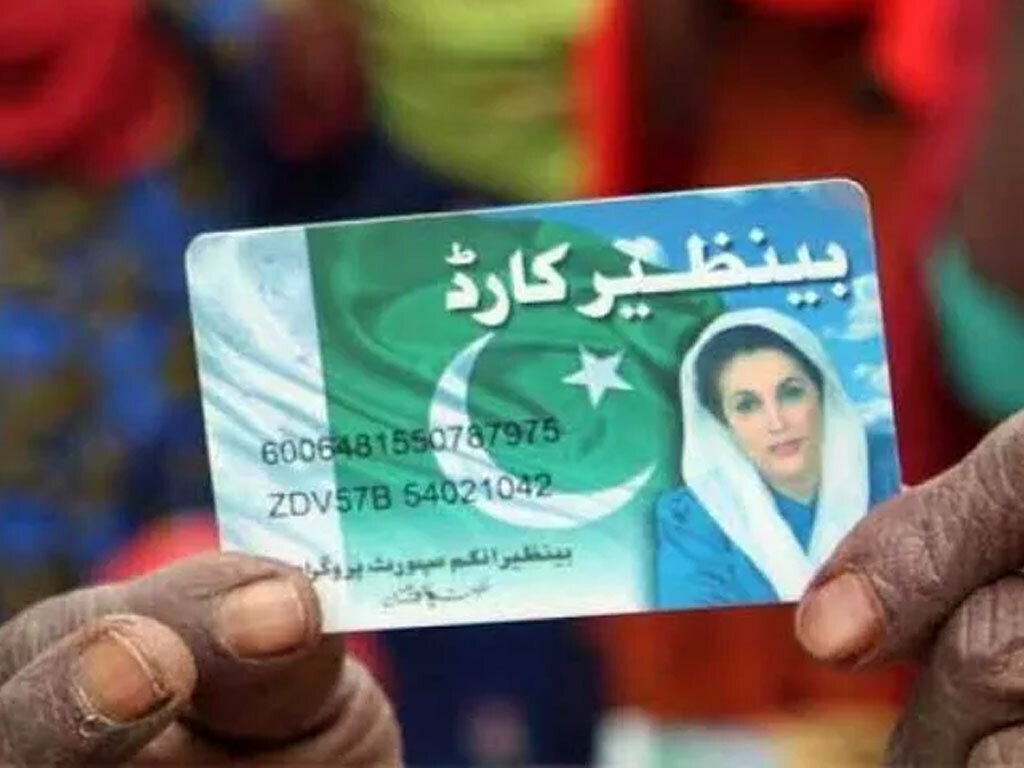

ISLAMABAD: The National Assembly Standing Committee on Poverty Alleviation and Social Safety expressed serious concern over the country’s escalating poverty rate - now nearing 50 percent and highlighted persistent inefficiencies at the Benazir Income Support Programme (BISP) beneficiaries’ point-of-sale camps where beneficiaries face undue hardship.
The committee meeting presided over by Mir Ghulam Ali Talpur, was convened to evaluate and expedite the transition of social protection mechanisms towards a more transparent, technology-driven system with minimal human intervention.
Talpur contextualised Pakistan’s social protection framework and emphasised the original intent of the income support mechanism: to minimise human intervention in the disbursement of financial assistance, thereby, ensuring dignity and transparency.
The committee noted with dissatisfaction the delay in launching the digital banking pilot project, which was initially scheduled for rollout by June. In response, the State Bank of Pakistan (SBP) official stated that while most technical and backend components have been completed, the remaining procedural approvals are in their final stages. The pilot is now expected to launch by the end of the current month. The initiative will integrate formal banking channels, leveraging geotagged branches and simplified account-opening procedures developed in collaboration with the BISP.
The SBP conveyed its assurance that the project—developed over the past year—would be operational within a week, with the first beneficiary accounts to be opened by 15 August 2025. Initially, the pilot will be implemented in seven districts and one additional district of Muzaffargarh, followed by a six-month evaluation (two quarters) to assess outcomes before scaling it nationwide.
To improve access and efficiency, SBP plans to expand ATM networks, implement a staggered distribution mechanism to reduce congestion, and gradually introduce digital wallets. Biometric verification will serve as the primary method of authentication, with debit cards issued only where fingerprints are unreadable. The banking industry is now fully onboard, and API integration testing is nearing completion. Two-factor authentication mechanisms are also under consideration to further secure payments.
The committee members expressed concern regarding the treatment of beneficiaries at bank branches and campsites. The Acting Governor SBP reiterated its commitment to safeguarding customer dignity and ensuring access to full banking services, including interoperability and secure fund transfers. The committee discussions also underscored the need to integrate cellular networks mobile repository data through the Pakistan Telecommunication Author-ity (PTA) to enhance biometric reliability and reach.
On the institutional front, BISP reported that out of 3,486 sanctioned posts; only 2,347 are currently filled, with only 1,858 positions currently held by BISP regular staff. The committee was informed that excessive reliance on deputation staff compromises institutional continuity and drives up operational costs. The Finance Division clarified that recruitment policy falls under the Cabinet and Establishment Division’s purview. As Pakistan remains under an International Monetary Fund (IMF) programme, hiring decisions must comply with fiscal and administrative frameworks.
The committee urged BISP to engage with the Establishment Division and Finance Ministry to address the staffing shortfall. It was mutually agreed that a coordinated approach is required to ensure timely resolution. Additionally, BISP will relocate offices to underserved tehsils such as Munda and Balambat to improve accessibility. The meeting concluded with a consensus to expedite the pilot rollout, while maintaining strict oversight to uphold transparency, protect beneficiary rights, and integrate vulnerable populations into formal banking systems.
The committee was attended by the following Members of the National Assembly: Mir Ghulam Ali Talpur, Ahmad AteeqAnwer, Aasia Ishaque Siddiqui, Mahtab Akbar Rashdi, Muhammad Bashir Khan, Jamshaid Ahmad, Misbahuddin, Shahid Usman, Nawabzada Iftikhar Ahmed Khan Babar, Shafqat Abbas, Mohammad Ilyas Choudhary, Mir Khan Muhammad Jamali and whereas, Aniqa Mehdi attended the meeting virtually.
The federal secretary of Ministry of Poverty Alleviation and Social Safety, and senior officers of the Ministry Poverty Alleviation and Social Safety, Finance, Planning Development and Special Initiatives and representatives from its allied departments, including BISP, PPAF and TVO were also in attendance.
Copyright Business Recorder, 2025




















Comments
Comments are closed for this article.