


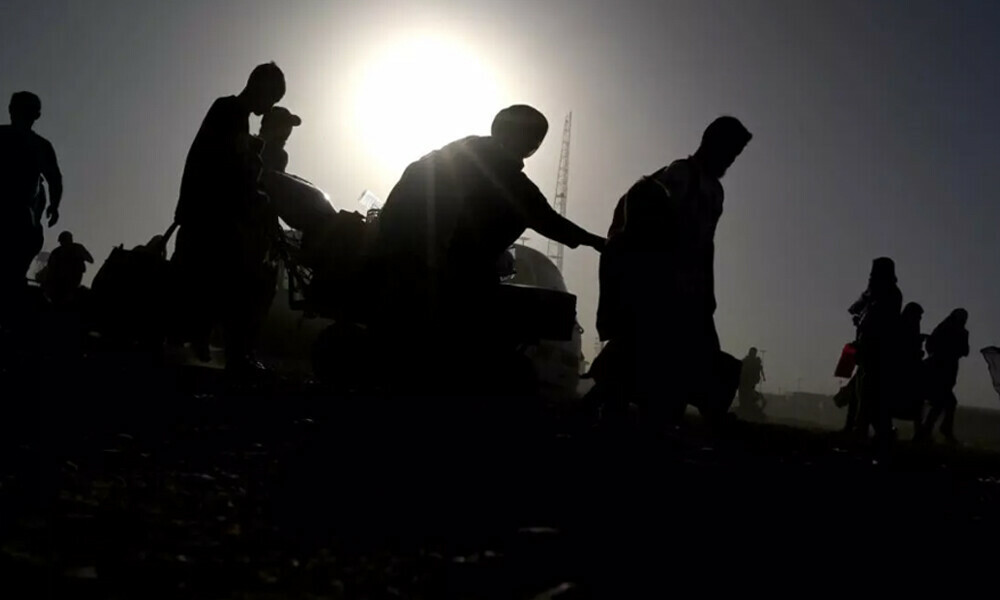
ISLAM QALA: More than 230,000 Afghans left Iran in June, most of them deported, as returns surge ahead of a deadline set by Tehran, the United Nations migration agency said on Monday.
The number of returns from Iran rose dramatically in recent weeks. Afghans have reported increased deportations ahead of the July 6 deadline announced by Iran for undocumented Afghans to leave the country.
From June 1-28, 233,941 people returned from Iran to Afghanistan, International Organization for Migration spokesman Avand Azeez Agha told AFP, with 131,912 returns recorded in the week of June 21-28 alone.
Since January, “691,049 people have returned, 70 percent of whom were forcibly sent back”, he added.
For several days last week, the number reached 30,000 per day, the IOM said, with numbers expected to increase ahead of the deadline.
Afghans spilled into an IOM-run reception centre out of buses arriving back-to-back at the Islam Qala border point in western Afghanistan’s Herat province on Saturday.
The recent returns have been marked by a sharp increase in the number of families instead of individuals, the UN said, with men, women and children lugging suitcases carrying all their belongings.
Many have few assets and few prospects for work, with Afghanistan facing entrenched poverty and steep unemployment.
The country is four years into a fragile recovery from decades of war under Taliban authorities, who have called for a “dignified” return of migrants and refugees from neighbouring countries.
Over 200,000 returned to Afghanistan in past nine weeks: interior ministry
Kabul’s Foreign Minister Amir Khan Muttaqi raised the Taliban government’s concerns in a meeting with Iran’s ambassador, according to a statement, saying: “A coordinated mechanism should be put in place for the gradual return of migrants.”
The cash-strapped government faces challenges in integrating the influx of returnees, which has piled on to hundreds of thousands also forced out in recent years from Pakistan – another traditional host of Afghans fleeing conflict and humanitarian crises.
Severe international aid cuts have also hamstrung UN and NGO responses, with the IOM saying it was “only able to assist a fraction of those in need”.
“On some high-volume days, such as recently at Islam Qala, assistance reached as few as three percent of undocumented returnees,” it said in a recent statement.
Returnees AFP spoke to in recent days at the border cited mounting pressure by Iranian authorities and increased deportations, with none pointing to the recent Iran-Israel conflict as a spur to leave the country.
However, “regional instability – particularly the fallout from the Israel-Iran conflict – and shifting host country policies have accelerated returns, overwhelming Afghanistan’s already fragile humanitarian and development systems”, the UN mission in Afghanistan, UNAMA, said in a statement.
Samiullah Ahmadi, 28, was seeing his country of origin for the first time when he crossed the border.
Unsure of what he would do once he reached the Afghan capital Kabul with his family, he was defiant in response to the pressures to return.
“I was born there (Iran). But the situation for Afghans is such that no matter how good you are or even if you have valid documents, they still don’t treat you with respect.”






















Comments
Comments are closed for this article.