


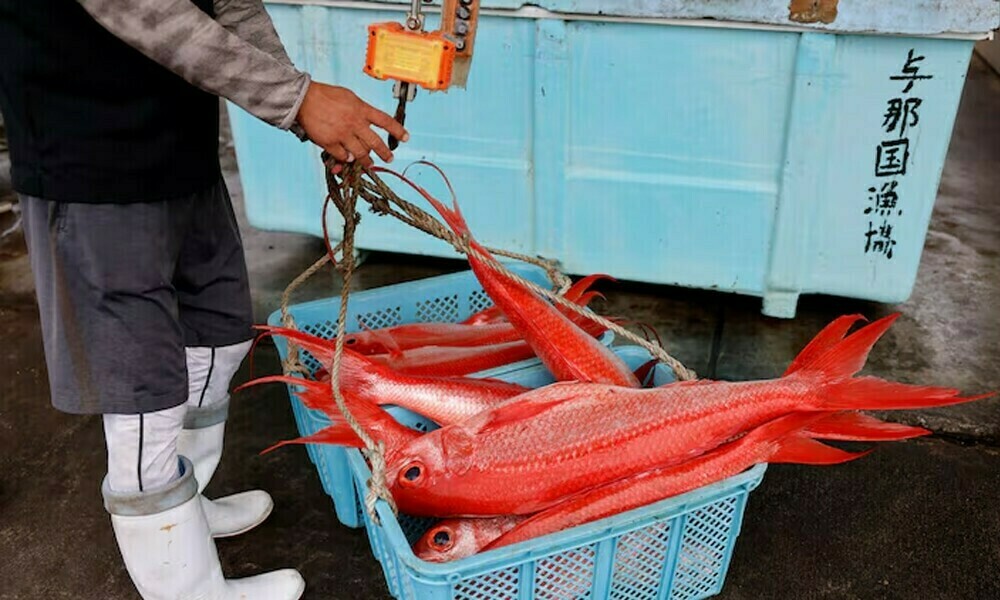

BEIJING: China has lifted a ban on seafood imports from most regions of Japan, partially mending a years-long dispute over Tokyo’s handling of nuclear wastewater.
China and Japan are key trading partners, but increased friction over territorial rivalries and military spending has frayed ties in recent years.
Japan’s brutal occupation of parts of China before and during World War II remains a sore point, with Beijing accusing Tokyo of failing to atone for its past.
Japan began gradually releasing treated wastewater from the stricken Fukushima nuclear plant into the Pacific Ocean in 2023.
The move was backed by the International Atomic Energy Agency and the plant operator TEPCO says all radioactive elements have been filtered out except for tritium, levels of which are within safe limits.
But it drew sharp criticism from Beijing, which banned imports of Japanese seafood as a result. Russia later followed suit.
Samples from long-term monitoring of nuclear-contaminated water from Fukushima had “not shown abnormalities”, China’s General Administration of Customs said in a statement Sunday.
As a result, China “decided to conditionally resume” seafood imports from Japan, except imports from 10 of the country’s 47 prefectures, including Fukushima and Tokyo, which remain banned.
The Japanese government received the decision “positively”, Kazuhiko Aoki, deputy chief cabinet secretary, told reporters in Tokyo.
China, Japan close to resuming seafood imports after Fukushima ban
But Japan “will strongly demand the Chinese side lift remaining import regulations on seafood from 10 prefectures”, he added.
Foreign Ministry spokeswoman Mao Ning confirmed Monday that Beijing was resuming seafood imports from regions “that meet China’s standards”.
But she warned that China would take measures to restrict imports “should any risks be identified”.
In 2011, a huge earthquake triggered a deadly tsunami that swamped the Fukushima nuclear facility and pushed three of its six reactors into meltdown.
China vociferously opposed the release of the treated wastewater, casting it as environmentally irresponsible. But in September last year, it said it would “gradually resume” importing the seafood.
Production companies that had suspended trade must reapply for registration in China and would be “strictly” supervised, Beijing’s customs administration said Sunday.


























Comments
Comments are closed for this article.