


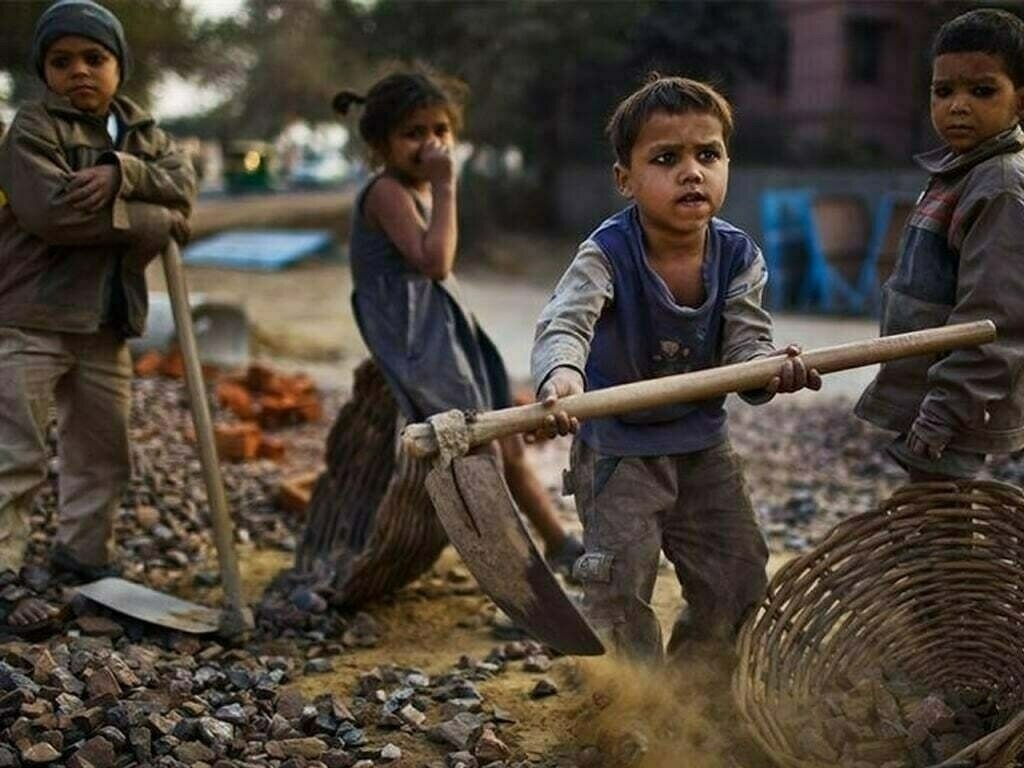
EDITORIAL: That Pakistan has had a long-standing, deep-rooted child labour problem is reflected in the continued exploitation of minors in sectors as varied as agriculture, trade, manufacturing and domestic work. Crippling poverty drives millions of children to enter the workforce at an early age, depriving them of education opportunities and a secure future.
As highlighted by the Society for the Protection of the Rights of the Child (SPARC) on the Annual World Day against Child Labour on June 12, urgent, coordinated action is needed to enforce child protection laws, expand access to quality education, and tackle the root causes sustaining this menace.
A glaring data gap continues to obscure the true scale of the problem, with the last National Child Labour Survey conducted as far back as 1996, when the number of child labourers was estimated at 3.3 million. Since then, ILO and Unicef figures indicate that this figure may have ballooned to 10-12 million, with the majority toiling in informal sectors that fall outside the purview of labour inspections.
Of the four provinces, only Khyber-Pakhtunkhwa has conducted a comprehensive child labour survey recently, which found that out of a total population of 8.2 million children, 745,165 are child labourers. All other provinces and the centre have failed to undertake timely surveys that could inform evidence-based policymaking and targeted interventions, allowing the scale and severity of the problem to remain inadequately documented and unaddressed across much of the country.
As SPARC has highlighted, an alarming 264,000 children are employed in domestic labour, hidden behind the walls of their employers’ homes, with the lack of visibility and regulatory oversight making them especially vulnerable to exploitation and abuse. Beyond domestic settings, child labour is deeply embedded across the supply chains of various industries.
From brick kilns, cotton fields and textile factories, to construction sites and the service sector, children are routinely engaged in hazardous and exploitative work that robs them of their childhood, education and wellbeing. Reflecting this grim reality, this year’s World Day Against Child Labour placed a spotlight on the need to “End Child Labour in Supply Chains”, reinforcing the urgency of dismantling the systems that enable such exploitation, calling for coordinated efforts across government, industry and civil society.
At the heart of the crisis lies entrenched poverty and limited access to quality education. For countless families struggling to survive, sending children to work is a financial necessity. Such desperate scenarios reinforce the cycle of poverty, stripping children of the chance to gain an education and build a more secure future. The situation is further exacerbated by weak social protection programmes, forcing families to rely on their children’s incomes. Meanwhile, weak regulatory frameworks and poor enforcement continue to enable dangerous labour practices.
While provincial governments have introduced a range of laws to curb child labour – such as Punjab’s ban on employing children at brick kilns and KP’s prohibition on the employment of children under 14 – serious concerns persist regarding their effective enforcement. The huge scale of the problem, limited institutional capacity and resource constraints continue to hinder meaningful progress.
Critically absent is a practical pathway that enables children to transition out of labour by ensuring their right to education, but without jeopardising their families’ already fragile incomes. SPARC’s call to establish education centres at brick kilns in Sindh is one such initiative that should be scaled up nationwide and made mandatory.
Clearly, much more needs to be done. From strengthening the capacity of law enforcement agencies and labour directorates so that they can hold exploitative employers accountable, to building robust social protection systems and reshaping societal attitudes that have normalised child labour, every front demands urgent attention. Meaningful change will only be possible through sustained, collective commitment across all levels of society.
Copyright Business Recorder, 2025




















Comments
Comments are closed for this article.