


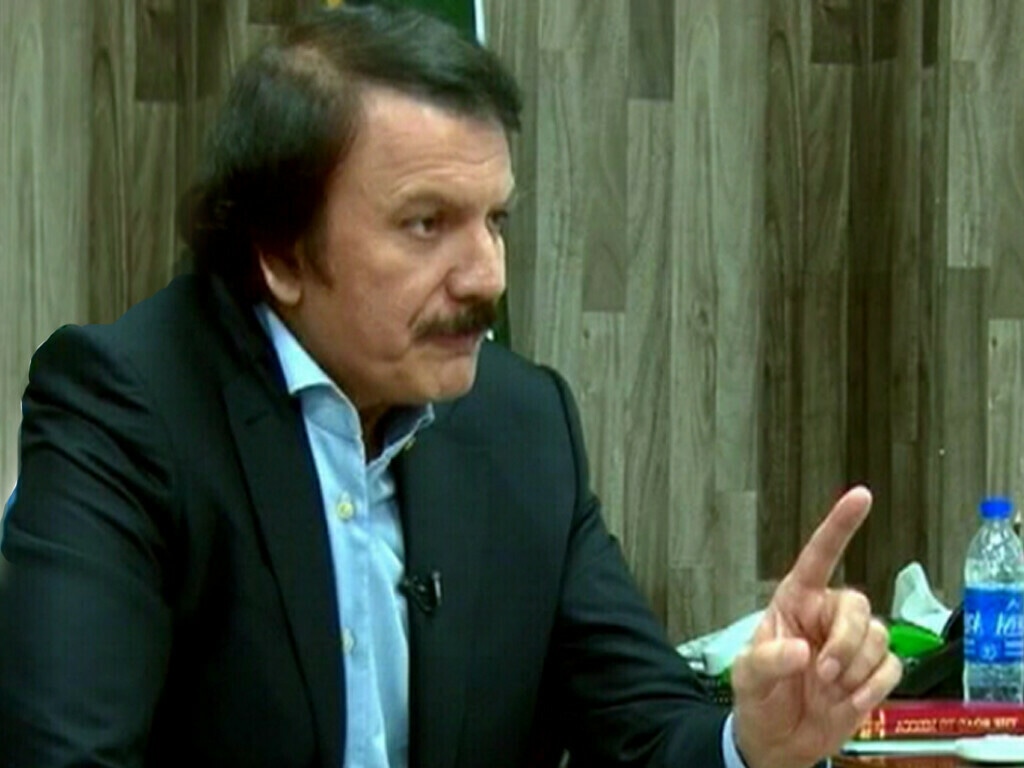

ISLAMABAD: Special Assistant to the Prime Minister (SAPM) on Industries and Production Haroon Akhtar Khan, Friday, while highlighting the government’s plan to reach net zero transport emissions by 2060 has reaffirmed the government’s commitment for sustainability, for innovation and industrial competitiveness.
Addressing the dissemination workshop on New Energy Vehicle Policy 2025-30, he said: “This policy aims to enable 30 percent of all new vehicles to be electric by 2030, and the ambition of reaching net zero transport emissions by 2060.”
He said that for the skill development National Vocational and Technical Training Commission (NAVTTC) also coordinating to train around 10,000 apprentices. The policy ensures that citizens are not just consumers, but beneficiaries. Buyers are protected through a new legal framework covering information transparency, currency risk sharing, and performance guarantees.
This transition is projected to save 2.07 billion litres of fuel annually, amounting to nearly $1 billion in foreign exchange savings. Additionally, the policy is expected to reduce carbon emissions by 4.5 million tons and cut healthcare-related costs by $405 million per year.
The government had already issued 61 licenses for manufacturing of motorbikes and three-wheelers while two licenses for the manufacturing of electric vehicles. Many international companies are interested in energy vehicle investment in the country. He emphasised that the policy is not just an environmental commitment but also an economic imperative.
Moreover, the policy enables the productive use of 126 TWh of surplus electricity, which would otherwise go to waste. To encourage adoption, the government is offering consumer subsidies including: Rs65,000 for electric two-wheelers, Rs400,000 for electric three-wheelers and Rs15,000 per kilowatt-hour for electric four-wheelers besides supporting and funding installation of electric charging stations. Additionally, 40 fast-charging stations are expected to become operational on highways by the end of 2025, improving infrastructure for EV users.
Akhtar also announced that provinces are being encouraged to offer free NEV registration to support nationwide adoption. He emphasised the policy's role in promoting industrial growth and local manufacturing, noting that 57 local manufacturing certificates have been issued and over 90 percent localisation has already been achieved in electric motorcycles and rickshaws. International players are showing growing interest in Pakistan’s NEV sector, which Akhtar described as a positive signal for foreign investment and technology transfer.
The policy is built on following five key pillars: (i) Subsidies for consumers; (ii) Tariff protections for local industry; (iii) Infrastructure development including charging stations;(iv) Quality and safety standards aligned with global benchmarks, and (v) Institutional support and regulatory frameworks.
Haroon Akhtar concluded by reaffirming the government’s commitment to a sustainable transport system that is equitable, forward-looking, and globally competitive. The country faced dual challenge of greenhouse gas emissions while energising its industrial base. Transport accounts for a significant share of our emissions, while our energy and manufacturing sectors remain underutilised in key value chains.
The NEV policy brings these two realities together, not as a problem, but as a platform and a national opportunity. The NEV policy is a smart industrial strategy which not simply subsidise, it prioritises accountability, technological advancement, and market fairness which based on five main pillars.
Copyright Business Recorder, 2025




















Comments
Comments are closed for this article.