


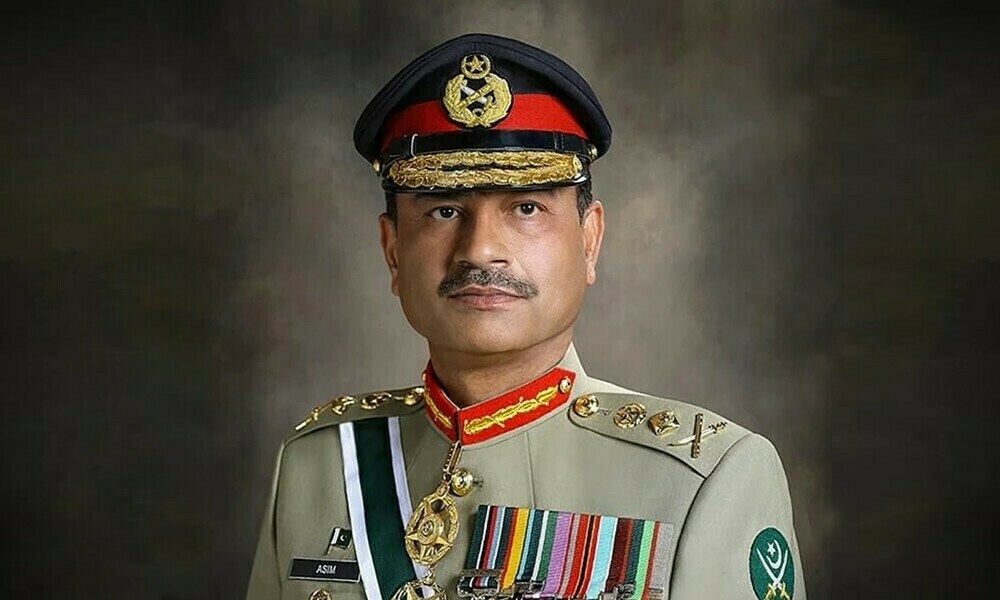
EDITORIAL: The Indians made quite a show of their delegation’s meeting with US Vice President JD Vance earlier this month, wasting no time in framing it as a strategic snub to Pakistan. That narrative didn’t age well. Field Marshal Asim Munir’s lunch at the White House with President Donald Trump — not only listed on the official schedule but also held without any civilian counterpart — has shifted the optics entirely. In diplomatic terms, this is not just a working lunch; it was a reset.
This is the first time a Pakistani army chief has been hosted alone at the White House. No prime minister. No foreign minister.
The COAS accompanied by the Director General of ISI, who is also the National Security Advisor, and the President with Secretary of State Marco Rubio and his special representative for Middle East affairs Steve Witkoff discussed everything from regional security and rare earths to trade and even crypto currencies. Coming at a time when US-Pakistan ties had been tepid at best for the last several years, this engagement marks a sharp and unexpected upturn. Islamabad has every reason to call this a diplomatic win.
What makes it even more significant is President Trump’s own emphasis on why this meeting happened. He made it clear that he invited Field Marshal Munir to thank him for choosing de-escalation during the most recent Pakistan-India standoff.
He went on to credit both Pakistan and India for avoiding what he described as a potential nuclear war, but he was also unambiguous in singling out Munir’s influence on the Pakistani side. “This man was extremely influential in stopping it,” he said, speaking to reporters on the White House. That level of praise from an American president — especially one not known for scripted diplomacy — matters.
It’s not difficult to read between the lines here. Rawalpindi’s ability to secure this meeting, and to frame it as a counterpoint to India’s engagement with the US Vice President, speaks to the quiet but real influence that still runs through the channels of military diplomacy. It also reinforces the Pakistan army’s centrality in matters of foreign and regional policy, especially during a time of political flux at home and uncertainty abroad.
Whatever was said behind closed doors, there was no public articulation of what is a deeply felt consensus in Pakistan — that Israeli actions are unlawful, disproportionate, and a violation of international norms.
Trump noted that Pakistan “knows Iran better than most” and is “not happy about anything.” Even though that this is a vague characterisation, there were signs of movement on the economic front.
Trump mentioned progress in trade negotiations with both India and Pakistan, signalling a rare willingness to rebalance engagement. If this leads to a serious trade deal that provides Pakistan improved market access or technology cooperation, it will be another important gain. For a country struggling with an overstretched balance of payments and dwindling export competitiveness, any structural shift in trade terms with the US would be a meaningful breakthrough.
Copyright Business Recorder, 2025




















Comments
Comments are closed for this article.