


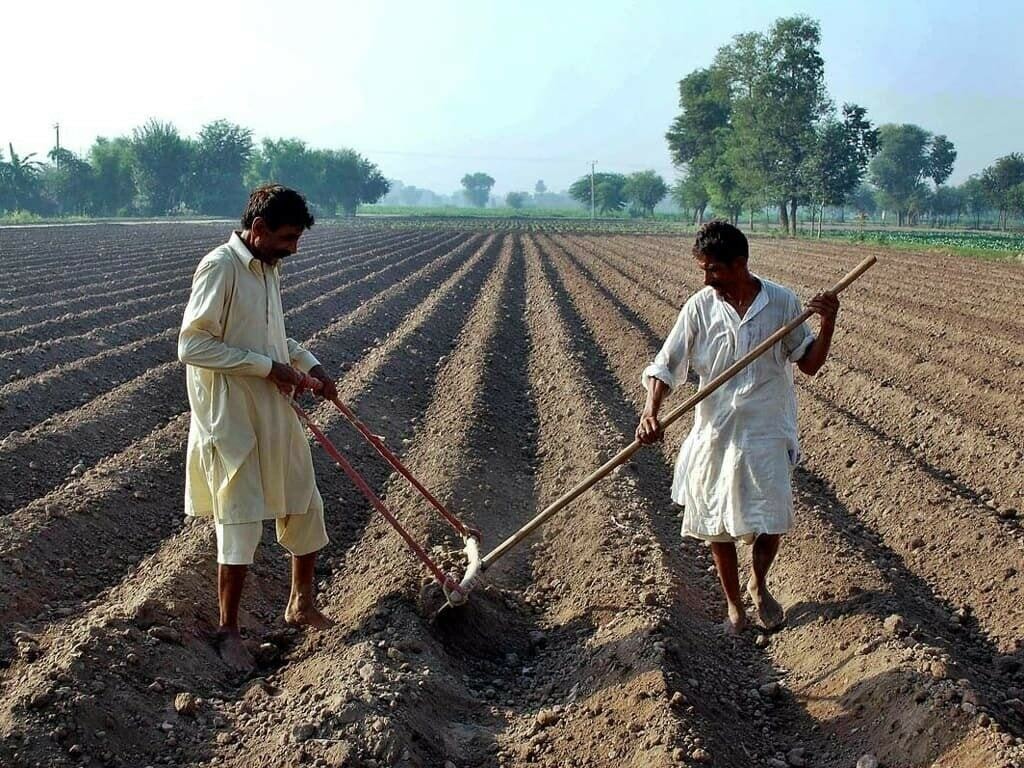

ISLAMABAD: As Pakistan’s agriculture sector faces one of its worst downturns in recent years, the Pakistan Kissan Ittehad (PKI) has called on the government to establish a transparent pricing mechanism and create an Agri Export Authority (AEA) to stabilise local markets and ensure food security.
PKI President Khalid Mahmood Khokhar urged the federal government to form an Agriculture Commodities Price Commission (ACPC) that guarantees a minimum 25 percent Return on Investment (ROI) to farmers.
He said that the move is vital for addressing the growing imbalance between domestic supply and demand while also creating incentives for future agricultural growth.
In order to ensure stability in local markets and promote sustainable marketing operations, the creation of an AEA is inevitable, Khokhar said.
He added that such an authority would help manage surplus production, balance domestic prices, and pave the way for consistent export strategies.
He also called for the immediate abolition of the 18 percent GST on seed cotton, as well as the removal of the 14 percent GST on tractors and 18 percent on tractor-mounted implements, to encourage mechanised farming and improve productivity.
Furthermore, Khokhar demanded a uniform electricity tariff of Rs10 per unit for irrigation tube wells to ease farmers’ costs.
Highlighting the gravity of the situation, he noted that the agriculture sector’s growth contracted sharply by 5.84 percent in the last year, dropping from 6.4 percent to just 0.56 percent, while the production of major crops declined by 13.49 percent compared to the previous year.
Cotton production fell drastically to 5.55 million bales, 50 percent below the target and 34 percent lower than last year, causing the cotton import bill to surge to an expected $4.45 billion 178 percent higher than last year’s $1.6 billion.
Wheat output also dropped by 8.91 percent to 28.98 million tons, representing an opportunity loss of approximately Rs250 billion in the international market, while maize production declined by 15.4 percent to 8.24 million tons, and sugarcane production decreased to 84.24 million tons from 87.64 million tons.
Khokhar further pointed out that maize farmers are facing a severe crisis due to a sharp fall in market prices, with rates plunging by Rs1,200 per 40kg within a month following the arrival of fresh crops.
Despite these alarming trends, the Punjab government’s agriculture budget for the financial year 2025-26 increased only marginally by 10.75 percent to Rs129.8 billion, which Khokhar described as a token increment insufficient to tackle the multi-thousand-billion-rupee crisis facing the sector. He warned that such inadequate measures fail to address the depth of the problem and urged immediate structural reforms to safeguard farmers’ livelihoods and ensure long-term food security for the country.
Copyright Business Recorder, 2025




















Comments
Comments are closed for this article.