


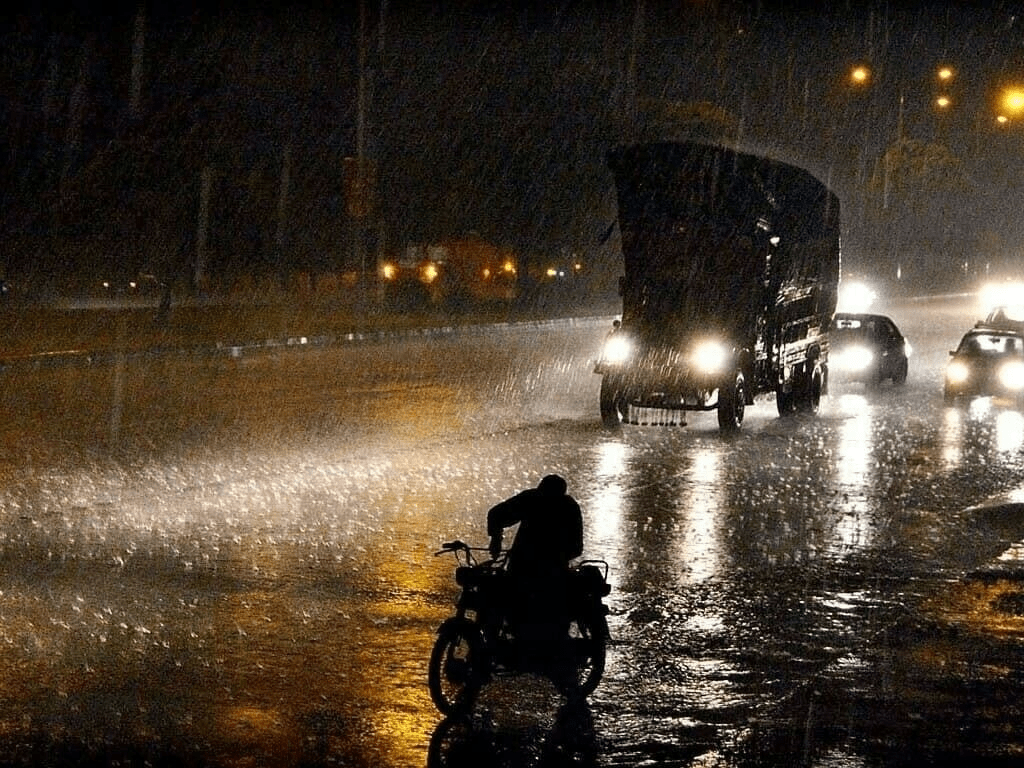

LAHORE: Temperatures are expected to be up to 2ºC hotter than average across the whole Hindu Kush Himalayan (HKH) region this summer monsoon, with three countries, India, Nepal, and Pakistan, as well as China’s Tibetan autonomous region, also set for above-average rainfall, according to a new analysis of global and national meteorological agencies’ data from the International Centre for Integrated Mountain Development (ICIMOD).
With floods the leading cause of deaths and economic damage in the HKH, and close to three-quarters (72.5%) of all floods from 1980 to 2024 occurring during the summer monsoon season, experts warn disaster agencies and communities to brace for a possible rise in climate risks and impacts on societies, economies, and ecosystems.
“Rising temperatures and more extreme rain raise the risk of water-induced disasters such as floods, landslides, and debris flows, and have longer-term impacts on glaciers, snow reserves, and permafrost. Lower rainfall, meanwhile, particularly in water-stressed countries such as Afghanistan, may pose risks to food and water security in a country with already extraordinarily high levels of malnutrition.”
“Given the extremely high exposure and risks in our region, we urgently need impact-based early warning systems adopted at scale, and for government and donor support to build up disaster preparedness to increase,” said Saswata Sanyal, Manager of ICIMOD’s Disaster Risk Reduction work.
The report, produced by ICIMOD’s Climate and Environmental Risks group, provides a synthesis of predictions from global and regional meteorological bodies including the South Asian Climate Outlook Forum (SACOF), the Asia-Pacific Economic Cooperation Climate Centre (APCC), the International Research Institute for Climate and Society (IRI), Copernicus Climate Change
Service (C3S) and national agencies.
Climate change – by driving more intense rainfall, permafrost degradation, and glacier retreat that can trigger floods, landslides, and GLOFs – is the primary cause of the increasing frequency and magnitude of mountain hazards in the HKH region.
Temperature rise, combined with wetter monsoons, can also raise the risk of heat stress and waterborne disease outbreaks, such as dengue, experts say.
South Asia has been wetter than average in recent years, except for 2023, a major report from the World Meteorological Organisation (WMO) issued last month confirmed. The organisation forecasts that this trend will continue until 2029.
The WMO repeatedly emphasises the need for increased investment in climate services and early warning systems in the teeth of rapidly escalating climate risks, with a particular focus on building the capacity of national meteorological and hydrological services, said a press release issued by the ICIMOD.
Copyright Business Recorder, 2025




















Comments
Comments are closed for this article.