


One reality which emerged out of the recent India-Pakistan conflict is that India is one among equal in the fraternity of South Asian nations. India has long positioned itself as the dominant regional power in South Asia, leveraging its demographic, economic, and military superiority.
However, the recent conflict between India and Pakistan has exposed critical vulnerabilities in this hegemonic posture. This article examines the implications of the conflict on India’s regional dominance, highlighting the growing parity between India and Pakistan in diplomatic and military affairs and the increasing strategic autonomy of smaller South Asian nations. It argues that the traditional notion of Indian hegemony is being challenged by an emerging more multipolar and assertive regional order.
India’s involvement in regional organizations like the South Asian Association for Regional Cooperation (SAARC) and the Bay of Bengal Initiative for Multi-Sectoral Technical and Economic Cooperation (BIMSTEC) also illustrates its ambitions to play a leadership role in South Asia. Yet, this perceived hegemony has often been met with resistance from neighboring countries.
Indian leadership’s role in South Asia has been underpinned by a combination of soft power, economic leverage and strategic dominance. New Delhi has frequently acted as a security guarantor, development partner, and political influencer in countries like Bangladesh, Bhutan, Nepal, Sri Lanka, and the Maldives.
However, these relationships have often been marked by tensions, with smaller states resisting perceived Indian overreach. Pakistan, influenced by historic parity between the two carved out countries, remained out of the orbit of India’s hegemony.
Countries like Bangladesh, Nepal, and Sri Lanka have increasingly asserted their sovereignty and economic independence. Bangladesh has pursued extensive economic partnerships with China and Japan and lately with Pakistan, while Nepal has defied Indian pressure on constitutional and territorial matters. Sri Lanka, Bhutan and the Maldives have oscillated between pro-India and pro-China alignments, reflecting a desire for strategic balance rather than dependence.
Nevertheless, this hegemonic stance has increasingly come under scrutiny, particularly in the wake of the recent India-Pakistan conflict, which has revealed significant constraints on India’s ability to unilaterally influence regional and global outcomes. India’s relative military and economic superiority did not translate into strategic dominance in this conflict.
The parity in tactical outcomes has dented the myth of India’s invincibility in conventional military terms. Pakistan’s nuclear deterrence, improved air defence, and effective diplomacy neutralized India’s attempts to impose strategic costs, creating a deterrent equilibrium.
The conflict illustrated that conventional superiority does not guarantee dominance in modern asymmetric and nuclear-influenced warfare. The rapid military responses on both sides underscored the limits of escalation without mutual destruction.
The conflict has affirmed Pakistan’s continued relevance in global diplomacy. Despite India’s growing alignment with the West, especially the US, , France and Russia, these powers refrained from taking a partisan stance. Instead, international diplomacy focused on de-escalation and parity-based dialogue. This reinforces the notion that, in matters of regional security and peace, India is not the sole interlocutor, and Pakistan remains a necessary counterpart.
Diplomatically, both countries engaged with major global powers to narrate their versions of the conflict. Crucially, the international community treated both states as equally responsible actors, calling for restraint and dialogue. The ceasefire agreement, reportedly influenced by external mediation from actors like the US and the United Arab Emirates, further undermined India’s insistence on bilateralism and highlighted its vulnerability to international pressure.
Moreover, internationally, both India and Pakistan engaged in parallel diplomatic offensives, apprising the world capitals of their narratives. Significantly, none of these powers outrightly condemned either side. Instead, global calls for restraint and dialogue placed both nations on an equal diplomatic footing.
India’s inability to dictate the terms of the conflict’s resolution represents a broader erosion of its regional and global influence. This shift is not only due to Pakistan’s strategic resilience but also because of the changing dynamics among other South Asian nations, many of whom are actively diversifying their diplomatic and economic engagements. The cumulative effect of these developments is a region that is moving away from a unipolar Indian-led order toward a more multi-polar framework.
South Asian states are no longer content with passive roles in a hierarchy led by India; instead, they are engaging in multilateral diplomacy, leveraging international partnerships, and resisting hegemonic pressures.
The recent India-Pakistan conflict serves as a critical inflection point in South Asia’s geopolitical trajectory. It challenges the long-standing assumption of Indian hegemony and underscores the emergence of a more balanced regional order. India’s strategic and diplomatic parity with Pakistan in the conflict, coupled with the assertiveness of smaller neighboring states, signals the decline of unilateral Indian dominance.
Moving forward, India’s future role in South Asia will depend not on its ability to dominate, but on its willingness to engage as a partner among equals. In a region characterized by rising nationalism, economic competition, and strategic realignments, hegemonic posturing may prove not only unsustainable but counter-productive.
The way forward lies in fostering regional integration, resolving bilateral issues through dialogue, and embracing a pluralistic vision of South Asian solidarity. India can play a significant role in making this happen.
Copyright Business Recorder, 2025
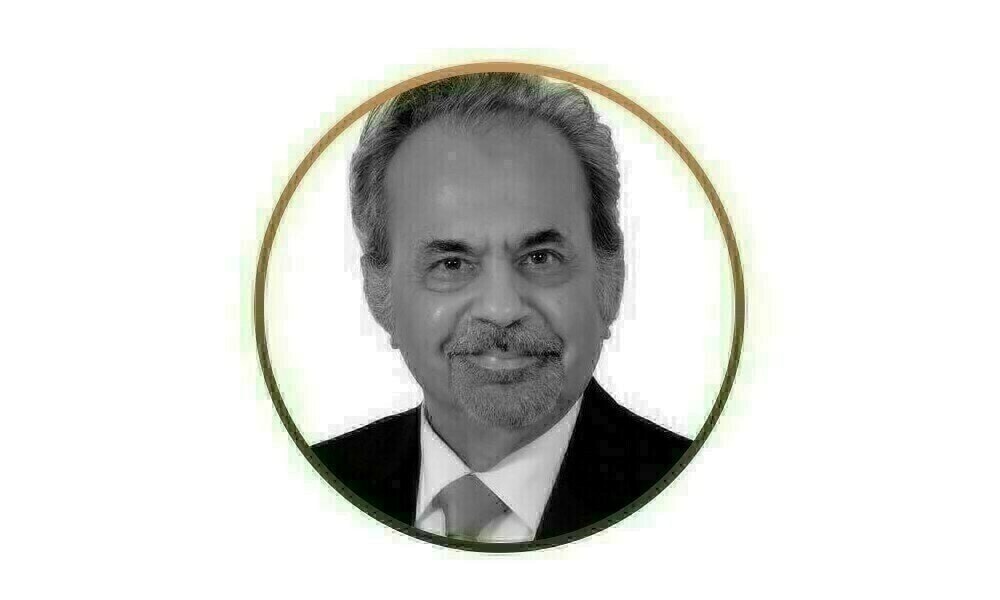
The writer is a former President OICCI; Global Business Leader and Strategic Affairs Analyst



















Comments
Comments are closed for this article.