


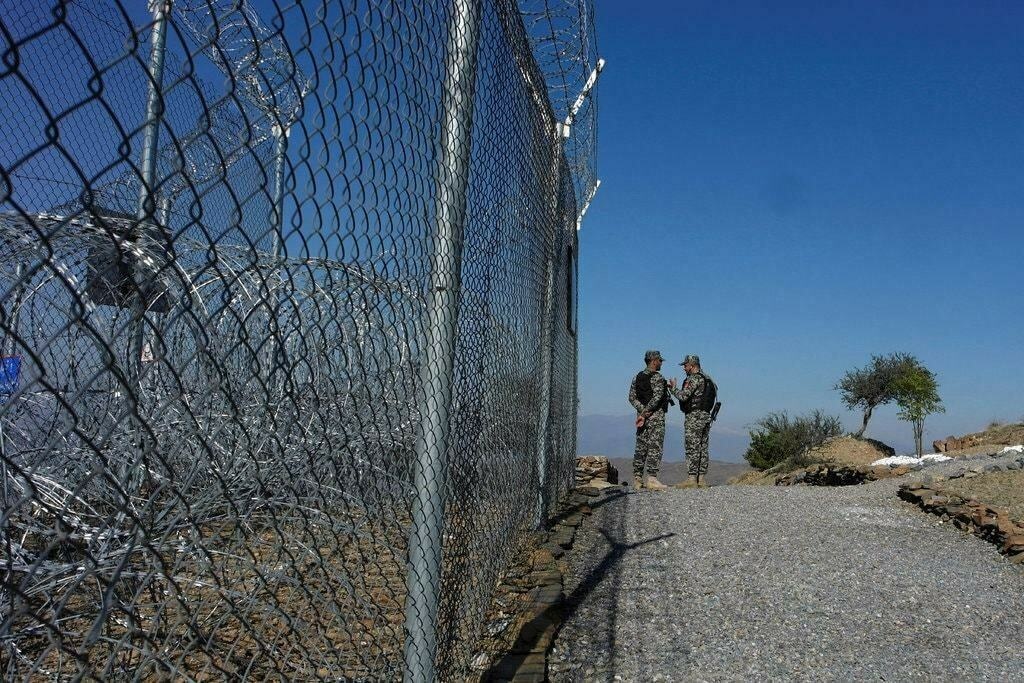
EDITORIAL: The Director General of ISPR has said out loud what the Pakistani security establishment has been warning about for some time now: that the Afghan government is not merely turning a blind eye to cross-border terrorism but actively harbouring Indian-sponsored groups orchestrating attacks on Pakistan.
Lt-General Ahmed Sharif Chaudhry’s statement — delivered to a student gathering in Khyber Pakhtunkhwa — deserves more than cursory coverage. It is a sobering reminder that regional instability is being weaponised by actors who have little interest in peace and who remain invested in permanent disruption.
At the heart of this crisis lies a bitter irony. Pakistan has long stood by its Afghan brethren. From hosting millions of refugees for decades, to providing critical aid during times of war and famine, Pakistan’s policy towards Afghanistan has been shaped more by shared history and kinship than by cold geopolitics. Yet today, elements within the Afghan state appear to be trading that fraternity for intelligence payouts from New Delhi.
This is not just a diplomatic problem; it is a direct threat to Pakistan’s internal security. The surge in terrorist attacks launched from Afghan soil has coincided with reports of financial and material support being channeled to extremist outfits by Indian agencies operating with impunity in Afghanistan.
Whether the motive is to destabilise Pakistan’s western frontier, draw attention away from atrocities in Kashmir, or simply exploit regional fault lines, the outcome is the same: bloodshed inside Pakistan, mistrust across borders, and a region drifting further away from stability.
The Afghan government, or what passes for one under Taliban rule, must understand that this covert alignment with India’s intelligence apparatus is not a strategic masterstroke—it is a reckless gamble. It risks turning Afghanistan into a staging ground for proxy warfare, isolating it further from regional partnerships that could offer genuine development, trade, and security cooperation. If Kabul thinks short-term financial patronage is worth undermining its only neighbour that has consistently supported its people, it is sowing the seeds of long-term strategic isolation.
There is also a message here for the Afghan people. The sentiments echoed by the students present at the DG ISPR’s address — the nationalistic chants, the visible unity — reveal a national mood that is no longer willing to excuse cross-border attacks as unintended fallout. If fraternal ties are to mean anything, the Afghan public must hold its rulers accountable for decisions that endanger regional peace and drag them into foreign-sponsored agendas. The Pakistani people have stood by Afghans in their darkest hours. What they see now is betrayal repackaged as diplomacy.
India’s hand in this is unsurprising. Its well-documented strategy of using asymmetric warfare to apply pressure on Pakistan is neither new nor particularly clever. What has changed, however, is Pakistan’s posture. General Chaudhry’s remarks point to a military that is not only alert but prepared. He referenced a past operation targeting 26 sites in India—conducted in response to aggression—to underscore that strategic miscalculation by New Delhi will not go unanswered. That same clarity should now guide Pakistan’s policy towards Kabul.
This is no time for romantic illusions. Afghanistan’s government must decide whether it wants to be a partner in peace or a pawn in someone else’s war. If it chooses the latter, it will find itself further destabilised, diplomatically isolated, and economically stranded.
For Pakistan, the path forward must combine vigilance with clarity. Diplomatic channels must remain open, but the red lines must be unmistakable. Terror launched from Afghan soil, with Indian backing, is not an Afghan domestic matter—it is a hostile act. And it will be treated as such.
The stakes are high. But the choice is simple. Either Kabul plays its role in ensuring peace, or it owns the consequences of choosing provocation over partnership.
Copyright Business Recorder, 2025




















Comments
Comments are closed for this article.