


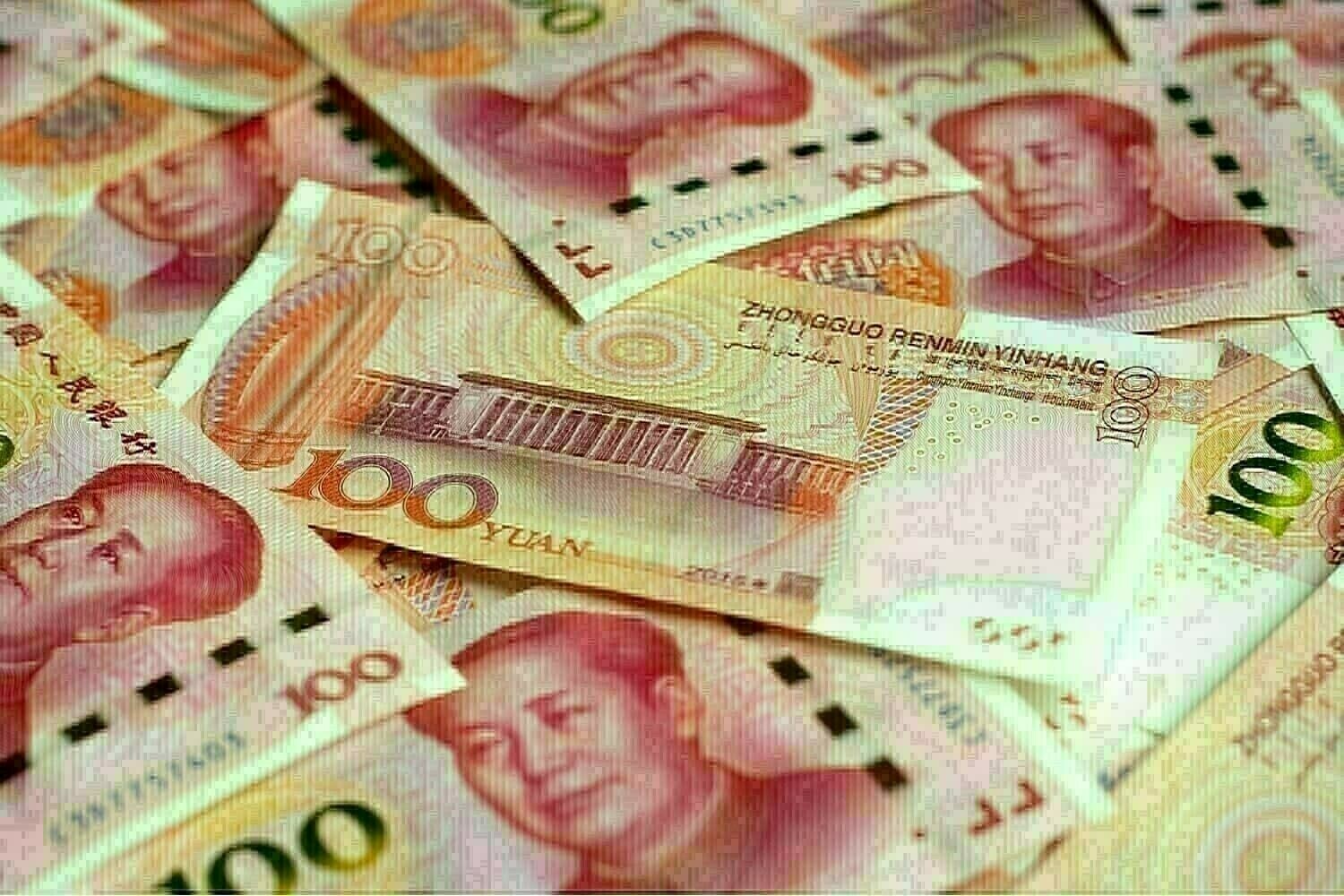

SHANGHAI: China’s yuan fell from a six-month peak against its US counterpart on Wednesday, pressured by rising demand for the dollar from corporates and offshore buyers after the greenback’s recent dip.
The Chinese currency leapt to levels last seen in November in both onshore and offshore markets on Tuesday, breaching the psychologically important 7.2 per dollar level, as Beijing and Washington’s agreement to pause their trade war boosted sentiment.
The deal inked between the US and China after weekend talks in Geneva surpassed market expectations, as both sides agreed to drastically unwind most of the tariffs imposed on each other’s goods since early April.
The sudden strength prompted major state-owned banks to buy dollars and sell yuan in the onshore spot market to slow the pace of yuan rallies on Tuesday, sources told Reuters.
Those moves were followed by more dollar demand on Wednesday including buying interests from corporate clients and overseas listed Chinese companies for their dividend payments.
As of 0313 GMT, the onshore yuan was 0.18% lower at 7.2169 per dollar. It hit a six-month high of 7.1855 on Tuesday.
Its offshore counterpart was down about 0.22% in Asian trade at 7.2133 as of 0313 GMT.
Volkmar Baur, FX analyst at Commerzbank, said China still faced risks from deflationary pressures and that the impact from the Sino-US trade deal was likely to be only marginal.
“Further interest rate cuts by the central bank are perhaps not to be expected in the short term,” Baur said.
“Structurally, however, the direction is likely to be clear. Even though the yuan has enjoyed political tailwinds for a few days and USD/CNY is back below 7.20 for now, the yuan is more likely to weaken in the medium term.”
China delivered sweeping monetary easing measures last week, including interest rate cuts and a major liquidity injection.
Prior to the market opening, the People’s Bank of China (PBOC) set the midpoint rate, around which the yuan is allowed to trade in a 2% band, at 7.1956 per dollar, the strongest since April 3.
The setting was 143 pips weaker than a Reuters’ estimate of 7.1813, the first time since November the fixing was below market expectations.
Traders interpreted that as a sign that authorities may not want a too-strong yuan when the dollar is largely steady in overseas markets.
“With a more dovish-than-expected result to last weekend’s US-China trade negotiations, and relatively limited signs of a broader surge in protectionism beyond the US, we are increasing our forecasts for China’s export growth for the second time in a week,” Goldman Sachs analysts said in a note.
“We expect policymakers to allow gradual appreciation of the yuan against the dollar in an environment of broad dollar weakness.”
They revised yuan forecasts to hit 7.20, 7.10 and 7.00 on a three-, six- and 12-month horizon, compared with 7.30, 7.35 and 7.35, respectively, in a previous prediction.




















Comments
Comments are closed for this article.