


Khar condemns India’s actions, praises role of Pakistan armed forces
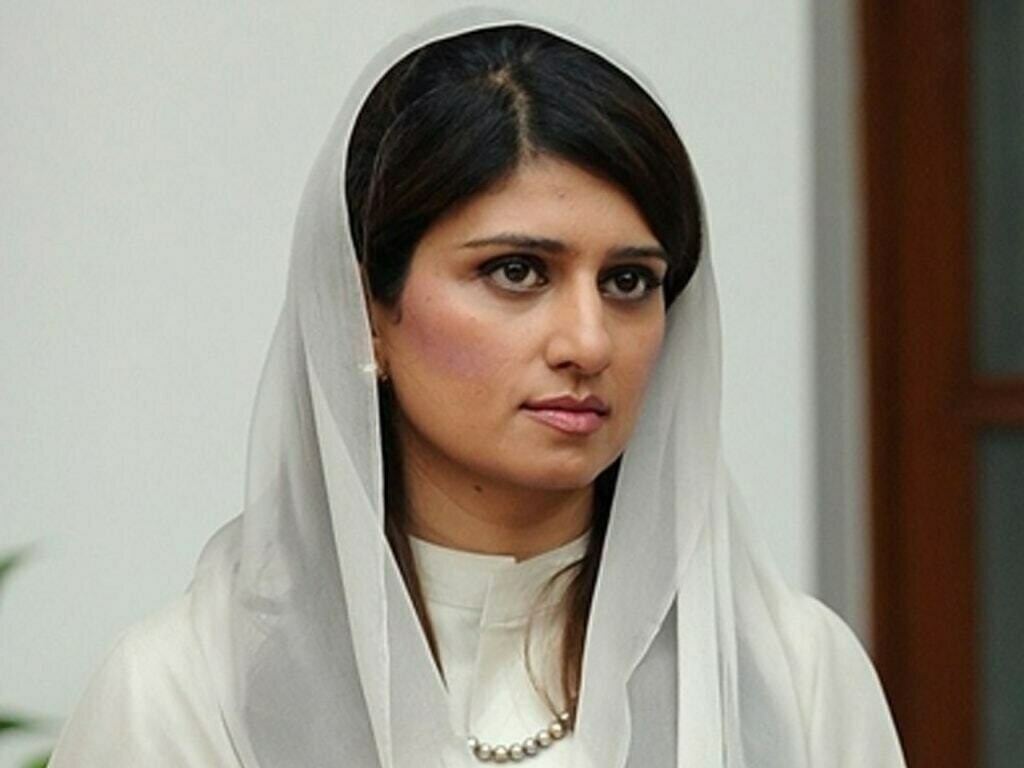

ISLAMABAD: Hina Rabbani Khar, the former foreign minister on Tuesday said that recent incidents between the two nuclear-armed neighbours should not be a cause for celebration, noting that “celebrating how one nuclear power challenges another without regard for capability or consequence is deeply irresponsible.”
Speaking over the recent tension between India and Pakistan, she condemned India’s actions in recent regional military tensions and warning against what she described as a growing disregard for international law and norms.
She recalled the 2019 crisis following India’s air strikes inside Pakistani territory, a move she described as “reckless escalation.”
She accused India of repeatedly crossing red lines during that episode, while Pakistan, she said, “demonstrated restraint” despite what she called a “fever of extremism” gripping Indian leadership at the time.
“All of Pakistan stood united in the face of that aggression,” Khar said, stressing that India misread Pakistan’s restraint as weakness – a miscalculation, she warned, that could have led to catastrophic consequences.
Turning to more recent developments, Khar took aim at the global community’s response to Indian actions, challenging narratives that framed India’s behaviour as self-defence.
“What new metrics are being applied,” she asked. “Have we abandoned the UN Charter and the rule of law? Are we no longer signatories to Article 25, which obliges all nations to follow UN Security Council resolutions,” she questioned.
She criticised Indian Prime Minister Narendra Modi’s unilateral declarations regarding Kashmir, asking whether the world was expected to “pay homage” to such claims while turning a blind eye to long-standing international resolutions on the disputed region.
Citing US President Donald Trump’s acknowledgement of Kashmir as a disputed territory, Khar argued that the Indian narrative had begun to unravel.
“The illusion of India’s conventional and military supremacy has been broken – not by Pakistan, but by Modi’s own extremist policies,” she declared.
According to Khar, the belief that India could serve as a regional security provider has been undermined by its inability to secure its own borders during confrontations with Pakistan. “Pakistan proved its capabilities through both defensive and calibrated offensive responses,” she asserted.
Khar argued that Pakistan’s military professionalism and operational competence had been underestimated. “We don’t just possess technologically advanced weapons – we train to use them better,” she said, claiming that Pakistan had altered global perceptions of power in South Asia and the broader Indo-Pacific strategy.
On the broader issue of terrorism, Khar accused India of weaponising the narrative. “If terrorism takes place in India, it invokes self-defence. If it happens in Pakistan, what are we expected to do? Remain silent?” she asked, warning of the dangerous precedents being set.
She questioned whether Pakistan would have been justified in retaliating militarily when it traced Indian involvement in past terror incidents like the Jaffar Express attack.
Khar argued that India’s attempts to detach itself diplomatically from Pakistan – a strategy pursued over the last 15 years – had failed.
“By provoking Pakistan into conflict, they re-hyphenated themselves with us in the eyes of the world,” she said. “India has shown itself to be the irresponsible nuclear actor in the region, not Pakistan.”
Criticising India’s perceived attempts to reshape regional realities through rhetoric and force, she said, “Calling a dispute resolved does not resolve it.”
She welcomed President Trump’s offer to mediate on Kashmir and noted that when he and US Secretary of State Marco Rubio advocated for a ceasefire, they were quickly accused of dishonesty by Indian voices.
“The real theatrics,” she said, “have been visible in broad daylight – from Indian political rhetoric to the implosion of its media and societal narratives.”
Khar concluded by stating that Pakistan would remain unapologetic in defending its sovereignty and would continue to celebrate the restoration of peace, including the role played by international partners in achieving a ceasefire.
Minister for Parliamentary Affairs Tariq Fazal Chaudhry, Abdul Qadir Patel and other lawmakers belonging to all political parties hailed national unity in recent tensions with India, claiming military success, including the downing of five Indian aircraft.
At the onset of the session, the lawmakers clashed over proposed legislation aimed at enhancing oversight of the Public Sector Development Programme (PSDP) and budgetary processes.
PPP’s Agha Rafiullah introduced the PSDP Oversight Bill, seeking transparent fund allocation and timely project completion, which was opposed by the government, terming it unnecessary.
Naveed Qamar, another PPP MNA, insisted that PDSP must be discussed in the standing committee like the finance bill, and warned, “If this attitude persists, the tables could turn.”
Minister Food Security Rana Tanveer Hussain dismissed the bill, insisting the planning minister could be summoned as needed and existing committees were sufficient.
A separate proposal by Rana Iradat Sharif Khan to establish a Parliamentary Budget Office met similar resistance.
The parliamentary secretary for finance, Saad Waseem Chaudhry, argued it would duplicate existing parliamentary functions.
The House also passed two private members’ bills—the International Examination Board Bill, 2024 and the Ghurki Institute of Science and Technology Bill, 2024—with majority support.
Both bills had previously been reviewed and cleared by the relevant parliamentary committees. The legislation was approved clause by clause during the session.
The day, reserved for private members’ business, also saw a flurry of new legislative bills introduced across diverse sectors. These included the Elections Amendment Bill, 2025, the Trade Organizations Amendment Bill, 2025, the Parliamentary Budget Office Bill, and the Islamabad Capital Territory Senior Citizens Amendment Bill, 2025.
Other proposed amendments addressed narcotics control, labour laws, civil service regulations, and trade development, including the Control of Narcotic Substances Amendment Bill, 2015, the Industrial Relations Amendment Bill, 2025, and the Trade Development Authority of Pakistan Amendment Bill.
Multiple bills focused on higher education, including the Al Musaddiq Institute of Higher Education Bill, Rawal International University Islamabad Bill, and the Wah Institute of Modern Sciences, Wah Cantt Bill.
Additionally, the Pakistan General Cosmetics (Repeal) Bill was introduced, signalling a possible regulatory shift in the cosmetics sector.
Copyright Business Recorder, 2025

























Comments
Comments are closed for this article.