


Review petitions against PHC judgement: ‘Clear error’ in verdict must be identified, rules SC
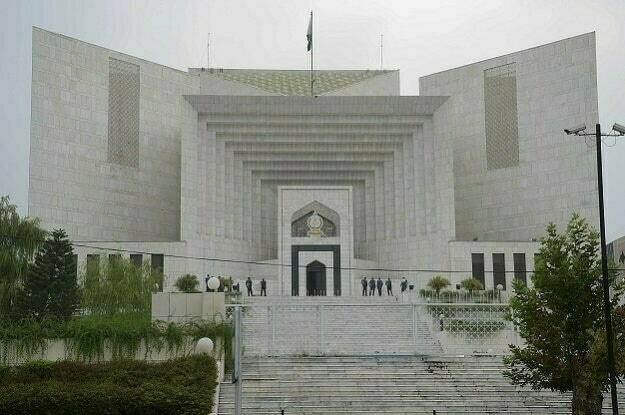

ISLAMABAD: The Supreme Court ruled that a clear error in an original verdict must be identified for a review petition to be accepted for hearing.
A three-member bench of the SC, headed by Justice Syed Mansoor Ali Shah, and comprising Justice Muhammad Ali Mazhar and Justice Syed Hasan Azhar Rizvi ruled that in a set of civil review petitions against a Peshawar High Court (PHC) verdict which had dismissed challenges brought by candidates who had been denied appointments as primary school teachers.
The judgment, authored by Justice Mansoor, stated that a review could be sought only under Article 188 of the Constitution, which empowers the SC to review its judgment under Article 188 of the Constitution, subject to the provisions of any Act of Parliament, and of any rules made by this Court. The procedure governing the exercise of review jurisdiction is further elaborated in the Supreme Court Rules, 1980.
Order XXVI, Rule 1 of the Rules stipulates that a review petition may be filed on grounds similar to those mentioned in Order XLVII, Rule 1 of the Code of Civil Procedure, 1908, which provides that a review may be sought where there is (1) discovery of new and important matter or evidence which, after the exercise of due diligence, was not within knowledge of, or could not be produced by, the third party seeking review at the time when the decree was passed or order made; (2) some mistake or error apparent on the face of the record, and (3) any other sufficient reason.
The court citing the Code of Civil Procedure, 1908 stressed that “some mistake or error apparent on the face of the record” was one of the situations where a review may be sought.
Acknowledging that the phrase “cannot be defined with precision”, Justice Shah declared that the error “must be self-evident, immediately apparent, and not require extensive discussion or reasoning”.
The power of review was “not an open invitation to revisit judgements merely on the basis of dissatisfaction with the outcome”, the judge emphasised.
“A decision, order, or judgment cannot be corrected simply because it is erroneous in law, or because a different view could have been taken by the court or tribunal on a point of law or fact,” he noted.
“Frivolous claims serve no purpose other than to waste the court’s time and resources,” the order stated, clarifying that the power of review should not be confused with the appellate power.
Noting that there were over 2.2 million cases currently pending before courts across Pakistan, including approximately 56,635 before the SC, the ruling pointed out that “frivolous, vexatious and speculative litigation contributes substantially to this backlog”.
The apex court upheld the judgments of the PHC, and the SC judgment under review (reported as Director Education Officer (Female) Charsadda and others v Sonia Begum and others, whereby, challenges brought by candidates who had been denied appointments as Primary School Teachers (PSTs) due to discrepancies between their domicile certificates and CNIC addresses were dismissed.
The court affirmed that under Section 3 of the Khyber Pakhtunkhwa (Appointment, Deputation, Posting and Transfer of Teachers, Lecturers, Instructors and Doctors) Regulatory Act, 2011, it is the domicile certificate, and not the CNIC address, that determines a candidate’s permanent residence for employment purposes. It further cautioned that relying solely on CNIC addresses would undermine the value of domicile certificates and unfairly disadvantage, otherwise, qualified applicants.
Recognising the distinction between “domicile” and “residence” and invoking the doctrine of legitimate expectation, the Court held that candidates who had successfully passed competitive examinations and possessed valid domicile certificates could not be denied appointments on technical grounds.
Copyright Business Recorder, 2025

























Comments
Comments are closed for this article.