


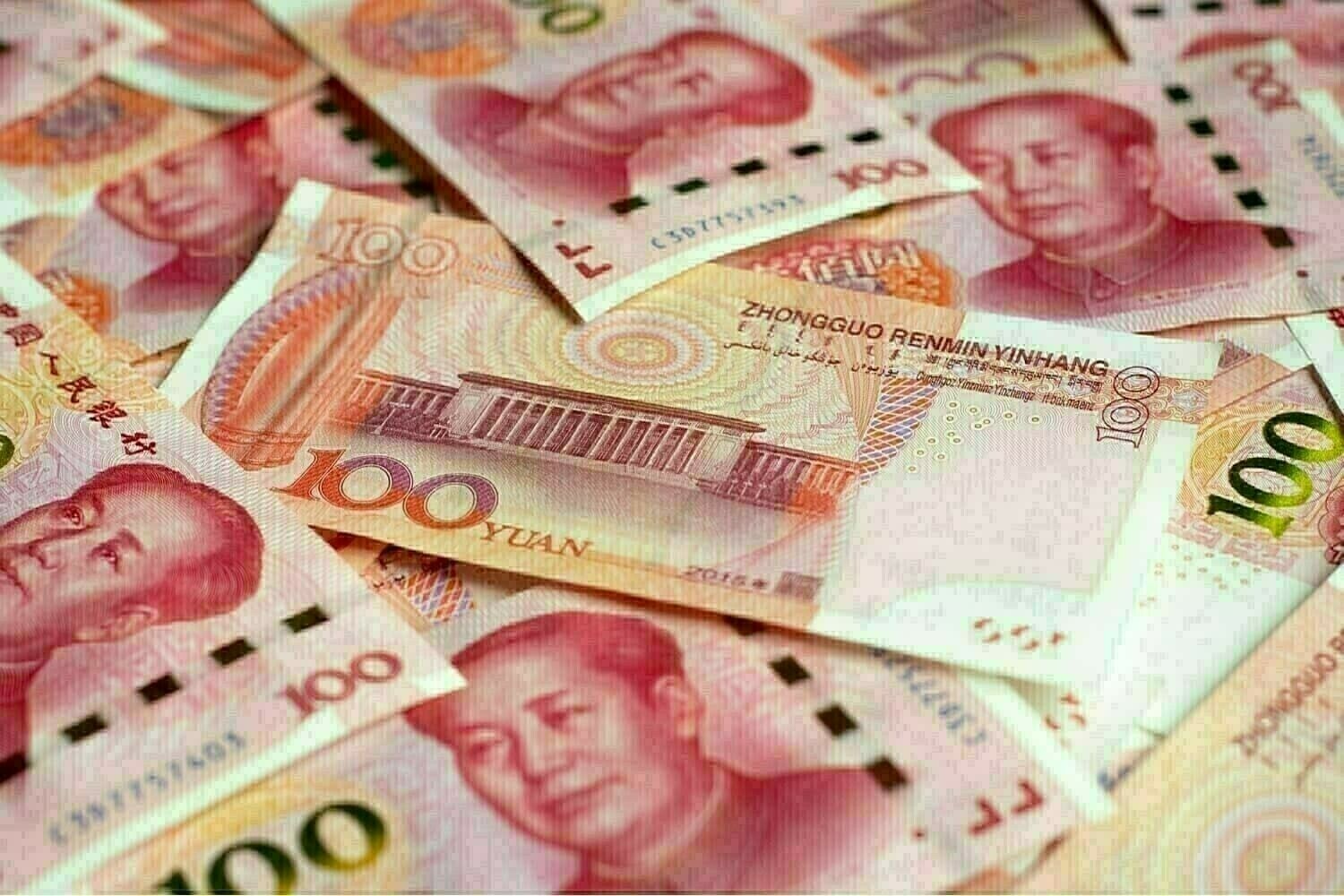

SHANGHAI: China’s yuan slipped against the dollar on Monday, as investors carefully monitored the greenback’s movements in global markets and developments in trade tensions between the world’s two largest economies.
Currency traders said they will also pay attention to China’s April manufacturing data due on Wednesday for signs of any impact on the economy from US President Donald Trump’s 145% tariffs on Chinese goods.
While Trump has claimed progress is being made on trade with China, and many other countries, actual evidence is lacking. Treasury Secretary Scott Bessent failed on Sunday to back Trump’s assertion that tariff talks with China were under way.
“We think China will leave the door open for negotiations, but won’t be in a rush to reach a deal with the US,” economists at Barclays said in a note.
As of 0326 GMT, the onshore yuan was 0.13% lower at 7.2960 per dollar, while its offshore counterpart was down about 0.09% in Asian trade at 7.2948.
Prior to the market opening, the People’s Bank of China (PBOC) set the midpoint rate, around which the yuan is allowed to trade in a 2% band, at 7.2043 per dollar, its strongest since April 8 and 785 pips firmer than a Reuters’ estimate of 7.2828.
This month, the PBOC slightly eased its control on the currency, allowing official guidance to weaken past the key threshold of 7.2.
However, the guidance came in stronger than market forecasts, which traders interpreted as an official attempt to keep the yuan steady while allowing some flexibility to counteract tariff shocks.
Underlining the external risks, however, the yuan’s value against its major trading partners, as measured by the CFETS yuan basket index, fell about 5% so far this year to 96.42, according to Reuters calculations based on official data.
Meanwhile, the yuan traded largely flat against the dollar year-to-date.
“We maintain our year-end USD/CNY forecast of 7.35, which … implies a yuan depreciation against the CFETS basket and should be supportive of China’s exports and growth on the margin,” said Lisheng Wang, China economist at Goldman Sachs.
China’s deputy central bank governor, Zou Lan, re-affirmed on Monday the continuation of a moderately loose monetary policy and increased support for the economy, while maintaining yuan stability.
In global markets, the dollar made a steady start on Monday as investors prepared for a week packed with economic data that may give a first glimpse of whether Trump’s trade war is hitting home.



















Comments
Comments are closed for this article.