




LAHORE: Sakib Eltaff, CEO of Al Ghazi Tractors Pakistan has highlighted the catastrophic downturn in the country’s tractor industry, with sales plunging 63% below the eight-year average.
In an exclusive interview with Business Recorder, Sakib Eltaff believed the crisis on economic instability, unsustainable taxation, and the absence of a cohesive agricultural mechanization strategy, warning of dire consequences for Pakistan’s farming-dependent economy.
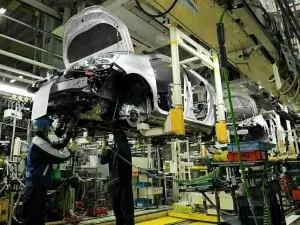
Al Ghazi Tractors Limited – with 50% ownership of Dubai’s Al-Futtaim Group and 43% by global agricultural machinery leader Case New Holland – stands as one of Pakistan’s two major tractor manufacturers, pivotal to modernizing the nation’s agriculture sector.
Eltaff further underscored the sector’s broader impact, noting that agriculture contributes over 20% to Pakistan’s GDP. “Beyond manufacturing, we sustain an ecosystem of 230 local vendors that employs 30,000 skilled workers. The industry indirectly supports nearly 300,000 livelihoods across the supply chain,” he said.
Recent months have seen unprecedented declines, with tractor sales hitting historic lows in what are traditionally peak months. “January and February 2025 recorded the weakest sales in memory—down 43% from last year. Adjusting for delayed deliveries under Punjab’s Green Tractor Scheme, the real drop is 63%,”
Eltaff revealed. He linked the collapse to shrinking farmer incomes and rising input costs. In this time of crisis, the industry needs stability, not short-term changes that may cause future shocks,“ he stressed, urging that key industry stakeholders should work together on fiscal reforms.
Pakistan’s mechanization levels lag far behind global benchmarks, with just 0.8–0.9 horsepower per acre compared to the FAO-recommended 1.4. Eltaff cited economic instability, climate risks, and policy gaps as key barriers. “Mechanization isn’t just about tractors—it’s about transforming productivity. This demands collaboration between policymakers, manufacturers, and financial institutions,” he asserted, advocating for long-term strategies over short-term fixes.
While praising Punjab’s Green Tractor Scheme for providing critical relief, Eltaff cautioned that such initiatives must be better timed and structured to enhance mechanization—not substitute the existing market demand.
He also highlighted affordability challenges, with tractor prices now starting at Rs2.5 million. “Banks must offer flexible financing solutions tailored to farmers’ income cycles, especially as interest rates decline,” he said, emphasizing the need for credit access despite farmers’ often informal financial histories.
Al Ghazi Tractors is pushing technological innovation to modernize farming, including the recent launch of the high-capacity NH 850 tractor and considerations of GPS-enabled driverless models. “Smart tools like drones for surveying, crop monitoring and targeted spraying could significantly improve yields, but these require policy backing and investment,” Eltaff noted.
Calling for a national mechanization policy, Eltaff warned that short-term interventions risk undermining the sector. “This industry anchors Pakistan’s agricultural value chain. Without strategic vision, we jeopardize food security and hundreds of thousands of jobs,” he said. As economic pressures mount, industry leaders urge decisive action to revive a sector vital to the nation’s survival.
Copyright Business Recorder, 2025










Comments
Comments are closed for this article.