


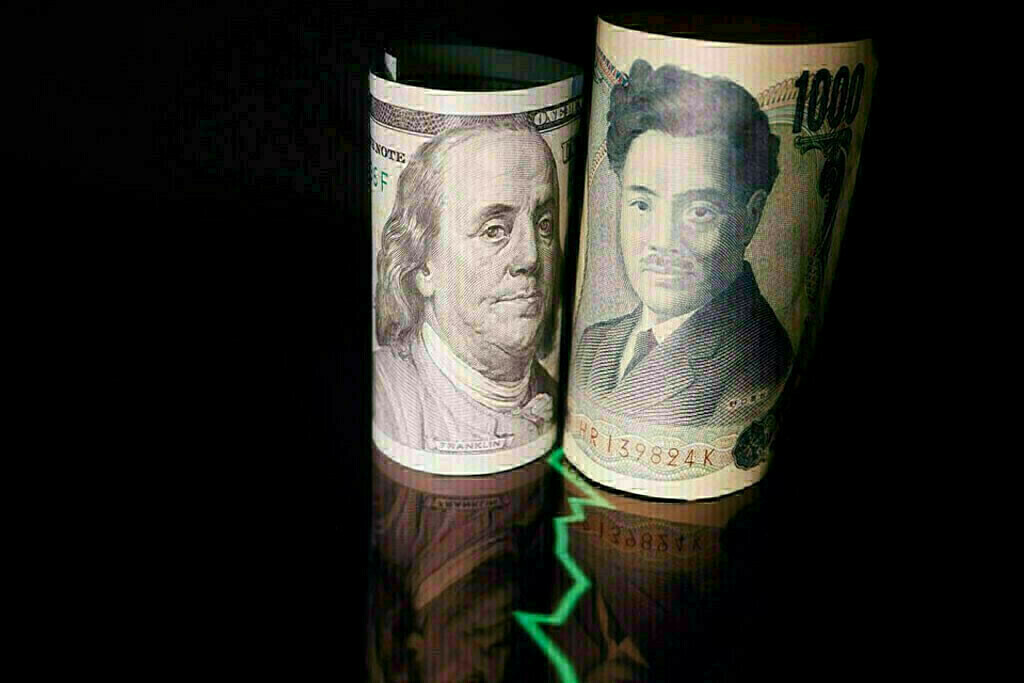

SINGAPORE: The yen was investors’ safe harbour of choice on Tuesday and it traded near five-month highs as fears about a tariff-driven slowdown in U.S. growth have rattled U.S. stocks and the dollar.
The Nasdaq fell 4% overnight and the S&P 500 slid 2.7% as equities caught up with a big rally in U.S. bonds, moving on the risk that U.S. economic growth slows down.
The yen touched a five-month peak of 146.625 per dollar and was last trading at 146.85.
Other moves in the currency market were more muted, but the lack of flight to the dollar - which has been sinking in recent weeks - was noteworthy, according to analysts.
The overnight drop in the risk-sensitive Australian dollar was a modest 0.4% and it last bought $0.6272.
Sterling was holding on above its 200-day moving average at $1.2875 and the euro was steady just above $1.08.
There were falls in the Canadian dollar and Mexican peso - the economies whose exports are to bear the brunt of U.S. tariffs - but they were modest.
The Canadian dollar was last steady around C$1.44 per dollar and the peso was at 20.34 per dollar.
China’s yuan was steady at 7.26 per dollar in early offshore trade on Tuesday.
“Historically, the dollar outperforms when we get a solid rise in volatility, but when the U.S. economy and U.S. equity market is the central point of concern, this is now limiting the attractiveness of the dollar,” said Chris Weston, head of research at broker Pepperstone in Melbourne.
The turmoil in equities seemed to be triggered by a Donald Trump Fox News interview, in which the president talked about a “period of transition” and declined to predict whether his tariffs on China, Canada and Mexico would result in a U.S. recession.
The dollar index , however, had already notched its largest weekly drop in more than two years last week as selling tracked a fall in U.S. bond yields and the euro leapt on German plans to reform a brake on borrowing.
“The market is unsure whether fading U.S. exceptionalism will continue to hurt the dollar or whether the dollar benefits from its safe-haven status,” said Bank of Singapore strategist Sim Moh Siong, noting any extension of selling in stock markets may lead safe-haven dollar buying to finally kick in.
Dollar weakens against yen, franc
The dollar index was mostly flat overnight as small rises against the Aussie and sterling were offset by losses on the yen and it settled at 103.89.
Germany’s Greens overnight vowed to block plans for a massive increase in state borrowing to revamp the military, but forwarded rival proposals in a bid for compromise and the euro handed back none of its massive gains from last week.
U.S. bonds, however, rallied, pushing down yields at a time when global yields are spiking.
In a week, the gap between 10-year U.S. and German yields has shrunk 33 basis points and the gap between U.S. and Japanese yields has shrunk 17 bps.

























Comments
Comments are closed for this article.