


NATO says won’t let ‘security vacuum’ emerge in Bosnia
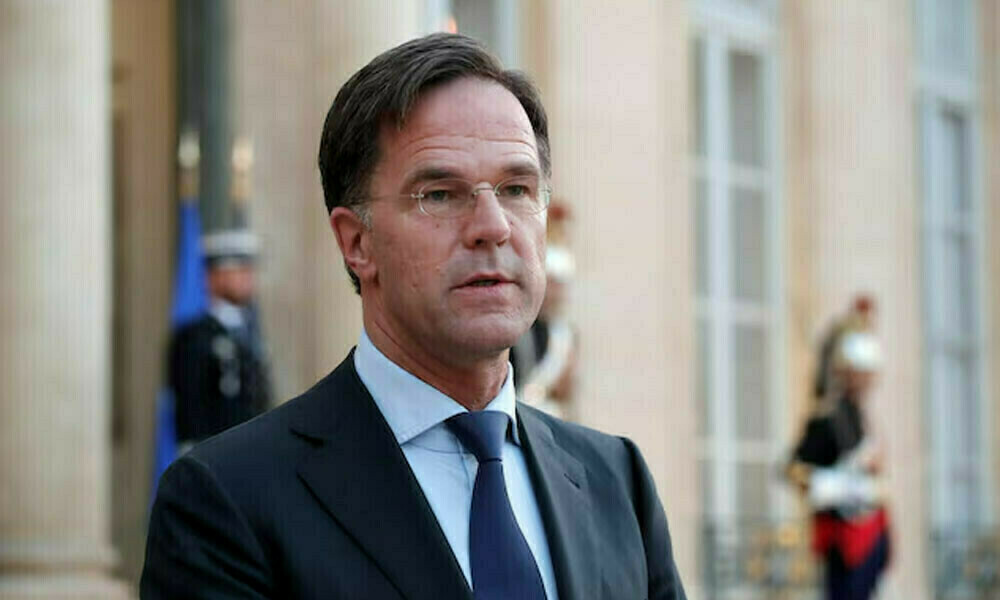
SARAJEVO: NATO chief Mark Rutte on Monday threw support behind Bosnia’s federal government that is locked in a power struggle with ethnic Serb leaders, saying the alliance would not allow a “security vacuum to emerge”.
Tensions have soared since Bosnian Serb leader Milorad Dodik was convicted last month for defying Christian Schmidt, the high representative charged with overseeing the peace accords that ended Bosnia’s 1990s war.
Dodik, who leads Bosnia’s Republika Srpska (RS) statelet, has remained unrepentant after the conviction and helped oversee the passage of laws forbidding access to Bosnia’s Serb entity by the country’s federal police and judiciary.
The laws were later struck down by the constitutional court.
Rutte landed in Sarajevo, as Dodik and Schmidt remained locked in their bitter feud with no clear path for de-escalation.
“This is not 1992 and we will not allow a security vacuum to emerge,” said the NATO secretary general at a press conference, referring to the year Bosnia’s bloody inter-ethnic war began.
Rutte made the remarks following a meeting with the three members of Bosnia’s presidency in the capital Sarajevo and called on the trio to help end the ongoing political infighting.
“You have got to solve this, the three of you,” Rutte added.
Since the end of Bosnia’s inter-ethnic war in the 1990s, the country has consisted of two autonomous halves — the Serb-dominated RS and a Muslim-Croat region.
The two entities have their own governments and parliaments and are linked by weak central institutions, which includes a three-member presidency that includes an ethnic Serb, Croat and Bosniak Muslim representatives.
Rutte’s visit comes just days after Bosnia’s constitutional court suspended legislation signed by Dodik that rejected the authority of the federal police and judiciary within the RS.
Last week, Dodik also ignored a summons from Bosnia’s chief prosecutor, who is investigating the leader on allegations of undermining the constitution.
Bosnia’s divided politics and fragile, post-war institutions have faced increasing uncertainty amid the unfolding crisis.
In response to the growing tensions, the European Union Force (EUFOR) last week said it would “temporarily increase” the size of its peacekeeping mission in the country.
Dodik’s actions come in the context of ongoing tensions with Schmidt, who holds broad powers to intervene in Bosnia’s governance.
The RS leader had already pushed through two earlier laws that refused to recognise decisions made by the High Representative and Bosnia’s Constitutional Court.
That led to his conviction last month and his being sentenced to a year in prison and six-year ban from office.
For years, Dodik pursued a separatist agenda, while repeatedly threatening to pull the Serb statelet out of Bosnia’s central institutions — including its army, judiciary and tax system, which has led to sanctions from the United States.
Copyright Business Recorder, 2025





















Comments
Comments are closed for this article.