


SAU’s Farmers' Day; experts call for advanced research in agriculture

HYDERABAD: Leading agricultural experts and progressive farmers have expressed concerns over Pakistan’s increasing vulnerability to climate change, ranking it among the most climate-affected countries globally, with Sindh being the hardest-hit province.
They highlighted that while Punjab’s per-acre yield was previously lower than Sindh’s two decades ago, Sindh has now seen a decline in productivity. Emphasizing the need for research-driven solutions, they stressed that innovation must align with farmers’ challenges to ensure sustainability and growth in the sector.
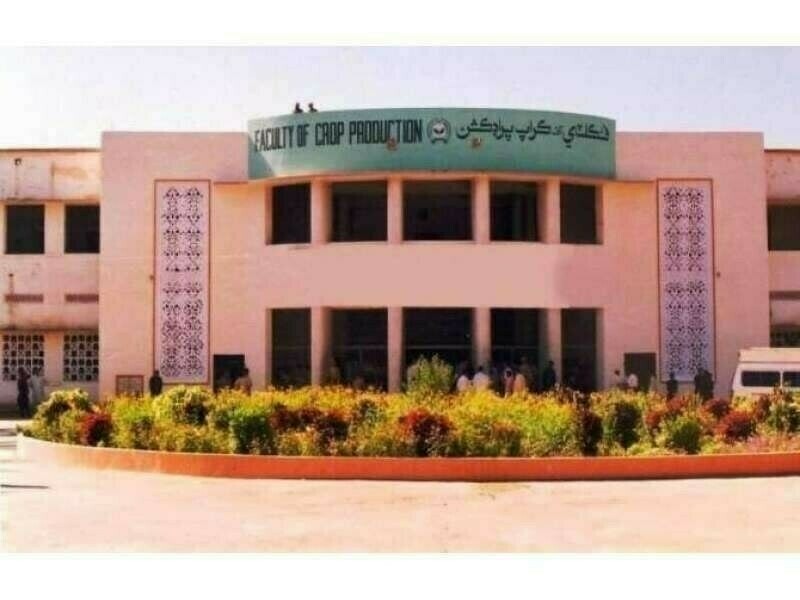
These views were shared during the Third Farmers’ Day, organized by the Seed Production & Development Center (SPDC) of Sindh Agriculture University (SAU), Tandojam, at the University Senate Hall on Wednesday.
Dr. Altaf Ali Siyal, Vice Chancellor of Sindh Agriculture University, underscored the global shift in agriculture from smart agriculture to robotic agriculture, marking the fifth stage of agricultural evolution. He noted that while the world is rapidly advancing, Pakistan is still striving to enter precision agriculture. He called for collaborative research initiatives among agricultural institutions to bridge this gap and promote modern farming practices.
Dr. Mehboob Ali Siyal, Director of the Nuclear Institute of Agriculture (NIA), Tandojam, highlighted the anticipated shifts in climate conditions, emphasizing the need for research on climate-resilient seeds to ensure higher yields. He also stressed the importance of training farmers in on-field seed production to address the ongoing shortage of certified and high-quality seeds.
Progressive farmer and Senior Vice President of Sindh Abadgar Board, Syed Nadeem Shah Jamote, pointed out the stagnation in agricultural commodity prices, stating that a price increase in agricultural commodities does not seem likely in the future. To improve farmers’ livelihoods, he urged a focus on increasing per-acre productivity. He also raised concerns over the onion crop’s persistent challenges, warning that the crop might face extinction if unresolved. Noting that 70% of agricultural labour comprises women, he called for structured training programs and fair wage policies to support their contributions.
Rizwan Bux Soomro, Regional Director of the Federal Seed Certification & Registration Department, said that private seed companies are now permitted to work on early-generation seed production, urging stakeholders to leverage this opportunity.
Nawaz Nizamani, a progressive farmer and CEO of a seed company, stressed the need for scaling up seed production, advocating for a one-mound (40 kg) to 40-maund multiplication strategy. He also encouraged student engagement in practical fieldwork to enhance their agricultural expertise.
Copyright Business Recorder, 2025


















Comments
Comments are closed for this article.