


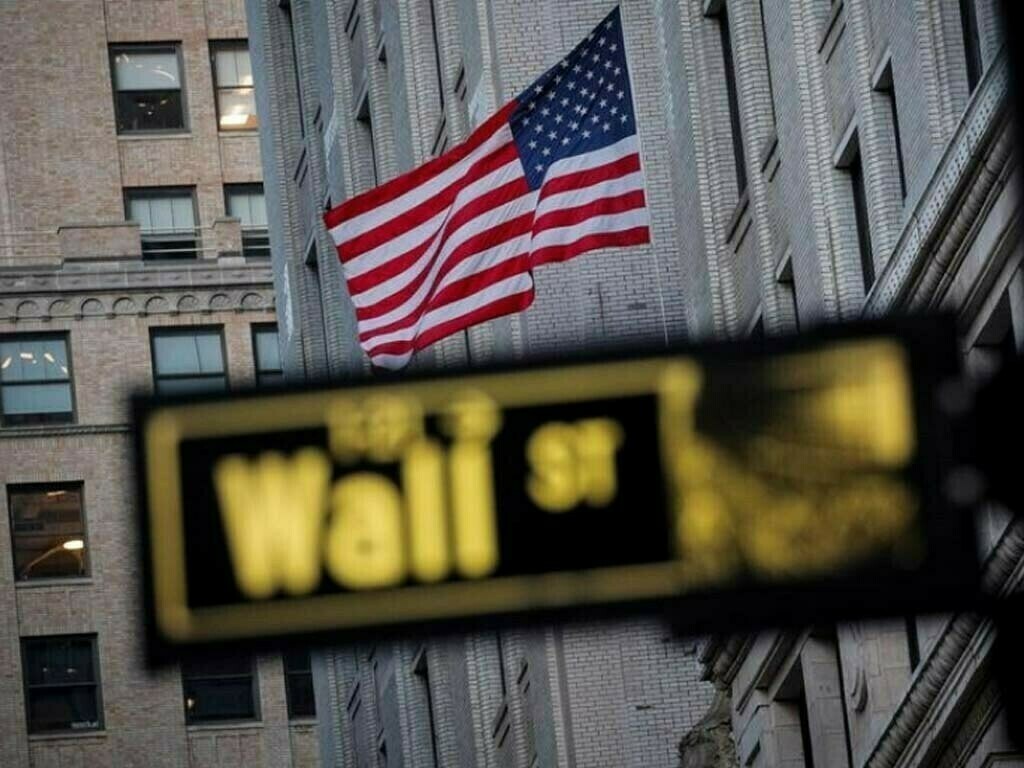

Wall Street’s main indexes moved lower on Friday, as investors assessed latest economic data including a weak consumer sentiment reading, while the blue-chip Dow suffered its steepest loss on a drag by UnitedHealth.
UnitedHealth dropped 9.2% after the Wall Street Journal reported that the U.S. Justice Department has launched an investigation into the company’s Medicare billing practices in recent months.
Shares of other health insurers were also hit, with CVS Health down 1.4% and Humana losing 5.3%.
On the data front, U.S. business activity nearly stalled in February amid mounting fears over tariffs on imports and deep cuts in federal government spending.
Separately, the University of Michigan’s final estimate on consumer sentiment came in at 64.7, compared to a forecast of 67.8.
All three main indexes are set for weekly declines despite the S&P 500 hitting record highs twice earlier this week.
Walmart’s dour forecast, along with jitters around President Donald Trump’s tariff threats and uncertainty over the Federal Reserve’s interest rate outlook, led to declines in all three indexes on Thursday.
Wall St falls as declines in Walmart, Palantir hit risk sentiment
“As long as the economy is strong, job market is strong and consumers stay resilient, then many of the president’s policies will probably not be deleterious on the economy,” said Jamie Cox, managing partner for Harris Financial Group.
“But if the consumer starts to falter, then it multiplies the difficulties of a tariff regime.”
Earlier this week, Trump said he will announce fresh tariffs over the next month or sooner, adding lumber and forest products to previously announced plans to impose duties on imported cars, semiconductors and pharmaceuticals.
The Personal Consumption Expenditures (PCE) reading, the Fed’s preferred gauge for inflation, would be on the radar next week after consumer and producer prices reading earlier this month painted a mixed picture.
Several Fed officials on Thursday signaled they still feel that cooling U.S. inflation will in time allow the U.S. central bank to deliver further interest rate cuts.
Comments from Fed Vice Chair Philip Jefferson are due later in the day.
At 10:16 a.m. ET, the Dow Jones Industrial Average fell 381.79 points, or 0.86%, to 43,798.28, the S&P 500 lost 22.88 points, or 0.37%, to 6,094.64 and the Nasdaq Composite lost 45.55 points, or 0.22%, to 19,918.27.
Nine of the S&P 500’s 11 sectors traded lower, with industrials leading declines with a 1.1% fall, while healthcare stocks dropped 0.7%.
Block slid 15.5% after the payment firm’s fourth-quarter profit fell short of estimates.
Akamai Technologies dropped 15.6% as the cybersecurity company forecast annual 2025 revenue below estimates.
Declining issues outnumbered advancers by a 1.23-to-1 ratio on the NYSE and by a 1.18-to-1 ratio on the Nasdaq.
The S&P 500 posted nine new 52-week highs and five new lows, while the Nasdaq Composite recorded 53 new highs and 47 new lows.























Comments
Comments are closed for this article.