


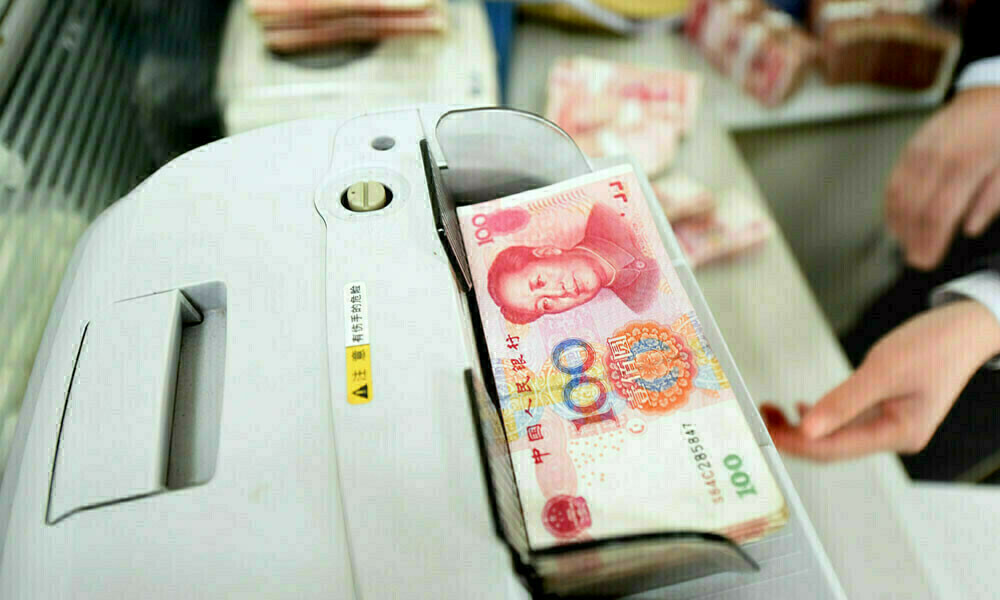
SHANGHAI: China’s yuan climbed to its strongest in two weeks against the dollar on Friday amid signs of government support, and after the release of better-than-expected August economic activity data.
But with China’s economic recovery far from being sure-footed and its yield gap against the United States remaining wide, analysts expect downward pressure on the yuan to persist.
The onshore yuan strengthened to as high as 7.24 per dollar, - its strongest since Sept. 1 - after August industrial output and retail sales growth beat expectations.
In the offshore market, the yuan strengthened to 7.2626 per dollar at midday day, erasing all the previous day’s losses.
Soon after the release of data, major state-owned banks were seen selling dollars in the onshore market, two sources with knowledge of the matter said.
The state banks - which often act under official guidance - took advantage of the upbeat news and amplified the yuan’s gains, prodding other market participants to follow suit, the sources said.
Earlier in the day, the yuan opened at 7.2752 per dollar, little changed from the previous day’s close, in muted response to Beijing’s cut in banks’ reserve requirement ratio (RRR).
China’s central bank also rolled over maturing medium-term policy loans while keeping the interest rate unchanged on Friday, focusing on boosting liquidity in the financial system.
Both steps to ease monetary conditions should provide some relief for an economy whose stuttering performance had made investors turn away, but some analysts expect the yuan’s downtrend to continue.
China’s yuan firms amid tight liquidity, US inflation in focus
“In our view, RMB would remain an attractive funding currency for carry trades with a managed and gradual depreciation against USD,” Goldman Sachs said in a note on Friday.
“The RMB weakness has been ultimately driven by the wide US-China interest rate differentials and sluggish Chinese economic growth,” Goldman said, expecting more yuan stabilisation efforts by Chinese authorities.
China’s yuan has depreciated steadily since February as the faltering post-pandemic economy and widening yield gap with other economies affected capital flows and trade.
Its rapid decline has prompted authorities to roll out a slew of measures to contain the weakness.
However, Maybank said in a report on Friday that the yuan’s “bottoming out process would likely be long and bumpy.”

















Comments
Comments are closed for this article.