


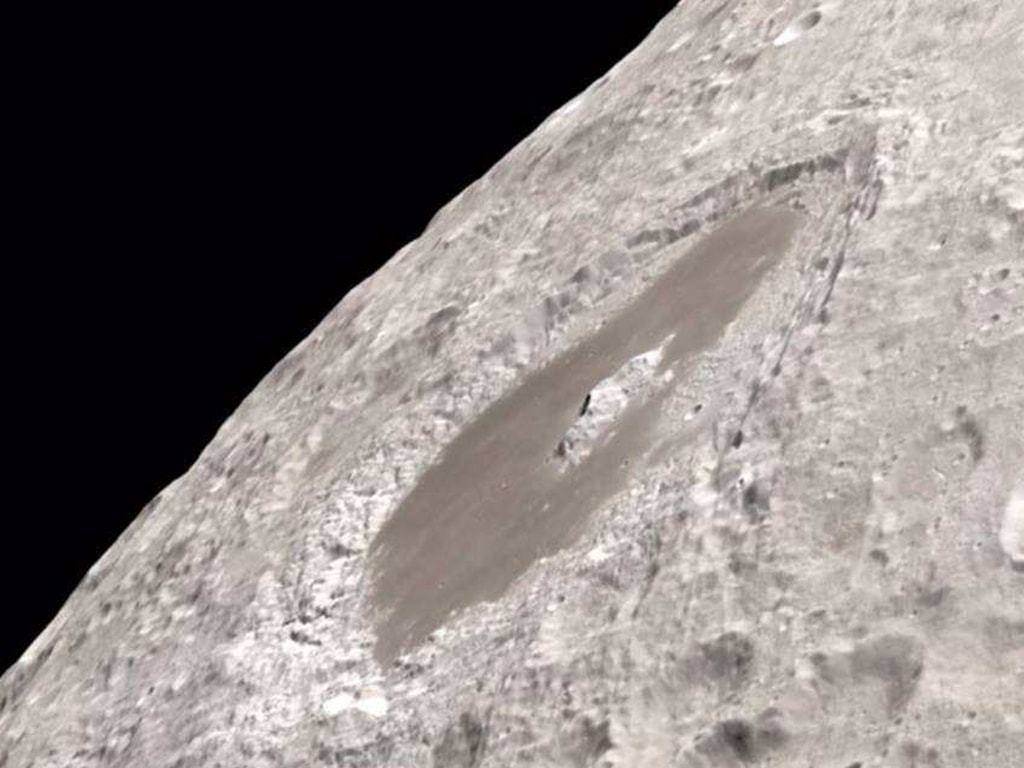

PARIS: There may be far more water on the Moon than previously thought, according to two studies published Monday raising the tantalising prospect that astronauts on future space missions could find refreshment -- and maybe even fuel -- on the lunar surface.
The Moon was believed to be bone dry until around a decade ago when a series of findings suggested that our nearest celestial neighbour has traces of water trapped in the surface.
Two new studies published in Nature Astronomy on Monday suggest there could be much more water than previously thought, including ice stored in permanently shadowed "cold traps" at lunar polar regions.
Previous research has found indications of water by scanning the surface -- but these were unable to distinguish between water (H2O) and hydroxyl, a molecule made up of one hydrogen atom and one oxygen atom.
But a new study provides further chemical proof that the Moon holds molecular water, even in sunlit areas.
Using data from the Stratospheric Observatory for Infrared Astronomy (SOFIA) Airborne Telescope, researchers scanned the lunar surface at a more precise wavelength than had been used before -- six microns instead of three.
Researchers believe the water might be trapped in glass beads, or another substance that protects it from the harsh lunar environment, Honniball told AFP, adding that further observations would help better understand where the water may have come from and how it is stored.


















Comments
Comments are closed for this article.