



There seems to be no end to the decelerating prices of coal as the demand slump continued well into 2020, starting long before covid-19 was on any country’s radar. Lockdown related slowdown may just be another nail in the coffin. Energy demand according to the International Energy Agency has been trailing south while there has been a decline in the global capacity for coal fired power plants for the first time in history.
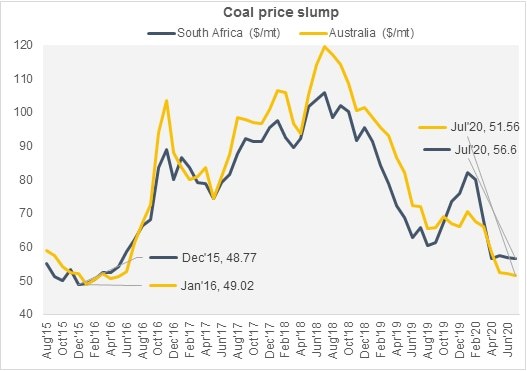
Coal prices have been falling for the past two years, since they peaked in Jul-18 at $106 per ton (for South African coal) but in only a matter of a year lost 60 percent of its value. Between then and Jul-20, South African coal price has plummeted by 46 percent (56% for Australian thermal coal). In the case of Australian coal, the drop has been more intense.
Culprit: demand. One of the prominent reasons is the reduced global output which has substantially cut down consumption. China being the biggest coal consumer had vowed to cut down coal production with its new found conscientiousness to save the country from environmental carnage but the real reduction has come in the form of slashing on imports while keeping its own production at a positive level. Coal exporters are suffering.
The same is the case for India where coal is currently in overcapacity (20% higher than peak demand) and the welcome mat for imports are being removed, the industry preparing to be a more prominent exporter. The government of India has ordered to replace 100 tons of imported coal with indigenous production in the coming year.
Other markets are becoming environmentally aware hoping to move away from fossil fuels and toward cheaper and cleaner renewable energies. Carbon emissions fell by 2 percent last year from electricity and from coal plants reduced by 3 percent. Though in many cases, the move has been from coal to natural gas, countries are trying to go greener.
South Korea, for instance has announced a green stimulus which would raise taxes on coal imports and close down coal-based power plants. Vietnam is putting coal-based power projects on halt and rushing renewable projects. The EU announced its own green package worth billions of dollars to “decarbonize” the economy. This is certainly expected to send reverberations across the world in reducing overall demand.
The supply glut against an organic reduction in demand—not only due to lower consumption but a global effort to go clean that is still taking shape—is explaining the price weakening. With covid-19, matters only became dire. Whether these prices will recover is not a question though—they eventually will. While some piecemeal efforts to move away from coal are being made, analysts believe without punitive measures on coal usage and substantive incentives on renewables, demand will eventually persevere and prices will recover.


















Comments
Comments are closed for this article.