


EDITORIAL: The government has constituted National Coordination Committee on Small and Medium Enterprises (NCC) under the chairmanship of Hammad Azhar, the federal minister for Industries and Production. The committee's objective as per the notification is to review and finalize the draft SME policy within two weeks and Hammad Azhar, in his capacity as the convener of the committee, is to brief the Prime Minister on a weekly basis on the impediments and recommendations for improvement and overall progress of policy guidelines.
In Pakistan, SMEs, the backbone of an economy in terms of their contribution to total national output and jobs, consist of 800,000 industrial units (40 percent located in urban areas), 1,200,000 in the service sector and 1,800,000 operate in commercial/retail shops.
In 1998, the then government in acknowledgement of the role of this critical sector in the country's development set up Small and Medium Enterprises Development Authority (SMEDA) with the responsibility to provide sectoral feasibility studies in coordination with the stakeholders, including the chambers of commerce and industry. An SME bank was also set up to provide credit to this sector. The lack of success of either of these two initiatives/entities may partly be sourced to the failure of subsequent governments to come up with a suitable definition of an SME as well as failure to acknowledge that the bulk of those operating in the SMEs do so in the parallel economy rather than in the documented economy. Sadly, these two lacunae persist to this day.
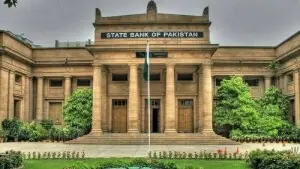
State Bank of Pakistan (SBP) early this year noted that from henceforth its definition would prevail, instead of several other definitions that were used in different government ministries/department that had caused confusion. The SBP definition is as follows: a small enterprise is defined as one with an employment size of up to 20 people with a sales turnover of 150 million rupees per annum while a medium enterprise is defined as one with an employment size of between 21 to 250 persons (manufacturing & services sectors), and 21 to 50 persons (trading sector) with an annual sale turnover from 150 million to 800 million rupees. Stakeholders suggest that small industries' annual turnover be raised to 200 million rupees and of medium industries to 1.2 billion rupees.
Soon after the Pakistan Tehrik-i-Insaaf government assumed office it launched a Certification Incentive Programme for SMEs under PQI Initiative 2025 at a cost of 745.810 million rupees targeting incentives to SMEs in the export-based manufacturing sector and pledged to provide SME linkages with Ministry of Science & Technology, R&D organizations and academia for the purpose of identifying technical issues and offering their services. It is unclear whether this amount was actually spent and if so how successfully, however, this policy would need to be expanded to all SMEs rather than only to those that export.
SMEs are identified with specific sectors that enables them access to bank credit including textile garments, fruits, vegetables, information technology, surgical goods, leather, branding & packaging, furniture, dates processing and gems and jewelry; however, it would be appropriate to include all units operating in the entire SME sector. It is also relevant to note that the bulk of small enterprises operate outside the formal documented economy partly because of the high cost of compliance and complexity of required documentation that is too complicated and expensive which many of the small enterprises cannot afford. Bank finance is the life blood of any business. Most SMEs' access to bank loans is virtually impossible as they operate from rented premises and banks insist on fixed asset (land or building) as collateral for giving loans. Hence, it is necessary that banks may consider providing loans on cash flow basis rather than only against fixed assets as collateral.
Pakistan's SME sector contributes 40 percent to the GDP and provides 80 percent employment to the non-agriculture sector. It is time a greater focus be put on developing this sector through resolving issues that it continues to face to this day.
Copyright Business Recorder, 2020















Comments
Comments are closed for this article.